

Aluminum Intake Manifold Parts Company: A Buyer's Guide to Quality and Performance
2026-09-25
Every engine builder knows the intake manifold is where cheap parts show their true colors. If you're shopping for aluminum intake manifold parts, the company you pick decides whether you get consistent airflow, clean machining, and proper fitment—or a box of headaches. This buyer's guide cuts the fluff and shows you what actually matters, with DDR as the standard for quality and performance.
Reading Casting Quality Before You Buy
Don't let a smooth finish fool you. Run your fingernail across the surface and look for tiny pinholes, sand inclusions, or hairline cracks that often hide near edges and corners. A quick tap with a coin can also reveal dull spots — a sign of porosity or internal shrinkage. If the casting is unpainted, check the un-machined areas first; those are where foundry shortcuts show up.
Measure the critical dimensions yourself instead of trusting the spec sheet. Use calipers on mounting holes, flange thickness, and any mating surfaces. Castings always shrink a bit during cooling, but a good foundry compensates for that and provides a dimensional report. Ask for a test bar from the same heat, then have it independently checked if the part will bear load or pressure.
Request the material certificate and match the heat number to the casting. If you can, do a simple spark test or send a sample to a lab for composition verification. Ultrasonic or X-ray inspection is overkill for most hobby projects, but if the casting goes into a critical assembly, it's worth paying for. Compare several castings from the same batch — consistency in weight and surface texture usually means a controlled process.
Port Shape, Runner Length, and Real-World Throttle Response
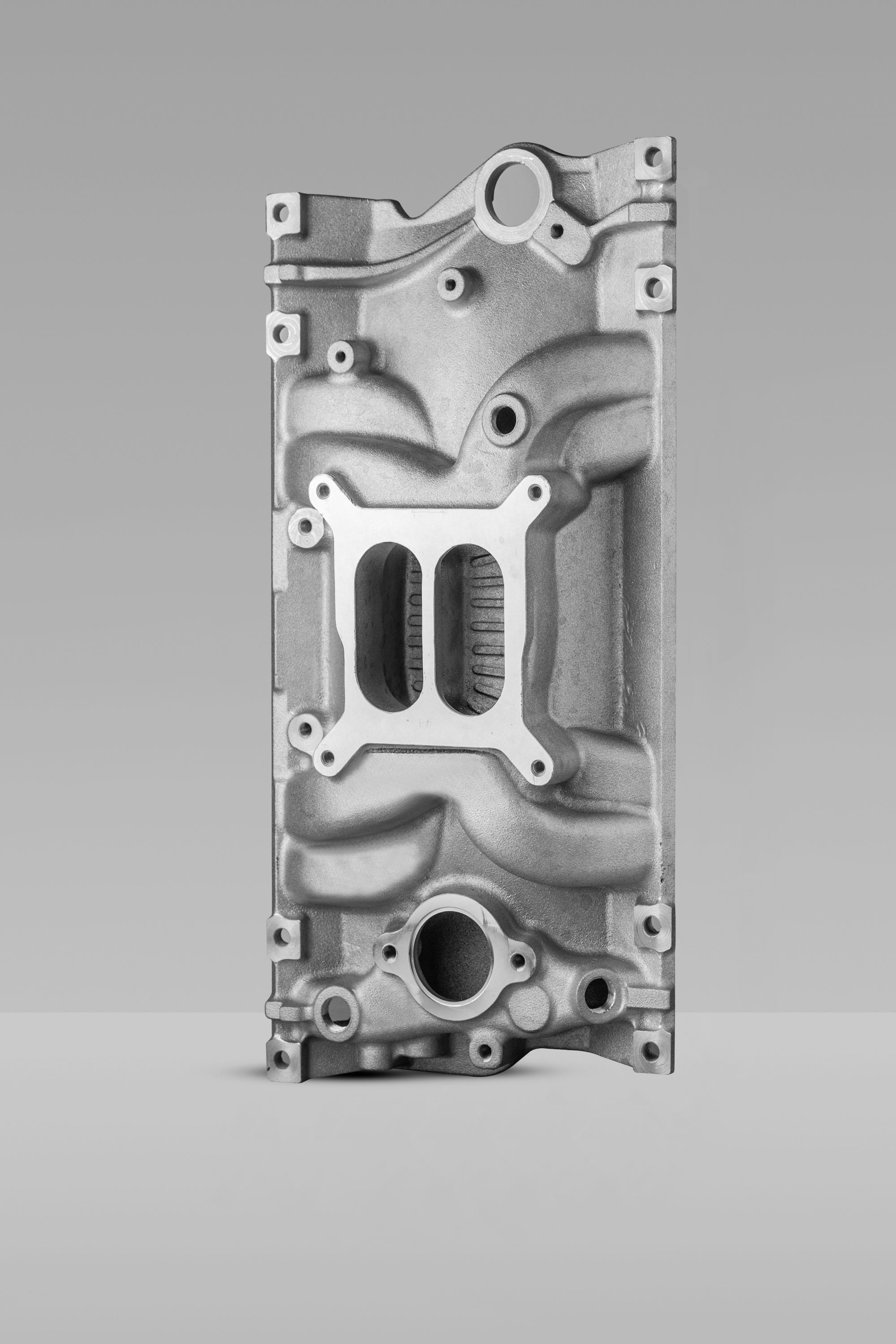
Port shape does more than just guide air into the cylinder—it dictates how the flow behaves the instant the throttle plate snaps open. A sharp edge or an abrupt cross-section change near the valve seat can cause the incoming charge to separate from the wall, creating localized turbulence that reduces fill efficiency at exactly the moment you need it most. Smooth entry angles, gentle tapers, and a well-blended bowl area allow the air to stay attached and maintain higher velocity, which shows up as a crisper part-throttle response and noticeably less lag when rolling into the throttle.
Runner length works on a different timescale, using intake pulse reflections to either help or hinder cylinder filling. Longer runners tend to reinforce the reflected pressure wave at lower rpm, giving the engine a fatter mid-range torque curve and making city-speed acceleration feel effortless. But that same length becomes a restriction at high rpm, where the incoming air has less time to travel and the tuned pulse no longer arrives in sync with valve opening. Shorter runners sacrifice some low-end shove but let the engine breathe freely near redline, which translates into a sharper, more immediate throttle response when you are already carrying speed.
In real driving, the combination of port shape and runner length determines whether the engine feels eager or hesitant. A short, well-shaped runner with a clean port entry can reduce intake-side inertia and cut the delay between pedal movement and actual acceleration, especially during quick gear changes or throttle blips. Conversely, an overly long or poorly contoured intake path makes the engine feel soft and lazy, even if the dyno sheet shows identical peak power. The difference shows up not in wide-open throttle runs, but in the dozens of small throttle adjustments you make every minute behind the wheel.
Material Differences Beyond the Spec Sheet
When you hold a product in your hands, the spec sheet rarely tells the whole story. The subtle grain of a machined aluminum edge, the cool weight of a glass back, the way a fabric resists fingerprints after months of daily use—these are the details that separate a well-made object from a forgettable one. Manufacturers often list raw materials like “aerospace-grade aluminum” or “Gorilla Glass,” but the tactile experience comes from choices that don’t fit into a bullet point: the exact alloy blend, the anodizing voltage, the radius of a chamfer. Those decisions determine whether a device feels premium or merely expensive.
Consider the difference between two phones with identical glass front panels. One uses a standard soda-lime glass with a plastic laminate; the other employs a chemically strengthened aluminosilicate with a custom oleophobic coating. Both spec sheets say “glass.” Yet after a week in a pocket, the first shows micro-scratches and smudges, while the second remains clear and smooth. The same holds for plastics: a polycarbonate shell can be thin and creaky, or it can be reinforced with glass fiber and finished with a soft-touch matte that resists wear. Without touching the product, you’d never know from the listed materials alone.
Even sustainable materials reveal their character only through use. Recycled aluminum sounds identical on paper, but the percentage of post-consumer content, the forging process, and the surface treatment all affect how it ages. A well-executed recycled case might develop a warm patina; a poorly mixed one could show pitting or uneven color. Likewise, bio-based plastics can feel brittle or silky depending on polymer chain length and additives. The next time you compare products, look beyond the material names. Pick them up, run a fingernail across the surface, and listen to the sound they make when tapped. That’s where the real differences live.
Matching Manifold Volume to Your Engine’s Breathing Habits
Engines do not draw air in a steady stream. The intake pulses are rhythmic, each cylinder pulling hard only during its brief intake stroke, then going quiet. If the manifold volume is too small for that cadence, the incoming charge slams into a wall of stagnant air at high rpm and the engine goes flat. Too large, and the air barely moves at low speed, killing throttle response and low-end torque. The trick is to size the plenum and runners so the pressure waves bounce back to the valve at the right moment.
A long, narrow runner keeps air speed high and helps fill the cylinder at lower revs, but it becomes a restriction when the engine wants to spin. Short, fat runners do the opposite—they free up top-end flow but leave the midrange feeling lazy. Plenum volume adds another layer: a bigger plenum acts as a reservoir for hard pulls, yet too much volume can dull the signal from each intake pulse and make tuning mushy. Matching these volumes means reading where your cam and head actually want to breathe, not just copying a dyno chart from another build.
On the street, most drivers feel the mismatch before they can measure it. A manifold that is too small chokes the motor right as it should be pulling hardest, while one that is too large makes the pedal feel disconnected and forces downshifts to get moving. The best setup preserves a crisp, urgent response around the rpm you actually use, then lets the engine stretch without wheezing. That balance is rarely found in a catalog—it comes from testing runner lengths, trimming plenum spacers, and paying attention to how the engine behaves under load.
Aftermarket Versus OEM: Digging Past the Claims
The debate between aftermarket and OEM parts often gets reduced to a simple story: one is original and safe, the other is a gamble. But if you look past the marketing brochures and forum arguments, that split doesn't hold up. Some aftermarket brands supply components that match or exceed the factory piece, while certain OEM replacements are just reboxed parts from third-party suppliers with a logo added. The label alone rarely tells you what you're actually bolting onto your vehicle.
What matters more is the specific part and the company behind it. A brake rotor from a reputable aftermarket maker might use better metallurgy and tighter runout specs than the stock unit, especially on a budget commuter car. On the other hand, a no-name aftermarket control arm might fail within months, even though it looked identical in the photo. OEM parts do offer predictable fitment and a warranty channel, but that doesn't automatically mean they use superior materials or that they never have design flaws.
The useful approach is to dig into part-by-part evidence instead of trusting blanket claims. Look for independent teardown comparisons, long-term owner reports, and whether a given aftermarket brand supplies original equipment to any automaker. Some drivers keep OEM for engine internals and sensors while choosing aftermarket for wear items like filters and brake pads. That kind of selective thinking usually beats brand loyalty.
Installation Fit Checks That Prevent Air Leaks and Headaches
Most installation leaks don't show up as an obvious gap. They hide in slightly warped flanges, mismatched mating surfaces, or a seal that compresses more on one side than the other. Before you torque anything down, run your fingers along the contact edges and look for uneven light passing through. A 0.05-inch feeler gauge slipped between the surfaces at several points will often reveal a fit problem that eyes miss.
Tightening sequence matters just as much as the parts themselves. If you crank one bolt fully before the others, the gasket distorts and creates a path for air. Work in a crisscross or star pattern, bringing each fastener to maybe a third of final torque, then repeat until snug. After assembly, a quick soapy-water test or a short pressure-drop check takes a few minutes and can save a full teardown later.
Pay attention to temperature swings, too. A seal that fits perfectly at room temperature may shrink or expand once the system reaches operating conditions. Recheck the joint after the first thermal cycle if you can, and keep spare shims or adjustable mounts nearby for fine-tuning. That extra pass often prevents the kind of intermittent leak that turns into a recurring headache.
FAQ
Look past the polished exterior. The real tells are consistent wall thickness, clean internal transitions, and documentation of the casting process. A trustworthy shop will mention the alloy grade—usually 356 or 319 aluminum—and won't hide the fact that they pressure test every unit before shipping. If the price seems too good, ask about porosity testing; many budget castings skip it.
For most street builds, the factory-style geometry is already a compromise, so don't overthink peak numbers. A quality replacement manifold should keep runner cross-sections consistent and avoid sharp steps at the flange. If the company can't tell you the as-cast runner volume or at least the cross-sectional area, they're probably selling cosmetic parts.
Gravity cast or low-pressure cast are both common, but low-pressure tends to produce denser aluminum with less trapped gas. Sand casting is fine for prototypes, while permanent mold casting works well for production runs. Ask whether the company machines the critical surfaces after casting—flanges, injector bosses, and sensor ports all need a final pass to seal properly.
Request a sample report, not a sales brochure. A serious supplier will share CMM inspection data, pressure test results, and maybe even X-ray images for porosity. If they hesitate or only offer '100% inspected' as a slogan, keep looking. Also ask about their scrap rate on aluminum manifolds; good shops track it and are willing to discuss it.
Yes. Focus on the thermostat housing area, vacuum ports, and injector bungs. Thin walls or poor machining there lead to leaks and stripped threads. Ask if the company helicoils or inserts the threaded holes. Also check whether the manifold has provisions for all your OEM sensors—some aftermarket designs omit them or place them at awkward angles.
At minimum, it should cover casting defects and machining errors for at least one year. Be wary of warranties that only cover 'unused parts' or require professional installation receipts for every claim. A confident company will also accept returns for dimensional mismatch without arguing about who measured wrong.
For a stock or mild street engine, a slight mismatch is usually harmless. However, a large step or sharp edge at the head flange can disrupt airflow and cause reversion. A quality supplier will either match the ports to your gasket or provide clear measurements so you can check before bolting it on. If they claim 'fits all applications,' verify that with your own calipers.
Ask for the same data from both: material spec sheet, as-cast port dimensions, surface finish callouts, and a sample of their inspection report. Then compare the details no one puts in marketing—thread insert specifications, sensor boss locations, and whether the water neck area is reinforced. The supplier that can answer technical follow-ups without delay is usually the one that understands the part.
Conclusion
Before committing to an aluminum intake manifold, a close look at the raw casting tells you more than any polished ad photo. Check for porosity, uneven wall thickness, and stray flash around the runners—these flaws often hide stress risers and can lead to cracks under heat cycling. Port shape and runner length are equally telling: a short, straight runner tends to favor top-end power, while a longer, tapered runner builds mid-range torque and sharper throttle response in real traffic. Beyond the spec sheet, the aluminum alloy and casting method matter. A gravity-cast piece may look identical to a more expensive billet or sand-cast unit, but its density and heat rejection behavior can differ enough to alter intake air temperature and idle stability.
Plenum volume should match your engine’s actual breathing habits, not just the peak horsepower goal. An oversized plenum can soften low-speed velocity and make part-throttle response feel lazy, while a too-small volume chokes top-end flow. When comparing aftermarket claims against OEM units, look past peak dyno numbers—some OEM manifolds are better tuned for daily driveability and thermal stability. Finally, before you bolt anything on, check the flange flatness with a straightedge, test-fit the throttle body and vacuum ports, and confirm the gasket surfaces are clean and true. A small air leak at the cylinder head or injector bung can undo every performance gain and leave you chasing idle gremlins for weeks.
Contact Us
Contact Person: Shelly
Email: [email protected]
Tel/WhatsApp: 8613967667688
Website: https://www.yongyu.com/