

Best Corrugated Boxes for Secure Packaging and Shipping
2026-10-28
Shipping damage is a silent profit killer. Every dented corner and crushed side tells customers you don't care—but the right corrugated box changes that. Not all cardboard is created equal: flute profiles, board grades, and structural design decide whether your product arrives intact or in pieces. At ShiTeng Packaging, we've spent years perfecting boxes that hold up under real-world handling, from warehouse drops to last-mile tosses. This guide breaks down what actually makes a corrugated box secure—and how to choose the best one for your shipments without wasting money on over-spec or gambling on under-spec.
Beyond the Brown Cardboard: The Anatomy of a Secure Shipping Box
Open a genuinely secure shipping box and you'll immediately notice it shares little with the standard parcel sitting on your doorstep. The outer kraft layer is only a disguise; the real engineering lives between two sheets of corrugated fiberboard, where a high-density polyethylene fiber mesh or aluminum shielding blocks radio signals and prevents the contents from being scanned. This layered build turns a cardboard container into a physical firewall.
Every seam and corner has been rethought. Where ordinary cartons rely on packing tape that can be sliced and reapplied, a secure box uses recessed tamper-evident strips that leave an irreversible stain once peeled back. Corners aren't simple folds but heat-pressed rigid guards that can take a forklift impact without deforming the box's shape.
Internal cushioning rarely comes as bubble wrap or foam peanuts. Instead, die-cut self-locking honeycomb panels are precision-cut to the item's silhouette, spreading vibration across the entire container rather than concentrating force at one point. Add a metal-free antistatic liner and the whole package becomes a portable, microclimate-controlled vault.
Why Your Current Boxes Might Be Failing You (and What to Use Instead)
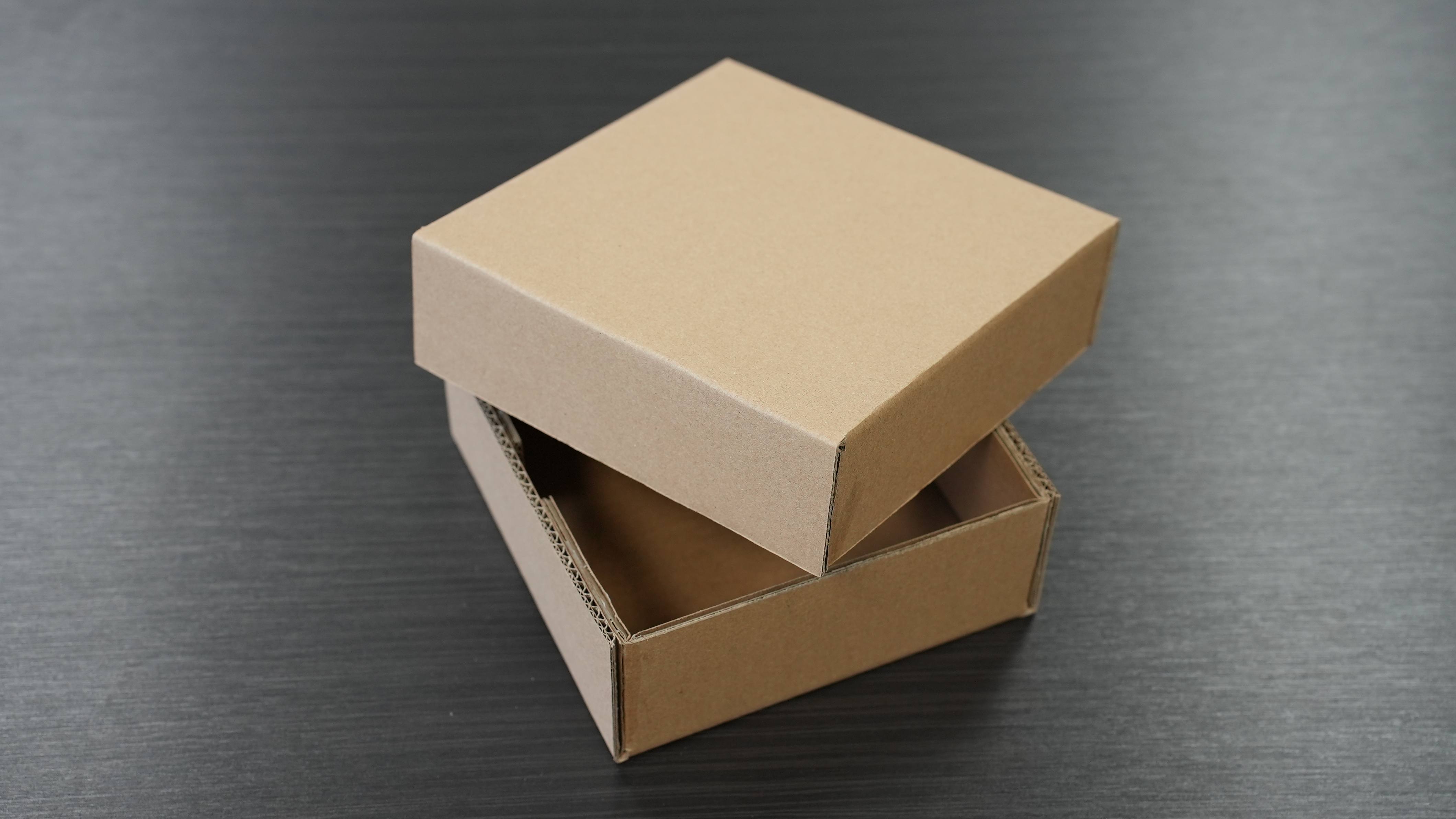
Standard boxes are built for the average item, not yours. They collapse under uneven weight, leave sharp edges exposed, and force you to pad out the empty space with wads of paper or bubble wrap. That one-size-fits-all logic quietly adds up to damaged goods and wasted materials, even when the box feels sturdy in your hands.
A better move is to switch to custom-cut inserts or modular dividers made from rigid honeycomb board or molded pulp. These pieces grip your product exactly where it needs support, removing the need for tape or foam peanuts. You can also look for boxes with tear strips and pre-scored fold lines that adapt to different item heights, so one box style handles several SKUs without feeling loose.
If you're using boxes for storage rather than shipping, the failure is usually about findability. Opaque walls and identical lids mean you're opening three boxes just to locate a single cable. Swapping to bins with clear side panels, write-on label zones, or color-coded corner tabs changes the daily routine entirely — you see what's inside without lifting a flap, and the time saved adds up faster than you'd expect.
Single-Wall, Double-Wall, Triple-Wall: A Real-World Breakdown
Most people assume wall thickness is just a spec on a data sheet. Walk onto a construction site or into a cabinetry shop, and you quickly learn it dictates how a panel behaves under load, how it insulates, and even how it accepts fasteners. Single-wall panels are the workhorses of lightweight framing and interior partitions—cheap to produce, easy to cut, and perfectly adequate when structural demands are modest. But ask a builder who has watched a single-wall panel bow under moisture or warp in direct sun, and they will tell you the real story: economy has its limits.
Double-wall construction changes the equation. Two bonded layers create a box-like cross-section that resists bending far better than a single sheet of the same total thickness. This is why double-wall polycarbonate dominates greenhouse glazing and covered walkways—it traps an insulating air gap while still letting light through. The trade-off is weight and cost, but for applications involving temperature swings or occasional impact, the extra layer pays for itself. Triple-wall goes further, adding a second air chamber and often a denser internal rib structure. You see it in cold-climate skylights and hurricane-rated doors, where the penalty in bulk is accepted because the alternative is frequent replacement.
Here is the nuance most buying guides skip: wall count matters less than the quality of the bond between layers. A well-made single-wall panel with a high-grade core can outperform a cheaply fused double-wall. Similarly, a triple-wall panel with sloppy rib alignment may be no stiffer than a good double-wall. So instead of chasing more layers as a status symbol, match the wall configuration to the actual job—span, thermal range, impact exposure, and how often someone will lean against it. That is the difference between a specification and a solution.
How Heavy Is Too Heavy? Matching Box Strength to Product Needs
Overestimating box strength is just as wasteful as underestimating it. A carton rated for forty pounds carrying a six-ounce glass ornament means you're paying for corrugated layers that never work. Conversely, a lightweight mailer holding a cast-iron skillet will fold long before the destination. The real question isn't how heavy the product is in isolation, but what forces the box will face between your dock and the customer's hands—stacking pressure in transit, vibration on conveyor belts, and the inevitable drop from waist height onto concrete.
Most corrugated boxes use an Edge Crush Test (ECT) rating, which measures stacking strength, while single-wall and double-wall constructions handle different puncture risks. A common mistake is matching the box to the product's static weight, ignoring the dynamic load of a box tumbling in a delivery van. For dense items under ten pounds, a 32 ECT single-wall box often suffices. But once you cross fifteen pounds or the product has sharp corners, you're flirting with blowouts unless you step up to a 44 ECT double-wall or add interior cushioning that stabilizes rather than just pads.
The sweet spot comes from testing a packed box the way carriers actually treat it. Fill a sample, drop it three times from thirty inches on each corner, then check for seam splits. If the flaps pop open but the product is fine, the failure isn't the board strength—it's your tape adhesion or flap design. Too many packagers chase heavier boxes when a simple reinforcement insert or a switch to a full-overlap slotted container would solve the problem for a fraction of the cost.
The Packing Tape Isn't Enough: Internal Support Strategies That Work
Most people assume a few strips of packing tape will hold everything together. They wrap the outside, shake the box, and call it done. But once that package hits a sorting machine or gets stacked under heavier freight, the real damage happens from the inside. Without proper internal bracing, even a perfectly sealed box can arrive with crushed corners, snapped edges, or loose parts rattling around. The trick is to stop thinking about the box as a container and start treating it as a suspension system for whatever is inside.
One reliable approach is to build a rigid skeleton around fragile items. Instead of stuffing the void with loose paper or air pillows that shift during transit, cut custom cardboard strips that interlock to form a cradle. For oddly shaped products, use scored foam blocks that you squeeze and release to lock the item in place. A cheaper but equally effective method is to use crumpled kraft paper rolled into tight logs and wedged at stress points—like under handles or between stacked layers—so the item cannot twist or flex. The goal is to transfer shock away from the weakest part of the object and let the packaging absorb the hit.
Another overlooked trick is to reduce internal movement before you even seal the box. Wrap small parts in tissue, then tape them to the main body so they cannot scrape against each other. For electronics or glassware, cut a piece of corrugated board slightly larger than the opening and slide it in as a diaphragm, pressing against the top and bottom of the item. If you are shipping multiple pieces, separate them with thin sheets of foam that have been sliced partway through, so each layer acts like a shock absorber. Remember, the outer tape only keeps the box closed. The internal support is what actually keeps your product whole when the carrier decides to drop it from waist height.
When Shipping Goes Wrong: Lessons From Damaged Packages
I still remember the first time a package I sent arrived looking like it had been through a demolition derby. The box was crushed on one side, tape peeling away, and the contents—a set of ceramic mugs—had become a jigsaw puzzle of sharp edges. The buyer’s photo message wasn’t angry, just resigned, which somehow felt worse. That day taught me more about shipping than any guide ever could.
What surprised me most wasn’t the damage itself, but how avoidable it had been. I had skimped on cushioning, thinking a few sheets of crumpled newspaper would do the trick. They didn’t. Now I treat the inside of every box like a game of Tetris: nothing should shift, rattle, or have room to meet its neighbor. Bubble wrap isn’t optional for fragile items—it’s the difference between a happy customer and a refund request. And those flimsy thin-walled boxes? They belong in the recycling bin, not on a delivery truck.
Beyond packing, I learned to photograph everything before sealing the box. Not for social media, but for the inevitable claim process when a carrier decides your parcel is a soccer ball. Having time-stamped proof of proper packing turns a frustrating back-and-forth into a straightforward conversation. And yes, insurance on anything you can’t afford to replace out of pocket is worth every cent. The lesson stuck: a little extra effort before the box leaves your hands saves a lot of apologizing later.
FAQ
Look for the Mullen burst rating and edge crush test (ECT) value. A box with a high ECT rating, like 44 or 48, handles stacking pressure well, while a burst rating around 200# or above resists punctures from sharp edges. Double-wall construction adds another layer of fluting for extra rigidity.
Measure your item's length, width, and height, then add about two inches to each dimension for cushioning. Oversized boxes force you to use more void fill, which drives up shipping costs and lets contents shift. Custom-sized boxes or adjustable depth boxes can trim that waste.
Yes, most are. They're made from kraft paper and typically contain a high percentage of recycled fibers. After use, flatten them and remove any non-paper tape or labels. Many curbside programs accept them, and the fibers can be reused several times before they degrade.
Single-wall has one layer of fluting between two liner sheets, ideal for lightweight to medium items. Double-wall adds a second fluting layer and an extra liner, which gives much better crush resistance and insulation. Choose double-wall for heavy tools, glassware, or long-distance shipping.
Standard boxes lose strength when wet, but you can opt for wax-coated or water-resistant corrugated. Those coatings help repel moisture from rain or condensation. For extreme conditions, consider using a plastic liner inside the box or wrapping the outside with stretch film.
It depends on the box's size, wall thickness, and ECT rating. A standard single-wall box with an ECT of 32 can often handle 40 to 60 pounds if properly packed and sealed. Heavier items need a higher ECT or double-wall box, and you should reinforce the bottom with strong tape.
Pressure-sensitive acrylic or hot melt tape bonds well to kraft surfaces. For heavy boxes, use 3-inch wide tape and apply it along the center and side seams in an H pattern. Avoid masking tape or duct tape; they peel off corrugated surfaces under stress.
Custom printing can strengthen your brand unboxing experience, but it's usually cost-effective only at higher volumes. For smaller runs, try plain boxes with branded stickers or stamps. If you ship fragile products, a printed box with handling icons adds a professional touch without a huge markup.
Conclusion
The phrase “brown cardboard” hides a lot of variation in flute profiles, liner weights, and moisture resistance. A box that survives a short van ride may collapse under cross-country stacking, yet many shippers keep reordering the same 32 ECT single-wall carton out of habit. If you have ever opened a delivery to find crushed corners or split seams, the culprit is rarely bad luck; it is usually a mismatch between box construction and the actual load. Single-wall board suits lightweight, low-density items that fill the carton without shifting. Double-wall buys real puncture resistance and stacking strength for tools, glassware, or dense parts. Triple-wall exists for crates and machinery, not as a marketing upsell. A useful rule: ignore the vague “heavy duty” label and look for the edge crush test number and box certificate, then weigh the product, measure its footprint, and add at least a 10% safety margin. That small arithmetic beats relying on thicker tape or extra void fill.
Tape alone never saved a poorly packed box. Internal support does the quiet work: rigid foam corner blocks protect the weak points, dividers stop metal edges from touching, and void fill only helps after the product is immobilized. Leave a heavy item free to slide and it becomes a hammer inside the carton, even if the outer walls are double-wall. The best lessons come from damaged-package reviews: scuffed corners usually mean weak edge crush, dented side panels mean insufficient internal bracing, and blown-out bottoms mean the wrong taping pattern or a wet environment. Before choosing a more expensive triple-wall box, solve those internal failures first. A modest upgrade from single-wall to double-wall, plus a well-placed corrugated insert, often fixes what a “heavy duty” carton never will.
Contact Us
Contact Person: Mr. Ge Man
Email: [email protected]
Tel/WhatsApp: 8613710506492
Website: https://www.shitengzx.com