

Best Double Jacketed Gaskets Manufacturer: Expert Guide to Quality and Selection
2026-07-28
Selecting the right double jacketed gasket can mean the difference between a leak-free system and costly downtime. In this guide, we cut through the noise to help you understand what truly matters—from material compatibility to manufacturing precision. As a trusted name in sealing solutions, Kaxite brings decades of hands-on expertise to the table, but we believe informed decisions start with clear, practical insights. Whether you're upgrading existing equipment or specifying components for a new project, the choices you make now will shape your operation's reliability for years to come. Let's dive into the essentials of quality and selection that too many buyers overlook.
Understanding the Core of Double Jacketed Gaskets
A double jacketed gasket is far more than a simple sealing component; it represents a carefully engineered solution where the interplay between the soft filler and the metal jacket defines performance. The core idea is to combine the structural integrity and heat resistance of a metallic outer shell with the conformability of a compressible inner material. This design allows the gasket to withstand extreme temperatures and pressures while maintaining a reliable seal on irregular flange surfaces. Unlike solid metal gaskets that demand perfectly machined faces, the double jacketed construction provides a degree of forgiveness, as the filler compresses to fill microscopic imperfections without requiring excessive bolt loads.
At its heart, the gasket relies on a layered architecture: a central filler ring, commonly made from graphite, PTFE, or non-asbestos fiber, is encased in two formed metal jackets that are joined at the inner and outer edges. This dual-layer cladding is what gives the gasket its name and its versatility. The metal jackets—typically stainless steel, soft iron, or nickel alloys—act as a robust barrier against aggressive media and prevent the filler from being extruded or chemically attacked. Meanwhile, the filler contributes the necessary resilience and compressibility. The way these jackets are formed—whether with corrugations, tangential seams, or solid construction—significantly influences how the gasket seats on the flange and recovers after being compressed. Over time, this design has been refined to minimize common failure points, such as jacket splitting at sharp bends, by incorporating techniques like stress-relieving radii and localized heat treatment.
One often overlooked aspect is the gasket's ability to adapt to thermal cycling. In service, temperature fluctuations can cause flanges to expand and contract at different rates, which can compromise a static seal. The double jacketed gasket's combination of a metal skin and a viscoelastic filler allows it to move subtly with the joint, preventing the microscopic leaks that typically occur when a rigid seal loses contact. This dynamic response is crucial in applications like heat exchangers, where startups and shutdowns impose continuous mechanical stress. Furthermore, the choice of filler depth and jacket thickness can be tailored to specific operating conditions, creating a bespoke sealing solution that avoids the wasteful over-engineering of solid metal alternatives while still delivering longevity in harsh environments.
Material Choices That Define Performance
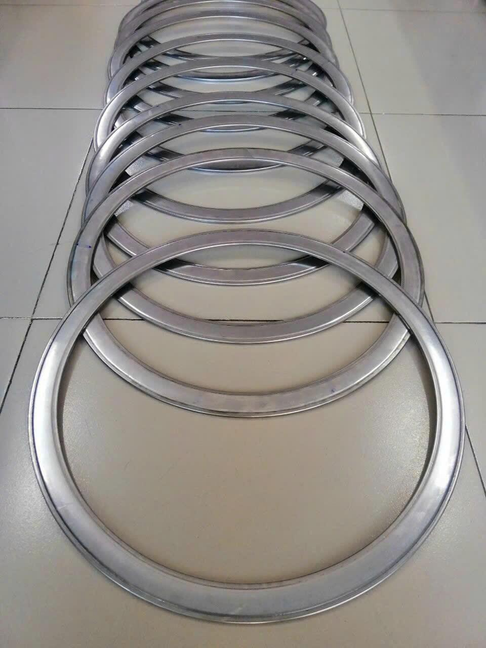
The soul of any high-performance gear isn't just in its design—it's in the raw materials that breathe life into it. When engineers sit down to blueprint a product that will be pushed to its limits, the conversation starts with one question: what can this material truly endure? It's not about picking the strongest metal or the lightest composite off a shelf; it's about understanding the invisible dance between stress, temperature, and fatigue that happens at a molecular level. A carbon fiber weave, for instance, isn't simply “lightweight”—its real genius lies in how the fibers are oriented to resist torsional loads that would twist a lesser material into oblivion. This attention to directional strength, to the quiet language of material science, is what separates a product that survives from one that excels.
Think of the polymers used in vibration-dampening layers. Most spec sheets will boast about durometer ratings, but what they won't tell you is how a material remembers its shape after repeated compression. A superior elastomer doesn't just absorb shock—it returns that energy in a controlled, predictable fashion, preventing the micro-instabilities that lead to long-term failure. This is where craftsmanship intersects with chemistry. It's the difference between a running shoe that feels dead after 200 miles and one that still springs back with every stride. The magic isn't in marketing buzzwords; it's in the polymer chain architecture that strikes a balance between resilience and pliability, a balance that only comes from iterative, real-world testing rather than sterile lab conditions.
Then there's the overlooked art of joining dissimilar materials. A titanium shaft bonded to a carbon fiber headstock sounds exotic, but the real performance story is in the adhesive interface. Traditional epoxy bonds become brittle with age and thermal cycling, creating stress risers that wait to catalyze cracks. Advanced bonding layers, however, are engineered to flex slightly, to breathe with the materials they unite, forming a transition zone that mitigates galvanic corrosion and harmonic mismatches. It's these unglamorous, borderline obsessive details that prevent catastrophic delamination. In a world where everyone claims “military-grade” or “aerospace-inspired,” true performance is carved from the patience to sweat the small stuff—the material choices that never make it to the brochure, but are felt in every mile, every rep, every moment of trust between user and tool.
The Manufacturing Journey Behind Reliable Seals
Creating a seal that holds up under pressure isn’t just about mixing rubber and shaping it. It starts with raw material selection that borders on obsessive—each polymer, filler, and curing agent is tested not only for its individual properties but for how they behave together under heat, chemicals, and repeated stress. Small variations can lead to cracks or premature wear, so every batch is sampled and put through a battery of real-world simulations before it ever touches a mold.
From there, precision tooling takes over. The molds themselves are engineered to tolerances often tighter than a strand of hair, because even a slight misalignment can compromise the seal’s ability to hold tight. Unlike high-volume commodity production, reliable seals often undergo multiple forming or machining steps—sometimes compression, sometimes injection, sometimes a combination—to ensure the cross-section is exactly uniform. Post-molding, parts aren’t just visually inspected. They’re measured with laser scanners and subjected to leak tests that replicate years of service in a matter of hours.
But the real secret isn’t in any single machine—it’s in the constant feedback loop between the production floor and the R&D lab. Data from every run—temperature curves, cycle times, even ambient humidity—is captured and analyzed. If a seal performs slightly better one day than the next, the team digs into why, treating small deviations as opportunities to refine. This blend of craftsmanship and data driven process control means the seals that leave the factory aren’t just “made”—they’re the evolved result of a continuous learning cycle, each generation more reliable than the last.
When and Where to Use These Gaskets
High-temperature, high-pressure environments demand gaskets that won’t buckle under stress—think steam systems, chemical processing lines, or exhaust manifolds where standard materials simply disintegrate. These gaskets step in where flexibility meets brute force, sealing irregular flange faces without demanding excessive bolt loads. They’re particularly useful in applications that cycle between extreme heat and cold, maintaining a tight seal even when thermal expansion tries to pull everything apart.
In corrosive settings like acid transfer or offshore saltwater pumps, the material’s inherent resistance saves hours of downtime. You’ll find them in power generation plants, refineries, and anywhere aggressive media meets high vibration, because they absorb the shock without losing grip. It’s not just about withstanding temperature—it’s about enduring the constant battering that comes with real-world industrial life.
They also shine in maintenance-intensive areas where swapping out gaskets is a hassle. If you’re dealing with aging infrastructure or hard-to-reach joints, using a gasket that lasts longer than the equipment makes sense. That said, avoid using them in low-pressure potable water lines or simple HVAC systems unless you really need the upgrade—the cost rarely justifies the performance in those mild conditions.
How to Evaluate Quality Without Guesswork
Relying on gut feelings to judge quality often leads to mismatched expectations and overlooked details. A structured approach replaces vague impressions with clear benchmarks, allowing you to see beyond surface polish. By defining what matters before you begin, you turn subjective opinion into a repeatable, transparent process.
Start by pinning down the non-negotiables—durability, functionality, or user experience—and then create a simple checklist that translates these into observable traits. Testing against this checklist removes personal bias and reveals consistent patterns, whether you’re examining a product, a service, or creative work. The key is to measure against criteria rooted in purpose rather than fleeting preference.
Finally, gather input from multiple perspectives to cross-check your own observations. This doesn’t mean averaging opinions; it’s about identifying blind spots you might miss alone. Over time, you’ll build an internal framework that makes quality assessment almost instinctive, yet entirely grounded in evidence.
Balancing Cost and Long-Term Value
Businesses often fixate on the upfront price tag, treating savings as the ultimate win. Yet this narrow lens misses the hidden drains of cheap solutions—frequent repairs, sluggish performance, and compatibility headaches that bleed resources over time. A bargain today can quickly morph into tomorrow’s money pit.
Long-term value reveals itself in durability, adaptability, and the absence of drama. A well-built asset or trusted partnership doesn’t just work; it evolves with your needs, sparing you from costly overhauls. The real measure isn’t the purchase price but the uninterrupted flow of operations and the confidence that your investment won’t crumble under pressure.
Striking the balance means looking at total cost of ownership without becoming paralyzed by it. It’s about choosing components that integrate smoothly, scale without friction, and maintain their relevance. Sometimes the smarter move involves paying more now to avoid paying repeatedly later—a principle that separates fleeting deals from lasting value.
FAQ
Double jacketed gaskets feature a soft filler material completely encased in a metal jacket, usually with two layers for added durability. They’re widely used in high-pressure, high-temperature applications like heat exchangers, boilers, and piping systems where a tight seal is critical. The metal shell provides structural strength, while the filler conforms to surface irregularities for leak-free performance.
Material selection depends on the operating conditions—specifically temperature, pressure, and the media being sealed. The metal jacket is typically chosen based on compatibility with the process fluid; common options include stainless steel, carbon steel, or exotic alloys. The filler can be graphite, PTFE, or ceramic, each suited to different thermal and chemical environments. Always consult a manufacturer’s material compatibility chart before deciding.
Look beyond just price. A reliable manufacturer should have a proven track record, offer material traceability, and provide detailed quality documentation. Check if they can handle custom sizes and non-standard designs, and whether their production facility is certified. Good communication and post-sale support are equally important—you want a partner who understands your application needs.
Yes, reputable manufacturers adhere to standards like ASME B16.20 for metallic gaskets, and may hold ISO 9001 for quality management. For certain industries, additional certifications like API 6A or NACE might be required. Always request copies of certifications and test reports to verify that the gaskets meet your specifications.
Absolutely. Most experienced manufacturers offer custom fabrication to match unusual flange dimensions, special facings, or unique pressure classes. You’ll need to provide detailed drawings or specs, and the manufacturer should confirm feasibility and suggest the best construction. Custom orders may have longer lead times, so plan accordingly.
One frequent error is reusing old gaskets—they’re designed for single use and lose resilience after compression. Improper bolt torque sequencing can cause uneven load and leaks. Also, neglecting to clean flange surfaces can prevent a proper seal. Always follow the manufacturer’s torque values and installation guidelines to ensure a reliable joint.
Compared to spiral wound gaskets, double jacketed gaskets offer better thermal conductivity and are less prone to buckling in wide flanges. They’re more robust than sheet gaskets and can handle higher pressures, but they may require smoother flange finishes. The choice often comes down to specific installation constraints and budget, but for extreme heat exchanger duty, double jacketed is a top contender.
Standard sizes might be in stock and ship quickly, but custom gaskets often take a few weeks from design approval to delivery. The process usually starts with submitting your specifications, followed by a quote and a drawing for your review. Once approved, production begins. Rush orders are sometimes possible, so it’s best to ask the manufacturer about their scheduling capacity.
Conclusion
Selecting the best double jacketed gaskets manufacturer goes beyond a simple transaction—it demands a clear grasp of how these seals are built and why they excel. The core of a double jacketed gasket lies in its layered construction: a soft filler material completely encased by a metallic jacket, typically shaped to match flange surfaces. This design combines resilience with exceptional sealing under high pressure and temperature. The choice of jacket metal, from stainless steel to exotic alloys, and the filler, such as graphite or PTFE, directly determines chemical compatibility and thermal endurance. A top-tier manufacturer doesn't just list materials; they guide you through these options, ensuring your gasket withstands specific media and operating extremes without premature failure.
True quality emerges from meticulous manufacturing—precise forming, controlled welding, and rigorous testing that eliminate defects invisible to the naked eye. Such consistency separates reliable suppliers from the rest. When evaluating a partner, look past glossy catalogs and scrutinize their quality control processes, certifications, and track record in your industry. Whether sealing in refinery piping, heat exchangers, or chemical reactors, knowing where these gaskets perform best helps avoid costly misapplications. Finally, balance is critical: the cheapest option often leads to leakage and downtime, while over-specifying erodes budgets. The best manufacturer offers a sweet spot—engineering a gasket that delivers enduring value, not just a low initial price, through informed material selection and robust construction.
Contact Us
Contact Person: Kaxite
Email: [email protected]
Tel/WhatsApp: 0086-574-87527771
Website: https://www.seal-china.com