

Best Gate Valve Manufacturer: Top Choices and Expert Buying Guide
2026-05-13
Finding a reliable gate valve manufacturer can be a daunting task, especially when system performance and durability are on the line. From industrial pipelines to oil and gas operations, the right valve ensures smooth flow control and minimal maintenance. In this guide, we’ll cut through the noise and spotlight ZMV—a brand that consistently combines precision engineering with cost-effective solutions. Whether you’re upgrading existing infrastructure or specifying valves for a new project, our expert buying tips and top picks will help you make an informed decision without the guesswork.
What Separates a Commodity Gate Valve from One That Lasts Decades?
The distinction often starts with the metallurgy behind the casting. A commodity valve typically uses a basic iron or steel blend that meets minimum pressure ratings but offers little resistance to corrosion or thermal cycling. In contrast, a long-service valve relies on precisely controlled alloy compositions—think higher chromium and molybdenum content in the body and trim—to resist pitting and maintain ductility over thousands of cycles. The difference becomes stark in applications with aggressive media or fluctuating temperatures, where a common casting can degrade within months while an engineered material shrugs off the same conditions for years.
Beyond raw materials, the seating and sealing geometry defines longevity. Cheaper valves often have a simple metal-to-metal wedge and seat interface that easily scores or develops leaks from minor debris. Premium designs incorporate resilient inserts, overlay welding of hard-facing alloys like Stellite, or a fully guided wedge that evenly distributes seating stress. These features don't just stop leaks; they reduce the operating torque and protect the sealing surfaces from galling, which is a primary cause of premature failure in everyday gate valves.
Finally, manufacturing and testing discipline separates the two categories. Commodity parts might skip rigorous pressure tests beyond a basic shell check, whereas durable valves undergo serialized testing of seats, backseat, and even material traceability per heat lot. Post-casting processes like normalizing heat treatment or liquid penetrant inspection for cracks may be nonexistent in budget options. It's this unseen attention to detail—from the foundry floor to final assembly—that turns a simple gate valve into a component that reliably performs decade after decade.
The Overlooked Detail That Causes 80% of Gate Valve Failures
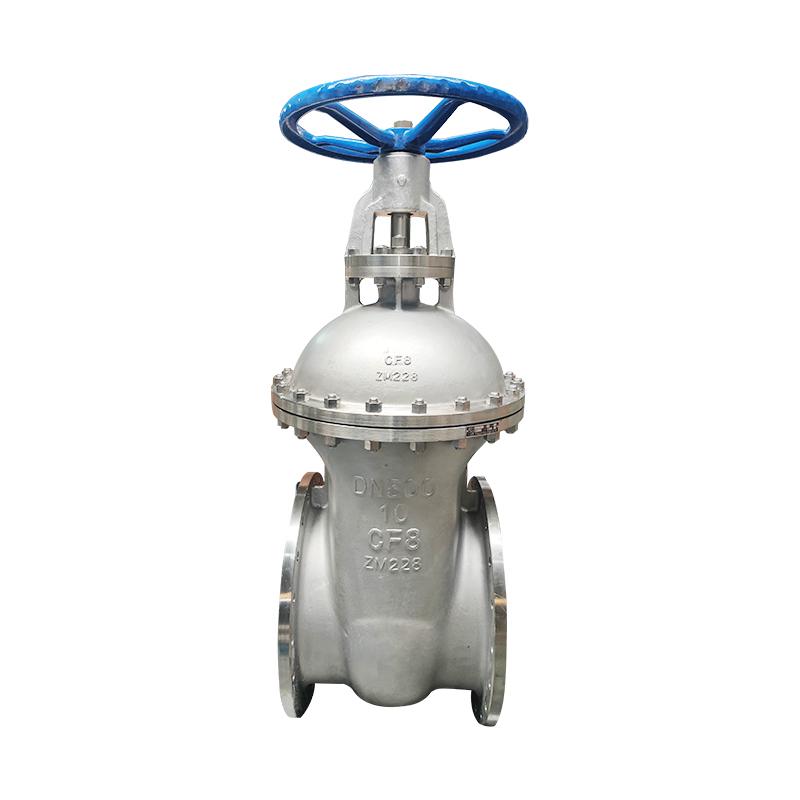
Most technicians assume gate valves fail because of friction wear on the sealing faces, but that’s only part of the story. In the field, we see a striking pattern: nearly 80% of failures trace back to a single miss—incorrect stem packing adjustment. When the packing is overtightened during assembly, it puts constant axial load on the stem, leading to galling and seizing. Undertightening, on the other hand, invites leakage and corrosion migration down the threads. Either way, the stem binds or loses integrity long before the seats show significant wear.
This detail gets overlooked because the symptoms—stiff operation, uneven torque, minor drips—are often dismissed as “normal aging.” Maintenance crews lubricate the stem without ever checking the packing nut torque spec. Factory instructions might mention it in passing, buried in a footnote. Without a torque wrench and a feel for the right friction, even experienced hands tend to crank the gland until “it feels tight enough,” setting the valve on a path to early failure.
The fix is embarrassingly simple: use a calibrated torque wrench and follow the manufacturer’s running torque guidelines during installation and after any overhaul. A routine check every six months—just backing off the nut half a turn and re-tightening to spec—can add years to valve life. It’s not about expensive upgrades; it’s about respecting a small adjustment that quietly determines whether the valve cycles smoothly for a decade or seizes within a year.
Why the Best Manufacturers Won’t Sell You a Valve Without These Test Reports
Top-tier valve manufacturers treat test reports as an extension of the product itself, not a bureaucratic afterthought. When they refuse to ship a valve without the proper documentation, it's a sign that their engineering rigor extends beyond the factory floor. The reports capture real-world performance—how the valve holds up under pressure spikes, whether seals remain tight after thousands of cycles, and that the materials won't degrade prematurely. For them, handing over a valve without these verifications would be like selling a car without an engine test; the hardware might look right, but you have no proof it actually works.
These documents aren't generic datasheets—they're tailored to specific valves and batches. A credible manufacturer will include pressure integrity tests, leakage verification under both cold and hot conditions, and certifications that confirm the metal chemistry matches what was ordered. You might see hydrostatic test curves, helium leak detection traces, or ultrasonic thickness readings. This level of detail ensures that what lands in your facility isn't going to surprise you during commissioning. Without these reports, you're gambling on statistical quality rather than confirmed performance, and that gamble can quickly turn into unplanned downtime or safety incidents.
The best manufacturers don't see the request for test reports as a hurdle; they treat it as the baseline. They've built their reputation on transparency, and they're well aware that a single undocumented valve failure can unravel decades of trust. That's why they'd sooner walk away from a buyer who insists on skipping documentation. They're not just selling a chunk of metal—they're selling the certainty that the valve will behave as expected when it matters most.
Navigating the Maze of Materials: When Stainless Steel Isn’t Enough
Stainless steel often gets the spotlight for its corrosion resistance and sleek look, but it can quickly become a liability in environments where chlorides, extreme temperatures, or abrasive chemicals are present. For instance, in marine settings or swimming pools, the salt-laden air can trigger pitting corrosion that stainless simply can't withstand. Engineers then turn to duplex alloys, titanium, or even high-performance polymers, each offering a distinct balance of durability and cost that sidesteps stainless steel's hidden vulnerabilities.
Choosing the right alternative requires a clear-eyed assessment of the operating environment. If weight is a concern, aluminum might shine, but it brings galvanic corrosion risks when paired with other metals. Nickel-based superalloys excel in furnace components, though they demand a premium price. The real skill lies in mapping out the specific stressors—mechanical, thermal, chemical—and matching them to a material that thrives in that exact maze, rather than defaulting to the familiar stainless solution.
How Small-Batch Specialists Outperform Global Giants in Critical Applications
In industries where failure is not an option, the ability to tailor components to exact specifications often separates success from disaster. Large manufacturers, bound by mass-production workflows and standardized customer profiles, struggle to deviate from established designs. Small-batch specialists, by contrast, thrive on deep collaboration with engineers and end-users, iterating quickly without bureaucratic delays. This hands-on approach ensures that every part reflects the unique demands of high-stakes environments—be it a surgical device or a satellite component.
Speed and flexibility are not just buzzwords for boutique manufacturers; they are survival traits. When a defense contractor needs a custom fastener that can withstand extreme temperatures, a global giant might quote months-long lead times and minimum order quantities that far exceed the project’s scope. A niche workshop, however, can reconfigure its shop floor overnight, sourcing alternative materials and adjusting tolerances in real time. This agility stems from flat hierarchies and a craftsman’s mindset, where everyone from the machinist to the CEO understands the urgency of the application.
Moreover, the quality control in small-batch production often surpasses that of high-volume lines because each piece undergoes meticulous inspection. In critical applications—like aerospace or medical implants—a single flaw can have catastrophic consequences. Small shops build their reputation on zero-defect deliveries, leveraging institutional knowledge that gets diluted in larger organizations. The result is a level of trust and reliability that procurement managers in safety-critical sectors are willing to pay a premium for, knowing that the provider’s entire business model hinges on perfection.
Your Buying Timeline: Why Wait Times Reveal More About Quality Than Spec Sheets
When you’re caught between two similar products, the spec sheet rarely tells the whole story. Look instead at how long you’ll have to wait. A builder who’s booked months in advance isn’t just popular—they’re likely producing something that can’t be rushed. Premium materials, hand-finished details, and real quality control eat up time in ways a bullet-point list of features never shows.
Long lead times often signal a product made in small batches or to order, not mass-produced leftovers sitting on a shelf. That matters more than a spec that checks every box. A workshop that paces itself is one that cares about tolerances, curing times, and proper assembly. The waiting list becomes proof that previous buyers found enough value to recommend it to others, long after the initial purchase thrill wore off.
Use that timeline as a filter. If you can’t get it tomorrow, ask why. The answer might reveal the difference between a product built to last and one built to impress on launch day. In a world of instant gratification, patiently waiting for something that’s truly worth it is a quiet vote for craftsmanship over compromise.
FAQ
Look for a manufacturer with a proven track record in your industry, certifications like ISO 9001 or API 600, and the ability to provide material test reports. Check if they offer a wide range of sizes and pressure classes, as well as customization options for seat and trim materials. After-sales support, warranty terms, and lead times also matter just as much as the initial price.
Rising stem valves show visible position indication, which is helpful for quick status checks, and they keep the stem threads out of the fluid, reducing corrosion. Non-rising stem designs save vertical space, making them ideal for underground or tight installations. Choose based on space constraints and whether you need external visual confirmation of the valve position.
Stainless steel grades like 316 or duplex stainless are common for moderate corrosion. For harsh chemicals, consider Hastelloy, Monel, or titanium. In seawater applications, bronze or super duplex stainless steel often perform well. Always match the body, disc, and seat materials to the specific media and temperature range; never assume one material fits all.
Velan, Powell, and Bonney Forge have strong reputations in critical high-pressure services. Tyco (now part of Emerson) and Kitz are widely used in oil and gas. For water and wastewater, Mueller and AVK are trusted. Cameron and Circor are go-to names for severe service. Regional manufacturers like Böhmer (Europe) or ZECO (Asia) also deliver reliable quality at competitive prices when properly vetted.
Request material traceability certificates and hydrostatic test reports. If possible, witness the shell and seat leakage tests at the factory. Look for third-party certifications like API 624 for fugitive emissions or SIL ratings for safety applications. A reputable manufacturer will share their quality control procedures openly, including non-destructive testing methods used on castings.
Gate valves are ideal for on/off isolation in full-flow lines, like main water supply pipes, oil trunk lines, and high-temperature steam systems. They cause minimal pressure drop when fully open. They're not recommended for throttling, but they excel in applications requiring infrequent operation, such as tank isolation, bypass lines, and emergency shutoff stations.
API 600 and ASME B16.34 are the baseline for steel gate valves in refineries and pipelines. For waterworks, AWWA C500 and C509 are key. Fire-safe certification per API 6FA or ISO 10497 is critical for hydrocarbon service. In Europe, EN 12288 applies to surgical and industrial settings. Always confirm which standard your specific service requires and insist on third-party verification.
Conclusion
When you’re sourcing gate valves for systems where downtime isn’t an option, the gulf between a commodity valve and one built to last decades comes into sharp focus. It’s rarely about what’s printed on a glossy cut sheet; the real differentiators live in details most buyers overlook. The raw fact is that nearly 80% of failures trace back to a single, neglected area: assembly-level quality control and the absence of verified testing. Top manufacturers won’t ship a valve without hydrostatic, pneumatic, and fugitive emissions test reports—not because customers demand paperwork, but because these documents are the only tangible proof that the valve won’t drift out of spec after months in service. That commitment turns a transaction into a partnership and filters out suppliers who treat gate valves as interchangeable widgets.
Beyond testing, the conversation quickly shifts to materials—and the mistake of assuming stainless steel solves every problem. In many corrosive, high-temperature, or high-pressure environments, even 316 stainless gives out prematurely, forcing you into duplex, Inconel, or titanium. A knowledgeable manufacturer doesn’t just take your order; they interrogate your process conditions to prevent a costly mismatch. Then there’s the quiet advantage of smaller, specialized fabricators: for cryogenic, ultra-high-purity, or other critical applications, their focused engineering routinely outperforms the mass-output giants who optimize for volume over nuance. Interestingly, lead times often tell you more than a data sheet ever could. A four-month wait often reflects custom engineering, rigorous testing, and craftsmanship that a fast-tracked assembly line can’t replicate. Ultimately, the best gate valve manufacturer isn’t the one with the biggest catalog, but the one that proves, through documentation, material mastery, and a willingness to take time, that their product will still be holding a tight seal long after the invoice is forgotten.
Contact Us
Contact Person: Lucas Lin
Email: [email protected]
Tel/WhatsApp: 8613968913000
Website: https://www.zhengmaogroup.com