

Best Lauryl Alcohol Ethoxylate: Top Choices for Superior Surfactant Performance
2026-09-01
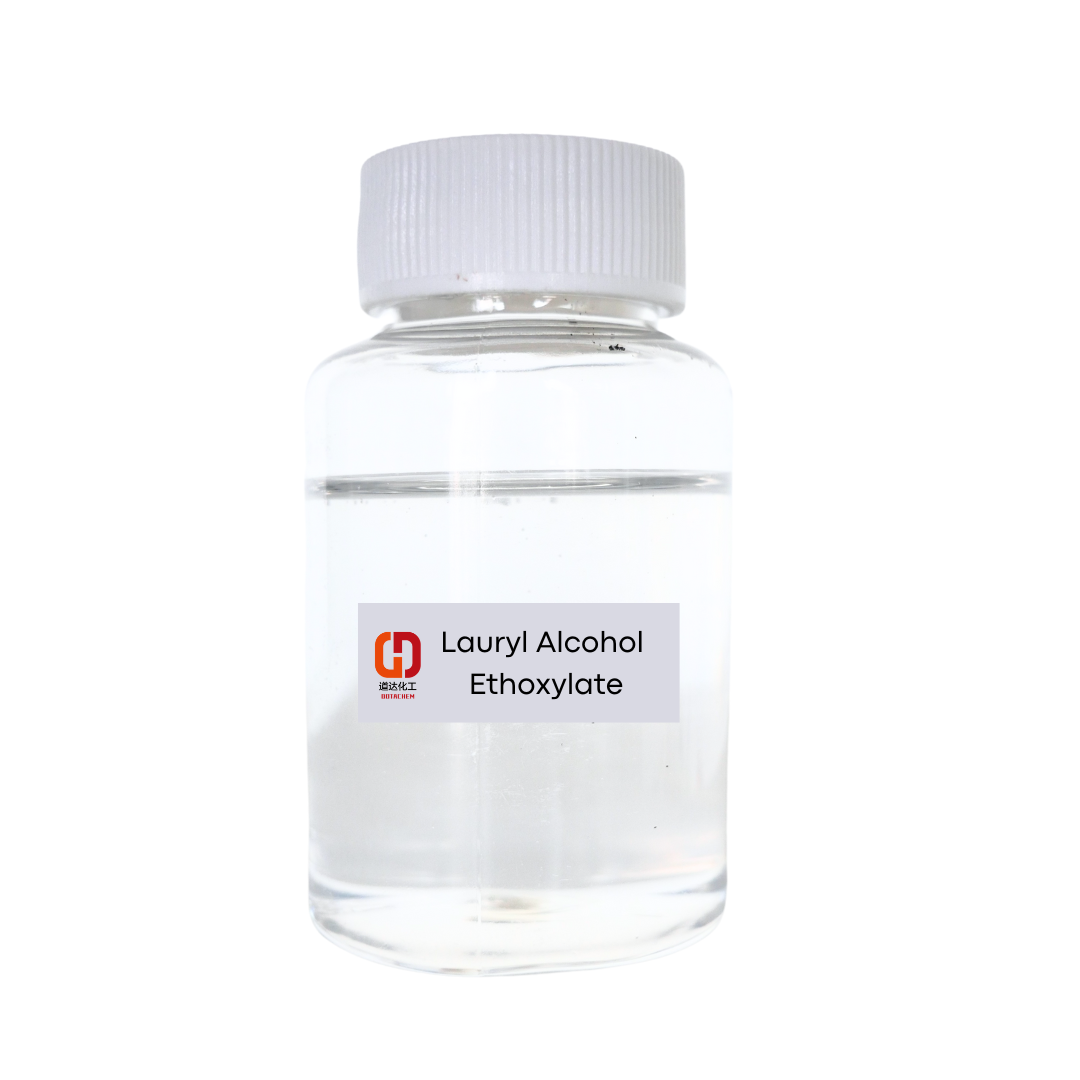
Finding the right lauryl alcohol ethoxylate can be the difference between a formulation that just works and one that truly excels. Whether you're developing household cleaners, personal care products, or industrial degreasers, surfactant performance hinges on consistency, cloud point, and emulsifying power. But with so many suppliers claiming top-tier quality, how do you separate genuine performance from marketing noise? In this guide, we cut through the clutter and spotlight the top choices that consistently outperform the rest. One name that keeps surfacing in rigorous evaluations is POLYKEM, a supplier known for dependable ethoxylates tailored to demanding applications. Here's what sets the best apart—and why your next formulation might depend on it.
Beyond Basic Detergency: Where Lauryl Alcohol Ethoxylate Earns Its Keep
Most formulators know lauryl alcohol ethoxylate as a workhorse surfactant in laundry powders and dish liquids, but its real story starts where ordinary cleaning ends. In hard-surface care, it quietly solves a problem few ingredients handle well: removing greasy films without leaving a visible residue. A dilute solution on stainless steel or glass lifts oily fingerprints and polymerized cooking spatter at concentrations that would make nonionics with higher HLB values simply bead up. That balance of low foam and fast wetting is why maintenance teams favor it for touchless cleaning systems in commercial kitchens and food plants.
Outside cleaning, the molecule becomes a surprisingly effective process aid. Textile scouring baths use it to pull spinning lubricants out of polyester and nylon before dyeing, improving color yield without altering fabric hand. In agrochemical formulations, it acts as a low-foam adjuvant that helps herbicides spread across waxy leaf surfaces, boosting uptake while minimizing drift. Even metalworking fluids benefit: the ethoxylate stabilizes oil-in-water emulsions under high shear, reducing tramp oil buildup and extending sump life in ways that shorter-chain alcohols cannot match.
The differentiator is tunable ethoxylation. By shifting from 3 to 9 moles of EO, a formulator moves from emulsifying crude oil in demulsifier packages to wetting concrete in dust-suppression sprays. That versatility keeps lauryl alcohol ethoxylate relevant where commodity surfactants plateau—whether it is rinsing calcium stearate from recycled plastic flake or dispersing carbon black in waterborne coatings. The value lies not in being the strongest cleaner, but in being the one that performs predictably when foam, residue, and compatibility constraints leave no room for compromise.
Reading a Technical Data Sheet Like a Formulator, Not a Beginner
Most people skim a technical data sheet the way they read a nutrition label—checking one or two bold numbers and moving on. A formulator reads it like a detective walking through a crime scene. Start with the test methods, not the headline values. A viscosity of 4,000 cps means nothing until you know whether it was measured on a Brookfield RV at 20 rpm or a cone-and-plate at 10, because the geometry and shear rate change the story entirely. Look for the footnotes; they often hide the real performance limits, like temperature ranges where the data is extrapolated rather than measured.
Then scan for what’s missing. A data sheet that lists tensile strength but not elongation at break is telling you the material is stiff but perhaps brittle. A formulator compares the claimed values against the typical variance for that chemistry—does a 5% difference in solids content matter for your process, or is it within batch-to-batch noise? Also check the date of the sheet. Older revisions may reflect raw material sources that have since changed; the supplier’s current production reality rarely matches a three-year-old PDF.
Finally, translate the numbers into your formula’s context. Don’t ask “Is this thickener good?” Ask “At a 0.3% use level in a pH 6.5 emulsion with 20% oil, will it hold a 50°C stability test for four weeks?” That means pulling out the rheology curve, not the single viscosity point, and checking the salt tolerance or surfactant compatibility notes. Read the data sheet as a hypothesis to be tested in your lab, not a certificate of performance. That’s the shift from beginner to formulator.
The Chain Length and Ethoxylation Sweet Spot for Hard Surface Cleaning
Most formulators eventually land on the same realization: not all alcohol ethoxylates behave the same on greasy countertops or scuffed floors. The chain length sets the baseline for how well a surfactant can wedge itself into oily soils, while the degree of ethoxylation fine-tunes the balance between speed and residue. Get either one wrong, and you end up with a product that either smears the dirt around or leaves behind a faint, sticky film that attracts more grime.
For typical hard surfaces, a sweet spot tends to emerge around C9 to C11 alcohol chains paired with roughly 6 to 8 moles of ethylene oxide. Too short a chain and the molecule lacks the hydrophobic grip to lift heavier deposits. Too long, and it becomes sluggish in cold water or overly prone to gelling. Likewise, very low ethoxylation gives you fast wetting but poor solubility in hard water, while very high ethoxylation rinses cleanly but slows down the actual cleaning action.
That said, the real sweet spot isn’t a single point—it shifts with the soil type and the surface material. A degreaser for stainless steel might lean toward a slightly longer chain and lower EO count to cut through polymerized oils, whereas a daily cleaner for sealed stone or glass benefits from a shorter chain and a bit more ethoxylation for streak-free drying. Testing across a range of soils and water hardness levels is the only way to confirm where your formula actually sits on that curve.
When Cheaper Grades Backfire: Stability and Gelation Risks
Switching to a cheaper grade of a rheology modifier or emulsion stabilizer often looks like an easy win on the cost sheet, but the savings can evaporate quickly once the batch history starts to diverge. Lower-priced materials frequently carry broader molecular weight distributions, higher ash content, or residual monomers that are not caught by a standard certificate of analysis. These impurities can act as nucleation sites or slowly react with other components, leading to viscosity drift, phase separation, or a steady drop in pH during shelf life. The result is a product that passes initial release testing but fails stability protocols weeks later, eroding both margin and customer trust.
Gelation is a particularly deceptive failure mode because it often appears only after the formulation has experienced a few temperature cycles or a shift in ionic environment. Cheaper polymer grades may contain small amounts of high-molecular-weight fractions or unintended crosslinking agents left over from less tightly controlled manufacturing. Under mild stress, these fractions can bridge between particles or chains, creating a three-dimensional network that turns a free-flowing liquid into a semi-solid gel. Once this network forms, it is rarely reversible by simple mixing, and the batch must be scrapped or reworked at significant expense.
Long-term stability tests on formulations built with lower-cost raw materials frequently reveal problems that a single viscosity reading cannot predict. A gel that forms after six months on a warehouse shelf in a warm climate, or a cream that separates after three freeze-thaw cycles, is far more expensive than the per-kilogram savings from the cheaper grade. For that reason, many formulators now run accelerated stress panels not only on the finished product but also on each incoming lot of critical ingredients, using rheological fingerprinting and particle size analysis to catch lot-to-lot variability before it reaches production.
Formulation Tricks for Low-Foam and High-Temperature Applications
High-temperature systems tend to amplify foam because lower viscosity and reduced surface tension let bubbles form quickly, yet many defoamers lose their punch when heat breaks down their carrier oils or causes them to solubilize into the surfactant phase. One trick that keeps working past 80°C is to lean on nonionic surfactants with a cloud point slightly below your operating temperature. Once the surfactant comes out of solution, it stops stabilizing foam and even acts as a built-in antifoam. Pairing this with an EO/PO block copolymer that has a high PO content can further drop foam persistence without sacrificing wetting at temperature.
For persistent microfoam in hot alkaline or high-shear conditions, the usual silicone defoamers can fail because they either coalesce too fast or get sheared apart. A more robust route is to use a high-molecular-weight polyacrylate or a branched siloxane with a viscosity above 100,000 cSt, pre-dispersed in a polyglycol carrier. Pre-wetting the defoamer with a small amount of glycol ether before adding it to the batch helps it survive thermal shock and spread more evenly. Another useful move is to add a hydrophobic silica with a BET surface area around 200 m²/g, but only after the base formula has cooled below 50°C to avoid clumping.
Sometimes the foam source is not the surfactant but the coupling agent or hydrotrope. Switching from a short-chain sodium xylene sulfonate to a longer-chain phosphate ester or an amphoteric hydrotrope can reduce foam by lowering the critical packing parameter of the micelles, especially in hot caustic solutions. It also helps to buffer the system so the pH stays within a narrow band, because even half a pH unit can shift the defoamer from surface-active to solubilized. Finally, testing foam height after one hour at temperature, rather than just at startup, gives a much better read on whether the formulation will hold up in continuous high-temperature service.
Matching Your Water Hardness and pH to the Right Ethoxylate
Field water is rarely as clean as the lab sample. Calcium and magnesium shift the effective cloud point of an ethoxylate, sometimes enough to turn a clear concentrate hazy after a 1:10 dilution. Run a quick titration against the actual supply water before locking in the EO chain length; the extra five minutes beats reformulating later.
Acidic and alkaline systems interact differently with ethoxylates, and pH drift during storage matters more than the initial reading. A low-pH metal cleaner may demand a shorter-chain ethoxylate with a lower cloud point, while a high-alkaline degreaser often tolerates longer EO tails. Adjust the water pH first, then add the surfactant, and watch for haze at the working temperature, not just at room temperature.
Hard water doesn't automatically call for the highest EO grade. Higher ethylene oxide content improves hard-water solubility but raises the cloud point, which can cause trouble in heated spray washes. Match the EO moles to both the water hardness and the intended operating temperature, then confirm with a simple cloud-point measurement on the final diluted product. That step catches compatibility problems that a data sheet never will.
FAQ
It offers a tunable HLB range depending on ethylene oxide moles, giving formulators precise control over emulsification, wetting, and detergency. Compared to other alcohol ethoxylates, the C12 chain length hits a sweet spot for foam profile and hard-surface cleaning without leaving heavy residue.
Lauryl alcohol with 7 moles of EO (LAE-7) often leads in heavy-duty degreasing. Its HLB around 12.2 ensures strong oil solubilization while maintaining rinseability. Tomamine AO-14 or Lutensol AO7 are commercial examples, but exact choice depends on solvent coupling needs.
Match EO number to your target HLB and application. Lower moles (3-5 EO) work for water-in-oil emulsions and low-foaming cleaners; mid-range (6-8 EO) suits laundry and hard-surface cleaning; higher moles (9-12 EO) provide better solubility in high-electrolyte systems.
Yes, LAE-3 or LAE-4.5 with cloud points below typical wash temperatures act as defoamers while still contributing to soil removal. They pair well with nonionic-cationic blends to control foam without sacrificing protein soil detergency.
In shampoos and body washes, it functions as a secondary surfactant to boost viscosity response and reduce irritation potential of primary anionics. LAE-2 or LAE-3 are common choices for fragrance solubilization and mild cleansing.
Yes, but pick a higher EO chain like LAE-15 or LAE-20 for cloud points above 100°C. These remain soluble and effective as wetting agents and emulsifiers in scouring and dyeing baths, preventing dye spotting.
Lauryl-based (C12-C14) variants provide sharper phase boundaries and more predictable gel ranges. Broad-cut versions like C12-C15 may offer slight cost advantage but often show batch-to-batch variation in pour point and detergency.
Keep in closed, dry containers at 15-30°C. Avoid prolonged exposure to air and direct sunlight to prevent peroxide formation. Low-mole products can become hazy at lower temperatures; gentle warming restores clarity without affecting performance.
Conclusion
The best lauryl alcohol ethoxylate is not simply the one with the strongest degreasing numbers on a spec sheet. Experienced formulators look past basic detergency to how the surfactant behaves in the exact conditions where it will be used. Reading a technical data sheet properly means checking more than HLB or cloud point: you want tight active content, low free alcohol, a narrow ethylene oxide distribution, and clear data on gel ranges and viscosity peaks. For hard surface cleaning, a C12–C14 hydrophobe with roughly 5 to 9 moles of EO usually hits the sweet spot—enough penetration and wetting to lift oily soils without leaving a tacky film. But that window shifts fast if your water hardness or working pH is outside the usual range. Hard water with high calcium or magnesium demands a few extra moles of EO or a more hydrophilic grade to avoid clouding, precipitation, and loss of cleaning power.
Cheaper grades often backfire in real formulations. They may carry wider ethoxylation distributions, higher residual alcohol, or inconsistent batch-to-batch gel boundaries, which leads to unexpected thickening, separation, or poor rinsing. In low-foam and high-temperature applications, the right choice is often a narrow-range ethoxylate, a lightly end-capped product, or a blend with a short-chain co-surfactant to suppress foam without killing hard-surface wetting. Matching the ethoxylate to your water hardness and pH is not a minor detail; it separates a robust, shelf-stable cleaner from one that hazes or loses performance on the job. The top choices are rarely the cheapest drums on the quote sheet. They are the grades with reproducible technical data, predictable gelation behavior, and enough flexibility to handle your local water and temperature swings while still delivering superior surfactant performance where it counts.
Contact Us
Contact Person: Levi
Email: [email protected]
Tel/WhatsApp: +86 532 84688720
Website: https://www.polykem-intl.com