

Best N52 Magnet: Powerful Neodymium Options for High-Performance Applications
2026-08-20
When a design calls for maximum magnetic force in a minimal footprint, N52 neodymium magnets are usually the first choice. But not every N52 on the market delivers the same field strength, coating durability, or temperature resistance. Before you commit to a supplier, it's worth looking past the grade label. In this article, we compare what truly separates high-performance N52 options — and why DAWA has become a go-to source for engineers who can't afford magnetic compromises.
Reading N52 Specs: Pull Force, Gauss, and Coercivity Explained
Pull force is the number most ads lean on, but it's measured under conditions you'll rarely see in a finished design. The test uses a thick, flat steel plate, a clean surface, and a perpendicular lift at room temperature. Slide the magnet, grip a painted or plated surface, or let it get warm, and the real force shrinks—sometimes by half. Read that spec as a best-case ceiling, not a promise.
Gauss tells you how strong the magnetic field is right at the surface of the magnet, and it depends heavily on geometry. A thin N52 disc might read 4,500 gauss at its face, while a taller cylinder or a steel-backed pot magnet can push past 6,000. Because gauss falls off sharply with distance, this number is more useful for comparing shapes than for judging how much weight a magnet will hold across an air gap.
Coercivity is the spec that keeps the other two honest over time. N52 has the highest energy product of the common grades, but its coercivity sits lower than N42 or N48, meaning heat and opposing fields chip away at its magnetization faster. If your part runs above roughly 80°C or sits near a coil, check the intrinsic coercivity (Hci) on the datasheet. Otherwise, an N52 can become a mediocre N35 after a few hot cycles.
N52 vs. N42: When Does the Extra Pull Force Justify the Higher Price?
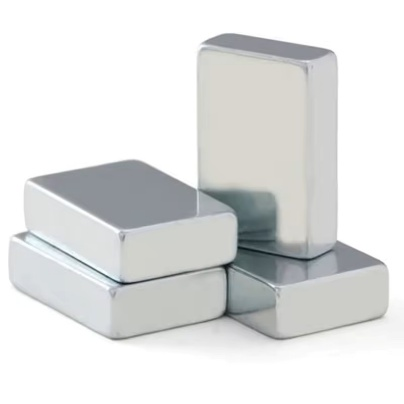
When you stack N52 against N42, the headline difference is pull force. A magnet's grade reflects its maximum energy product, and N52's higher number means it can pack more magnetic punch into the same physical size. In practical terms, N52 typically delivers around 15-20% more holding force than an identically shaped N42 magnet. That gap widens or narrows depending on geometry, air gap, and steel thickness, but it's the core reason some buyers reach for the premium grade.
The extra cost makes sense when you're fighting for every millimetre of space. If a design already uses the largest magnet that fits and still needs more grip, switching from N42 to N52 is often cheaper and easier than redesigning the housing. The same logic applies to weight-sensitive applications like drones, portable tools, or wearable closures, where a smaller N52 can match the force of a bulkier N42 and shave grams off the final product.
On the flip side, if your assembly has room to spare and the N42 already holds with a healthy safety margin, paying more for N52 rarely pays off. Many industrial fixtures, jigs, and DIY projects run for years on N42 without issue. A quick bench test with the actual mating surfaces will tell you more than any spec sheet, but as a rule of thumb, step up to N52 only when the pull force numbers actually limit your design.
Shape Matters: Discs, Blocks, Rings, and Spheres for Tight Spaces and Heavy Loads
In cramped assemblies, disc-shaped components often serve as the quiet workhorses. Their low profile allows them to slip beneath rotating shafts or into shallow recesses where taller forms would collide. When a heavy axial load must be spread across a narrow annulus, a disc distributes pressure more evenly than a square block of similar footprint, reducing localized stress at the edges.
Blocks and rings solve a different set of problems. A rectangular block resists tipping under lateral force and stacks neatly for multi-axis alignment, making it a practical choice for machine bases and linear guides. Rings, on the other hand, remove central mass where it contributes little, leaving a strong hoop that handles radial compression or acts as a spacer around a shaft without adding unnecessary bulk.
Spheres earn their place when misalignment and multidirectional load paths cannot be ignored. A spherical contact surface allows rotation in any direction, preventing edge loading on bearings and joints. Though they occupy more vertical space than discs, their ability to self-center under heavy, shifting loads makes them indispensable in compact steering linkages and articulating mounts.
The Heat Problem: Temperature Limits and Demagnetization Risks for N52
Neodymium magnets labeled N52 pack the highest energy density of any commercially available grade, but this performance comes with a strict thermal ceiling. Unlike lower grades such as N35 or N42, N52 magnets typically begin losing permanent strength when exposed to temperatures above 60–80°C, depending on the specific geometry and coating. Once the operating point crosses the knee of the demagnetization curve, the magnetic domains start to flip irreversibly, and the loss cannot be recovered even after cooling back to room temperature.
This sensitivity stems from the material's relatively low intrinsic coercivity, which drops rapidly as heat rises. In practical terms, an N52 disc magnet inside a motor housing or a sensor bracket can see localized temperatures spike well beyond ambient, especially under continuous load or near heat sources. Engineers who overlook this often discover that a magnet that tested fine on a bench loses a noticeable fraction of its pull force after just a few thermal cycles.
To mitigate the risk, designers either derate the magnetic circuit or switch to high-temperature grades like N48SH or N42UH, which sacrifice some room-temperature strength for far better stability at 150°C and above. For any application where N52 is being considered, it is critical to map the actual hot-spot temperature, not just the ambient rating, and to test the assembly at full operating temperature before committing to production.
Coatings That Last: Nickel, Zinc, Epoxy, and Gold for Corrosive Environments
When metal parts face constant exposure to moisture, salt, or industrial chemicals, the right coating can mean the difference between a decade of service and a costly failure in months. Nickel plating offers a hard, wear-resistant shield that stands up to both corrosion and friction, making it a go-to for valves and hydraulic components. Zinc, on the other hand, takes a sacrificial approach: it corrodes before the steel beneath it, acting as a quiet guardian for fasteners and outdoor structures.
Epoxy coatings bring a different kind of strength—thick, chemical-resistant barriers that seal out water and acids. They bond tightly to prepared surfaces, which is why pipelines, storage tanks, and marine equipment often rely on them. Gold, though rarely chosen for bulk protection, earns its place in electronics and precision contacts where even microscopic corrosion can break a circuit. Its stability under harsh conditions keeps connections clean and conductive.
Choosing among these four isn’t just about corrosion resistance; it’s about matching the coating’s behavior to the specific wear, temperature, and electrical demands of the environment. A zinc-coated bolt outdoors will look different from a gold-plated connector in a humid factory, but each survives because the coating was matched to the threat.
Handling Strong Magnets Safely: Pinch Injuries, Pacemakers, and Storage
The most immediate risk with strong magnets is not always obvious until it happens. Two magnets can jump toward each other across a gap and clamp down on whatever is between them—often a fingertip or a fold of skin. The resulting pinch can break the skin or cause a blood blister, so it's wise to handle only one magnet at a time and keep your other hand clear of the closing path.
Anyone with a pacemaker, insulin pump, or implanted defibrillator should stay well away from strong magnets. The field can interfere with how these devices sense heart rhythms or deliver therapy, sometimes without any visible warning. A safe rule is to maintain at least an arm's length of distance and never carry a strong magnet in a shirt or trouser pocket near the implant site.
Storing strong magnets takes a bit more thought than tossing them in a drawer. Separate them with non-magnetic spacers, keep them in a clearly marked container, and place that container away from electronics, credit cards, and anything sensitive to magnetic fields. If a stack becomes difficult to separate, slide them apart on a non-metal surface rather than prying with your fingers or using a steel tool.
FAQ
N52 is the strongest commercially available grade, with a maximum energy product around 52 MGOe. That translates to more holding force in a smaller footprint, which matters when space is tight and every millimeter counts.
You'll find them in brushless motors, magnetic couplings, sensors, high-end audio drivers, and compact actuators. If the design calls for maximum flux density in a minimal volume, N52 is usually worth it.
Standard N52 has a maximum operating temperature around 80°C. Above that, it begins to lose strength—sometimes permanently. For hotter environments, look for N52M, N52H, or N52SH variants that push the limit to 100°C, 120°C, or 150°C respectively.
Nickel-copper-nickel is the default and works fine indoors. For marine or humid settings, epoxy, plastic, or even gold plating offers better corrosion resistance. The neodymium core is highly reactive, so any scratch in the coating invites oxidation.
They demand respect. Two large N52 magnets can slam together hard enough to shatter or pinch skin badly. Keep them away from pacemakers, credit cards, and electronics. Use spacers and gloves when separating stacked discs or blocks.
It depends on the air gap. For direct contact with a flat steel surface, a disc or block with a large pole area works best. For long-distance attraction, a taller cylinder or a pot magnet concentrates flux further out, but you sacrifice some surface contact force.
Calculate the required pull force first. Many fixtures work fine with N35 or N42, which are cheaper and easier to source. If you need the highest force in a constrained space—like a hidden cabinet latch or a compact jig—N52 saves you from upsizing the magnet.
Yes. Repeated mechanical contact can wear through nickel plating and expose the neodymium core. For sliding or impact surfaces, consider a magnet with a rubber or epoxy coating, or design the assembly so the magnet is recessed behind a wear-resistant layer.
Conclusion
When high-performance applications demand the strongest permanent magnets available, N52 neodymium sits at the top. But raw pull force isn't the whole story—reading the specs means looking beyond a single number. Gauss tells you surface field strength, while coercivity reveals how well the magnet resists losing its charge. Compared to N42, N52 often delivers noticeably more grip in compact designs, but that upgrade only makes sense where space and weight are tight enough to justify the higher cost. For many heavy-load or tight-clearance jobs, shape becomes the real differentiator: thin discs concentrate force at the center, blocks spread it along a face, rings handle axial loads, and spheres suit specialized positioning tasks.
N52 also demands respect for its limits. Heat is the most common failure point—above roughly 80°C, standard N52 begins to lose strength permanently unless you opt for high-temperature grades. In corrosive or wet environments, bare neodymium will rust quickly, so choosing the right coating (nickel for general use, zinc or epoxy for moisture, gold for medical or decorative needs) extends service life. And because these magnets can snap together with surprising speed, safe handling is not optional: keep them away from pacemakers, store them with spacers, and never let fingers get between two attracting pieces. The best N52 magnet is not simply the strongest one on paper; it is the one matched carefully to the temperature, geometry, coating, and safety demands of your application.
Contact Us
Contact Person: Kelvin Lo
Email: [email protected]
Tel/WhatsApp: 0769-88561131
Website: https://dawamagnetic.com/