

Best Solar Portable System for Reliable Off-Grid Power
2026-10-31
Finding the best solar portable system for reliable off-grid power isn't a spec-sheet contest. It's about whether your gear wakes up when you need it—after a storm, on a remote trail, or during a blackout. Most kits fail quietly. The ones we trust don't. Below, we break down what separates dependable systems from the rest, and why SRS keeps showing up in our shortlist.
The Battery Spec That Actually Predicts Off-Grid Reliability
Capacity ratings and peak power numbers look impressive on paper, but they rarely tell you how a battery will hold up when the grid is gone for weeks. Off-grid reliability hinges on a less glamorous spec: cycle life at a specific depth of discharge. This figure—often buried in the fine print—reveals how many times a battery can be drained to, say, 80% of its rated capacity and still bounce back without losing meaningful storage. A 10 kWh pack rated for 4,000 cycles at 80% DoD will outlast a 12 kWh pack rated for 1,500 cycles at the same depth, even though the smaller unit seems inferior at first glance.
What makes this particular spec so predictive is that it captures degradation under the exact stress patterns common in off-grid setups. Grid-tied batteries rarely dip below 20% state of charge, but off-grid systems routinely cycle between 30% and 90% as solar input fluctuates. A manufacturer that tests and certifies cycle life at 80% DoD—rather than the industry-standard 50% or 60%—is essentially proving the battery can survive the roller-coaster of real-world autonomy. Pair that with a low self-discharge rate below 3% per month, and you have a unit that won't quietly bleed itself dry between cloudy stretches.
The practical payoff becomes obvious during extended outages. Take two batteries with identical 200 amp-hour ratings: one shows 2,000 cycles at 50% DoD, the other 3,500 cycles at 80% DoD. After three years of daily cycling, the first will have lost roughly 15% of its usable capacity, while the second stays above 90%. For a cabin or remote water pump, that difference means replacing the battery bank in year four versus year seven. So when comparing spec sheets, skip the headline numbers and go straight for the do-not-exceed depth and its paired cycle count—that's where the real off-grid story lives.
Why Most 'Portable' Solar Kits Struggle After One Cloudy Day
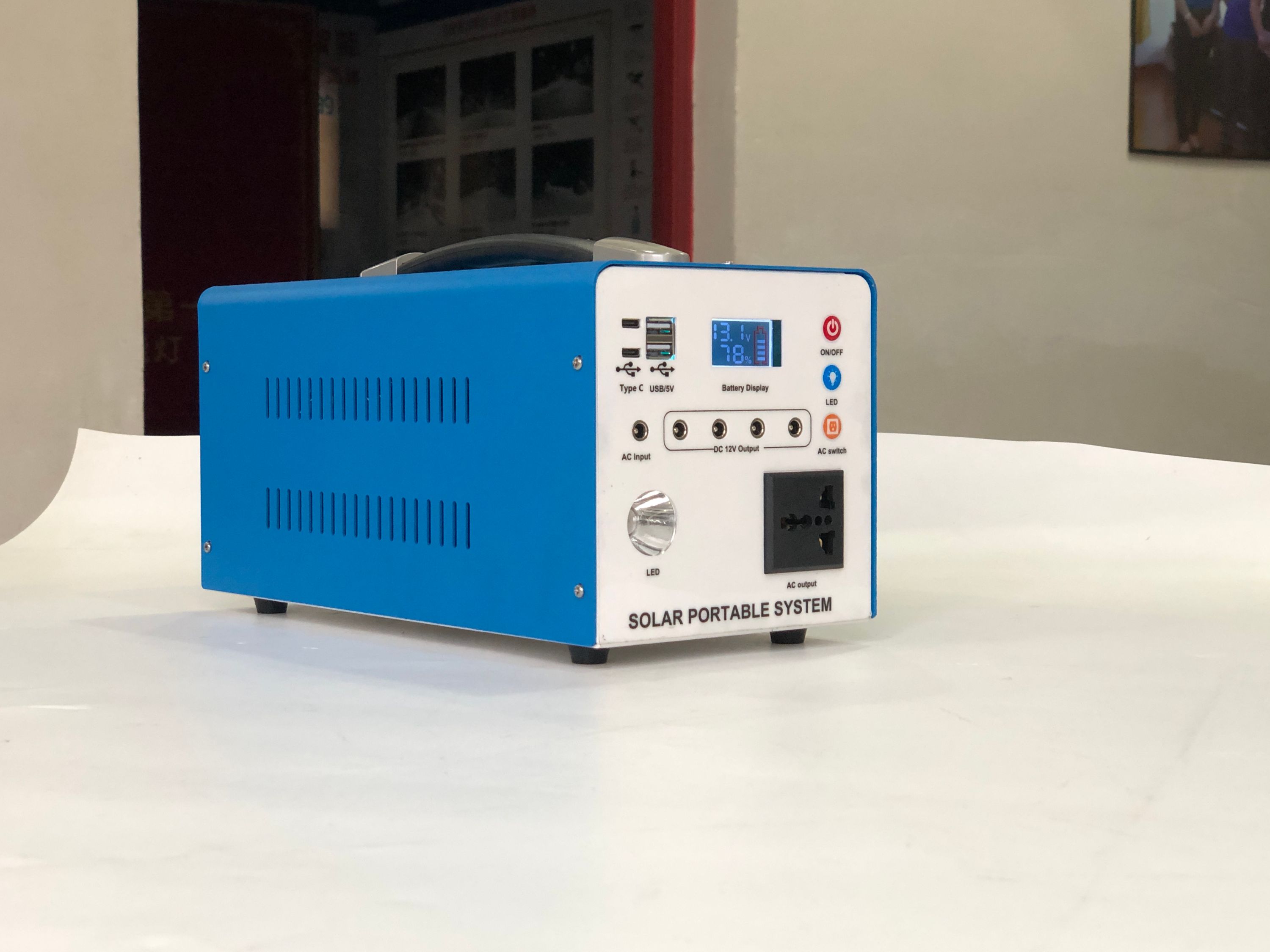
A single overcast afternoon shouldn't turn a portable power station into a paperweight, but that's exactly what many users discover when the sun disappears for a day. The problem isn't just the panel—it's the whole math behind the kit. Most compact solar kits pair a modest panel with a battery that's sized for a few hours of light use under clear skies. When clouds roll in, the panel's output can drop to 10-20% of its rated wattage, and the battery never gets the charge it needs to make it through the next night.
The charge controller is often the silent culprit. Cheap portable kits rely on basic PWM controllers that struggle to harvest energy from diffuse light. Under a thick cloud deck, sunlight is scattered and weak, but a good MPPT controller can still squeeze meaningful watts from that gloom. Most budget kits skip that upgrade to keep costs down, so the panel sits there doing almost nothing while the battery drains. Add in the fact that portable panels are small by design—easy to carry means less surface area to catch whatever light is left—and you've got a system that runs on fumes after one cloudy day.
Then there's the battery management side. Many kits don't reserve any buffer for cloudy stretches. The battery is sized for a single day of sun, with no headroom for a second or third day of poor weather. Once the voltage sags, the inverter shuts off or the USB ports go dead, leaving you with a fancy brick until the sun returns. Some displays even show a full bar when the battery is only half charged under load, so you don't realize you're in trouble until it's too late.
How to Match Panel Wattage to Your Real Energy Needs
Most people start with a panel wattage number they saw online, then wonder why their batteries never fill up. The real trick is to flip the process: don't pick a panel first. Grab your last three electricity bills, or better yet, track your actual usage for a week with a plug-in meter on your biggest loads. Write down every appliance you actually run daily—not the ones you plan to run someday—and total their watt-hours. That number, not a marketing spec sheet, is your starting point.
Once you have a real daily consumption figure, work backwards through the inefficiencies. Solar panels rarely deliver their rated wattage outside a chilly, perfectly angled lab test. Expect 70 to 80 percent of the label on a normal sunny day, less if your panel sits flat or gets shaded for an hour. Also factor in battery charging losses and inverter idle draw. A 200-watt panel might realistically give you 900 to 1100 watt-hours on a good summer day, but only half that in winter or cloudy climates. Match the panel's real output to your measured needs, not your optimistic guesses.
Finally, build in a buffer without going overboard. If your daily need is 1,500 watt-hours, and your region averages four peak sun hours, you'd want roughly 500 watts of panels—assuming clear skies and no shade. But since weather is never that cooperative, add twenty to thirty percent extra panel capacity rather than buying a bigger battery. Panels are cheap compared to storage; an extra 100 watts can mean the difference between a full battery by noon and limping along at 60 percent. Test the setup for a full week before adding more, and let your actual meter readings guide the next upgrade.
Charge Controllers: The Tiny Component That Can Ruin Everything
Most people shopping for a solar setup obsess over panel wattage and battery capacity. The charge controller gets treated like an afterthought—a little box with some terminals. That’s a mistake. This component sits between your panels and your batteries, deciding how much current actually flows. If it misreads voltage or fails to taper the charge, you can cook a battery bank in a single afternoon. I’ve seen lithium packs swell and lead-acid cells boil dry because a $40 controller decided to keep pushing current long after the bank was full.
The failure modes are sneakier than a complete blackout. A cheap PWM unit might work fine for months, then slowly drift out of calibration. Your batteries never reach a full state of charge, so you lose usable capacity without realizing it. Or the controller’s temperature compensation fails, and a cold night convinces it to overcharge. By the time you notice the voltage sagging or the system shutting down early, the damage is already done. Batteries are the most expensive part of most off-grid systems, and a malfunctioning charge controller is a reliable way to shorten their lifespan.
Spending more on a quality MPPT controller with proper battery profiles isn’t exciting. It doesn’t add watts to your spec sheet. But it’s the difference between a system that runs for a decade and one that needs a full battery replacement after two years. If you’re building a setup that has to survive heat, cold, or irregular sun, treat the charge controller as the component that can quietly ruin everything. Test it, monitor its readings, and don’t assume it’s working just because the lights are on.
Durability Tests That Separate Trail-Proof Units From Indoor Toys
Most gadgets survive a short fall onto carpet. The ones built for trail use get shoved off a tailgate, kicked across gravel, and left in a downpour before they earn their place in a pack. A meaningful durability test doesn't stop at checking for cracks in the housing. It tracks whether buttons still respond after repeated impacts, whether the charging port stays aligned, and whether the internal fan keeps spinning quietly under load. Units that pass these tests tend to show scuffs on the outside but no change in output or runtime.
Water and dust resistance claims fall apart quickly without realistic test conditions. Many indoor devices rely on rubber flaps and tight seams that work fine in a lab but fail after the plastic flexes from a hard knock. Trail-oriented gear gets cycled through quick temperature shifts, high humidity, and fine silica dust while running at full draw. The difference shows up in corroded contacts, fogged lenses, and connectors that no longer seat fully. If a unit can handle repeated cycles without those failures, it has a legitimate claim to weatherproofing.
Vibration is another quiet killer. A device that rides in a backpack or on a handlebar for weeks experiences thousands of small shocks that loosen solder joints and wear through cable insulation. A proper test mounts the unit to a shaker table and runs it at several frequencies while logging output stability. Units designed for trail use are often potted or braced internally, so the battery packs and circuit boards don't move relative to the shell. That internal rigidity is what separates a device that survives a season from one that becomes an expensive paperweight after the first rough weekend.
Powering a Fridge, CPAP, or Power Tools: What the Labels Don't Tell You
A fridge label might say 5 amps, but that's only half the story. The moment the compressor kicks in, it can pull two to three times that for a split second. Inverters and portable power stations are often rated for continuous output, yet that initial surge is what trips breakers and shuts down your backup plan. If you're sizing a battery or generator for a refrigerator, ignore the running watts and hunt down the locked rotor amp rating—or just multiply the running figure by three to be safe.
CPAP machines are deceptively light on paper. A typical unit draws 30 to 60 watts, but that number assumes no heated humidifier and no heated tubing. Turn those on and your load can climb to 90 watts or more, which cuts a 300-watt-hour power station down from a full night to barely five hours. Also, many CPAPs run on DC power natively; using the included AC adapter through an inverter wastes 10 to 15 percent of your battery just converting electricity. A simple DC cord can double your runtime.
Power tools are even trickier. A circular saw labeled 1200 watts will easily spike to 3000 watts when it bites into wet lumber. Corded tools on a jobsite generator need headroom—at least 20 percent above the tool's max draw—or you'll stall the motor and possibly damage both the tool and the power source. For cordless tools, the charger's power factor matters more than the battery capacity. Cheap chargers can pull 200 watts and waste half of it as heat, while better models sip 80 watts and charge faster because they manage current better.
FAQ
Battery chemistry and charge controller quality matter more than panel wattage. LiFePO4 batteries hold up better in temperature swings and partial states of charge, while an MPPT controller squeezes more usable power from weak sun. Skip anything with a PWM controller if you'll be in cloudy or forested areas.
Yes, but only if you right-size the battery and accept that panel output drops hard under clouds. A 12V compressor fridge drawing 40-60 watts needs roughly 500-800Wh per day. Pair a 100Ah LiFePO4 battery with 200W of panels and you'll stay ahead in sunny weather, though you'll want a backup charge source for consecutive rainy days.
Foldable panels have improved a lot but still use thinner plastic films that can crack if folded wet or stored under heavy gear. For vehicle-based trips where you can stow them flat, they're fine. If you're hiking or tossing gear around, semi-flexible or rigid panels with aluminum frames survive far more abuse.
Power stations are plug-and-play and convenient, but you pay for that integration and often can't swap a dead battery. A DIY system with separate panels, charge controller, and LiFePO4 batteries gives you more capacity per dollar and easier repairs, though it demands basic wiring skills and takes up more space.
Pure sine wave is worth the extra cost if you run anything with a motor, compressor, or sensitive electronics. Modified sine wave can make fridges hum loudly, reduce microwave efficiency, and even damage some LED drivers or medical devices. For reliable off-grid power, stick with pure sine wave.
Very little, but neglect kills performance fast. Dust and salt film on panels can cut output by 15-30%. Wipe panels with a damp cloth every few weeks, check connectors for corrosion, and keep the battery terminals clean. If you store the system for months, leave the battery at 50-80% charge in a cool place.
Low-temperature charging protection. Many lithium batteries cannot safely charge below freezing, and portable systems without this feature will either shut down or damage the cells when the temperature drops. Look for systems that state operating temps down to -20°C, or add a battery warming pad if you'll be in cold climates.
Conclusion
When you're sizing up a portable solar kit for real off-grid use, the battery spec that matters most isn't the headline amp-hour number—it's the cycle life and depth of discharge under partial shade. Most budget kits fall flat after a single cloudy day because their lead-acid or low-grade lithium packs can't recover from a deep drain, and the panels don't harvest enough diffuse light. Matching panel wattage to your actual energy needs means adding up the daily draw of your devices in watt-hours, then multiplying by at least 1.5 to account for cloudy mornings, inverter losses, and the fact that a 100W panel rarely gives you 100W outside lab conditions. Too many buyers size for a sunny afternoon and end up with a dead battery by Tuesday.
Charge controllers are the quiet killer: a cheap PWM unit can leave your battery chronically undercharged in cold weather, while a decent MPPT controller squeezes 20–30% more power from the same panel. Durability is where trail-proof units earn their price—look for sealed junction boxes, bolted-down battery straps, and a frame that won't crack when dropped from tailgate height. And don't trust the labels that say "fridge ready." A compressor fridge needs a surge of 3–5 times its running watts to start, a CPAP with a humidifier can draw 50–70W all night, and a cordless drill charger might pull 300W for a short burst. If the system can't handle those spikes without the inverter tripping, it's just a camping toy, not a reliable off-grid power source.
Contact Us
Contact Person: kitty
Email: [email protected]
Tel/WhatsApp: +8618676039824
Website: https://www.srssolargroup.com/