

Car Floor Liners Factory Manufacturing Process and Quality Control Explained
2026-08-14
Ever wondered what separates a premium car floor liner from one that warps, slides, or smells after a few months? At FANDEWEI, the answer lies in a manufacturing process that combines precision molding, rigorous material testing, and obsessive quality control. In this post, we pull back the curtain on how our factory turns raw TPE and PE into durable, custom-fit liners that survive everything from muddy boots to spilled coffee. Whether you're a detailer, a fleet manager, or just tired of replacing cheap mats every season, understanding the production line will change how you judge floor protection.
Inside the Compounding Room: Where Raw Materials Become Liner-Ready
The compounding room is where the foundation of every liner begins. Here, raw polymers, fillers, plasticizers, and additives are brought together under carefully controlled conditions. Each ingredient is weighed with precision, often down to fractions of a gram, before being fed into high-shear mixers. The goal is not just to blend, but to achieve a homogenous dispersion that will later determine the liner's flexibility, chemical resistance, and long-term durability.
Temperature and mixing speed are dialled in based on the specific formulation. Some compounds require a two-stage process: first a dry blend, then a melt-mix in a twin-screw extruder. This ensures that even stubborn additives, like carbon black or UV stabilizers, are fully incorporated. Operators monitor torque and melt pressure in real time, making micro-adjustments to avoid degradation while pushing for complete uniformity. The result is a compound that flows consistently and will process smoothly in downstream calendering or extrusion.
Once the compound passes in-process checks—melt flow index, density, and a visual inspection for any specks or gelling—it is cooled, cut into pellets, or directly conveyed to the liner production line. Every batch is traceable back to its raw material lots, creating a chain of accountability. This room may be hidden from the final product, but it defines whether a liner will hold up against aggressive chemicals, temperature swings, and years of service.
Molding Under Pressure: The Exact Heat and Time Behind a Snug Fit
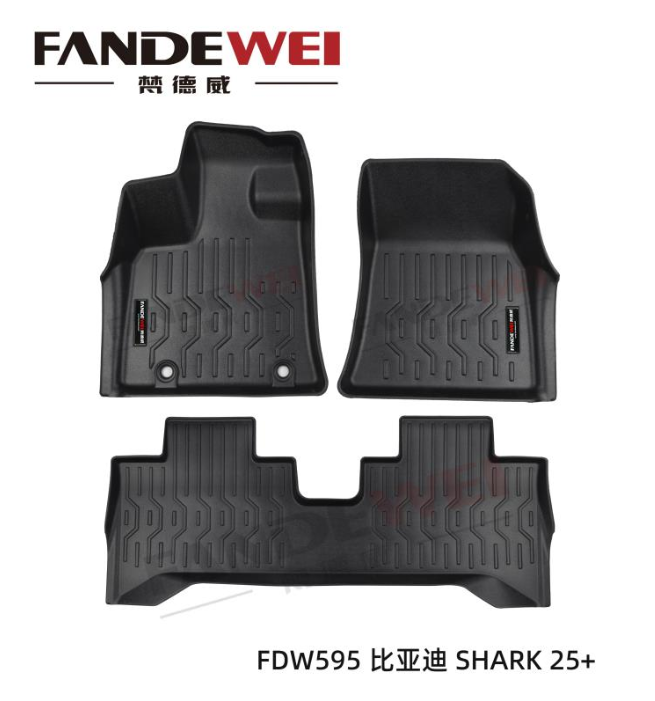
A snug fit doesn't come from squeezing harder or cranking up the temperature. It comes from hitting a narrow thermal window where the polymer chains loosen enough to flow but not so much that they lose their memory. For a typical EVA foam liner, that window sits between 185°F and 205°F. Below it, the material fights the mold and springs back within minutes. Above it, the surface skins over and the core turns spongy, ruining the compression set. The press closes at 60 to 80 psi while the foam is still in that workable state, forcing it into every undercut and radius of the foot or head shape.
Once the material reaches temperature, you have about 90 seconds to complete the forming cycle before crosslinking starts to lock in stress. Some shops preheat the blank for 3 to 4 minutes, then transfer it to the mold in under 10 seconds — any longer and the outer layer cools below the flow point, creating a weak seam. Cooling under pressure is just as critical. If you release the clamp too early, the part relaxes and loses the tight geometry. Holding it in a 40°F water-jacketed mold for another 2 minutes sets the shape permanently.
The exact numbers shift with material thickness and durometer. A 6 mm polypropylene shell might need 220°F and a 45-second dwell, while a 3 mm TPU bladder forms at 165°F in half that time. What separates a good fit from a great one is how tightly the heat, dwell, and cooling ramp are matched to the blank's thermal mass. Operators who rely on a single recipe always end up chasing warpage. Those who log surface temperature with an infrared gun and adjust dwell in 5-second increments get parts that pop out tight, stable, and ready to wear.
From Hot Sheet to Contoured Floor: Cooling and Setting Without Warps
A hot thermoplastic sheet has a short memory. Press it against a contoured floor and the material wants to spring back the moment pressure lifts. The trick is to let the surface skin cool while the core is still able to creep. Holding the sheet in place for just a few extra seconds allows the outermost layer to form a stable shell, locking the bend before internal stress can pull it flat.
Uneven cooling is what causes warps. If one side of the sheet loses heat faster than the other, shrinkage pulls the panel into a curl. To avoid that, the contoured floor itself becomes the heat sink. The contact points draw warmth away first, setting those high spots while the recessed areas cool more slowly. This staged cooling sequence lets the material settle into the final shape without fighting itself.
For deeper contours, a brief post-forming hold under light pressure works better than force. Think of it as teaching the plastic its new neutral position. Once the surface temperature drops below the material's deflection point, the warping tendency disappears, and the sheet stays true to the floor profile without needing adhesives or mechanical fasteners.
Edges, Clips, and Anti-Slip Backing: The Details That Get Overlooked
Most people pick a mat or rug based on how it feels underfoot or how it looks in a photo, but the edges are the first thing to fail. A cheaply finished edge starts to fray after a few weeks of foot traffic, and suddenly a mat that looked premium becomes an eyesore. Heat-sealed or double-stitched edges do more than look tidy; they stop the top layer from peeling away when chairs roll over it or when a vacuum catches the corner.
Clips and anti-slip backing get even less attention until the mat slides out of place. Built-in clips that anchor to carpet or floor prevent that slow forward creep that leaves half the floor unprotected. The backing matters too: rubberized dots and textured foam aren't the same. A good anti-slip layer holds firm without leaving sticky residue or damaging the floor underneath, while a cheap one can break down in heat or fail after a few cleanings. These small details are what separate a mat that stays put from one that constantly needs to be kicked back into position.
Stress Testing Beyond Daily Wear: Abrasion, Heat Aging, and Flex Fatigue
Most durability claims stop at everyday scuffs, but real failure shows up when materials face repetitive friction, sustained heat, and constant bending. Abrasion testing rubs surfaces under controlled pressure to reveal how quickly a finish dulls or a textile thins. Heat aging pushes samples through prolonged high-temperature exposure, accelerating oxidation and polymer breakdown. Flex fatigue, often overlooked, repeatedly bends a component past its elastic limit to replicate years of joint movement in weeks.
The value lies in combining these three rather than running them in isolation. A fabric that resists abrasion at room temperature may embrittle after heat aging, then crack within a few thousand flex cycles. Testing protocols that sequence thermal exposure before mechanical strain catch those cascading failures early. This matters for footwear soles, automotive interiors, and industrial belts where one weakened layer transfers stress to the next.
Designers who rely only on single-condition data often miss the compounding effects. What survives a 9-to-5 desk chair could disintegrate on a construction site or in a parked car during summer. By setting pass thresholds based on field observations—not just lab benchmarks—teams prevent costly recalls and warranty claims. The goal is not to over-engineer every material, but to map realistic limits before a product leaves the drawing board.
Final Inspection and Packing: What Leaves the Factory Only After a Checklist
Every unit reaches the final station with its own history—some have been reworked, others assembled on a different shift. The checklist doesn't care about that. It opens with the basics: no visible scratches on the housing, all screws seated to torque spec, and the serial number legible in three places. Then it moves to functional checks that mirror a first-time user's actions, but with more suspicion. Buttons get pressed twenty times, not once. The lens is inspected under oblique light, because overhead fluorescents hide hairline cracks. Only after each line gets a handwritten initials—not a stamp, not a typed name—does the unit move to packing.
Packing follows the same rhythm. The checklist specifies which side of the product faces the foam insert, how many silica gel packets go in the polybag, and the exact tape length for the outer carton. A new hire might think it's excessive; a veteran knows that a single missing desiccant can mean a corrosion claim three months later. The packer works through the list like a pilot's pre-flight: box dimensions, label orientation, and a final shake test to make sure nothing rattles. If any item is left unchecked, the carton doesn't get sealed. It gets a red tag and a conversation with the shift lead.
FAQ
Most factories that make durable floor liners run on thermoplastic elastomer (TPE) or thermoplastic polyolefin (TPO) pellets, though some budget lines still use PVC. The good stuff is TPE because it stays flexible in freezing weather, doesn't off-gas that plastic smell, and can be reground later. Along with the base resin, you'll see UV stabilizers, color masterbatch, and sometimes a slip-resistant additive blended in before molding. Incoming material gets checked for melt flow index, hardness, and density so the molding machine doesn't get surprised.
Fit starts long before production. The factory either pulls CAD data from the automaker under license or laser-scans the actual floor pan of a new vehicle. From that data, they cut aluminum molds, usually with a textured surface to hide minor scratches. A quick prototype is pressed first and test-fitted in a real vehicle, then the mold gets adjusted. The goal is a liner that follows the dead pedal, seat track, and door sill without curling or leaving gaps.
You'll typically see compression molding and injection molding. Compression molding heats a flat sheet of TPE until it's soft, then squeezes it between the two mold halves under high pressure and cools it. Injection molding shoots molten material into a closed mold, which gives sharper edges and more consistent thickness, but the tooling costs more. Some factories use a two-shot process to make the top surface soft and grippy while the bottom stays rigid.
If the liner has a carpet insert or a rubber backing, the layers are usually joined with a heat-activated adhesive film or by co-extrusion. The trick is keeping the temperature and dwell time consistent; too little heat and the bond fails a peel test, too much and the top layer warps. After lamination, samples are pulled apart to confirm the adhesive fails before the material does. Some designs avoid adhesive entirely by molding mechanical locks into the layers.
After each press cycle, an operator looks for short shots, flow marks, trapped air bubbles, and flash along the edges. Automated cameras compare key dimensions against a master profile, and a scale checks that the part weight hasn't drifted. Holes for retention clips or seat track anchors are checked with a go/no-go gauge. If a defect shows up twice in a row, the line stops and the mold temperature or injection pressure gets adjusted before more bad parts are made.
A batch sample goes through abrasion testing on a Taber machine to simulate years of shoe scuffs. Cold impact tests drop a weighted dart on liners chilled to around -30 degrees Celsius to make sure they won't crack. They also get baked in a heat chamber to check for warping, and an odor panel sniffs them after a set period in a sealed jar. Slip resistance is measured by dragging a weighted sole across the wet surface, and colorfastness is checked under UV light.
That chemical smell almost always comes from low-grade PVC or recycled filler material with unstable plasticizers. A good factory avoids that by running TPE or TPO and by keeping barrel temperatures inside the recommended range so the polymer doesn't degrade. Finished liners are left on ventilated racks for a day or two before packing, and random samples are placed in a sealed container for an odor rating test. If the smell score is too high, the whole batch is held back.
Minor issues like light flash or a dull spot can be reworked by hand buffing or trimming. But if there's a tear, a deep sink mark, or a clip hole that's out of position, the part gets ground up and reintroduced as regrind at a controlled percentage. That regrind ratio matters because too much will make the liner brittle. Every batch keeps a retained sample and a production date code, so if a customer ever reports a problem, the factory can trace it back to the exact press and material lot.
Conclusion
Before a floor liner ever reaches a mold, the compounding room sets the foundation. Raw polymer pellets, plasticizers, and colorants are weighed and blended in batches, with operators checking viscosity and dispersion because that mix determines whether the finished liner will flex without cracking or hold its shape in summer heat. Next comes molding under pressure: the heated sheet is pressed into a cavity at a specific tonnage, and the dwell time is tuned to the exact part thickness. Rushed cycles leave thin spots, while too long a cycle wastes energy and risks surface gloss mismatch. Once demolded, the liner moves to cooling fixtures designed to lock in the contour as it drops below the material’s set temperature—this is where a lot of warping gets prevented, not corrected.
After the basic shape is stable, attention shifts to the edges and underside. Trim lines are deburred, retention clips get installed where the factory’s fitment data calls for them, and the anti-slip backing—often a sprayed or laminated texture—is checked for coverage and peel strength. Then the testing lab takes over. Samples from each shift go through abrasion drums, heat aging ovens, and repeated flex cycles to simulate years of foot traffic and sun exposure; any liner that develops cracks, delamination, or excessive color shift fails the batch. Only after passing those tests does a unit reach final inspection, where a checklist covers surface defects, clip alignment, and packaging inserts. The pack-out area is deliberately quiet and well-lit, because that last pair of eyes catches what machines miss.
Contact Us
Contact Person: Jet
Email: [email protected]
Tel/WhatsApp: 8619903745266
Website: https://www.fandewei.com/