

China Commercial Heat Pump Systems Transform Large-Scale Heating and Cooling Efficiency
2026-10-09
Large commercial buildings in China have long struggled with energy-hungry HVAC systems that drain budgets and inflate carbon footprints. But a quiet revolution is underway, driven by commercial heat pump systems that are rewriting the rules of large-scale heating and cooling efficiency. At the forefront is Tongbaote, a brand that turns these advanced heat pump solutions into tangible savings and sustainability gains for enterprises across the country. As you read on, you'll discover how this technology is transforming not just temperatures, but the economics of comfort.
Gas Boilers Are Quietly Losing Their Grip on Chinese Commercial Heating
For years, the low rumble of a gas boiler was the background noise of Chinese commercial buildings—offices, hotels, shopping centers—but that sound is growing fainter. Property managers who once defaulted to gas for space heating and hot water are now running the numbers on electric heat pumps and district energy loops. The shift isn't loud or sudden; it's happening in equipment rooms and procurement spreadsheets, where higher gas prices, stricter building codes, and better heat pump performance have made the old standby less of a sure thing.
In cities like Beijing, Shanghai, and Shenzhen, new commercial projects are increasingly designed around heat pump arrays or connected to municipal heating networks that draw on waste heat and renewables. Older buildings are retrofitting in stages, swapping out boilers floor by floor to avoid downtime while tenants notice little more than a quieter mechanical room. The trend is driven less by ideology than by arithmetic: off-peak electricity tariffs can undercut gas, heat pumps deliver three to four units of heat for every unit of power they consume, and maintenance crews appreciate systems without combustion, flue gas, or annual safety inspections.
Gas isn't disappearing overnight, of course. It still matters for peak demand during extreme cold snaps and for industrial processes that need high-temperature steam. But in the commercial heating sector, the grip has loosened. Manufacturers that built their Chinese business on wall-hung boilers are now promoting hybrid systems and expanding heat pump portfolios—a clear sign they see the writing on the wall. The next decade won't be about banning gas so much as making it a niche backup rather than the default choice.
The Efficiency Numbers That Make Facility Managers Reconsider Heat Pumps
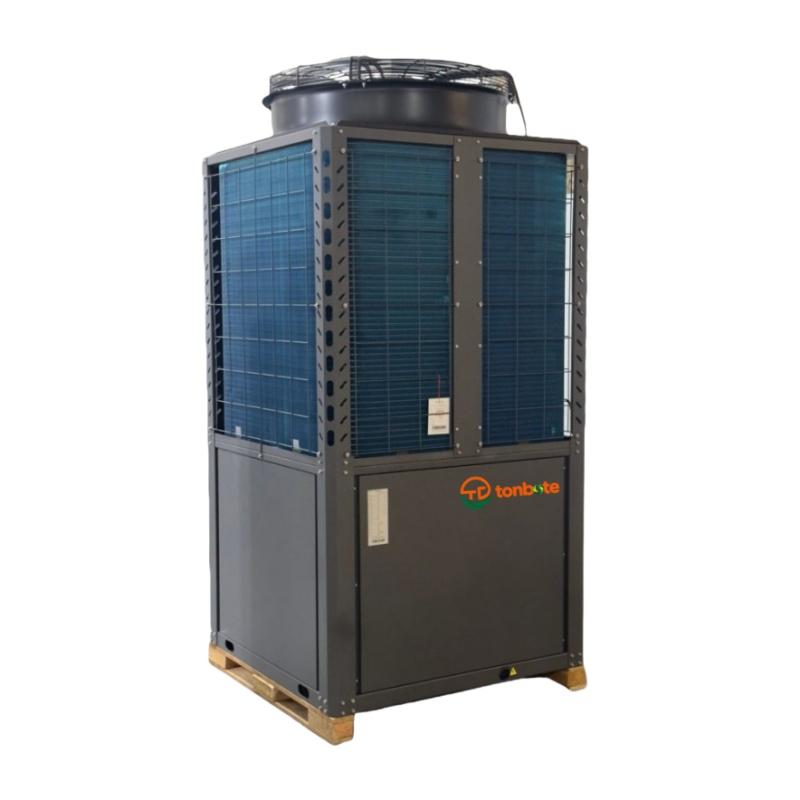
A modern cold-climate heat pump can hit a coefficient of performance (COP) above 3.0 at 5°F, meaning it delivers three units of heat for every unit of electricity. That number alone flips a lot of assumptions about electric heating, especially when the existing baseline is a 60% efficient gas boiler or aging rooftop units.
Part-load data matters just as much as the peak rating. Many facilities run HVAC systems at 40–60% capacity for most of the year, and inverter-driven heat pumps hold COP values above 4.0 in that range. Compare that to older fixed-speed equipment that cycles on and off, and the real-world operating cost gap widens fast.
When managers look at integrated energy efficiency ratios and heating seasonal performance factors side by side, the math starts driving retrofit decisions. A 20-year-old unit might deliver 1.2 kW of cooling per kW of electricity; a new heat pump often delivers 3.5 or more. That shift in the numbers shows up almost immediately in monthly utility bills.
Beyond Residential: Heat Pumps Scale Up for China's Largest Buildings
Large commercial and institutional buildings in China—office towers, hospitals, hotels, shopping malls—are now turning to heat pumps not just for heating but for integrated cooling and hot water. Unlike residential split units, these centralized systems use water-source or ground-source loops to move heat between zones, recovering energy from server rooms, kitchens, or even waste water. The scale is striking: a single high-rise can replace several megawatts of boiler capacity with electric heat pumps that operate at 300–400% seasonal efficiency.
Policy shifts and grid decarbonization are accelerating this transition. Municipal codes in cities like Beijing and Shanghai now require new public buildings to meet higher renewable energy quotas, and heat pumps are often the most practical way to comply without adding rooftop solar area. Meanwhile, large heat pump manufacturers have developed modular, high-temperature units that can deliver 70–80°C water, enough for existing radiator networks and industrial processes, making retrofits feasible in older buildings with no need to replace distribution piping.
The economics are changing, too. For building operators, the combination of off-peak electricity pricing, reduced maintenance compared to gas boilers, and rising carbon trading costs in pilot markets tilts the balance toward electrification. Some flagship projects in Shenzhen and Shanghai now run entirely on heat pump systems for space conditioning and domestic hot water, cutting carbon emissions by more than half while lowering annual energy bills. As these models prove themselves, the technology is moving from demonstration to default in China's commercial building stock.
Cold Climate Performance No Longer a Dealbreaker for Heat Pumps in Northern China
For years, a common complaint about heat pumps in northern China was that they could not handle the deep cold. When January temperatures dropped below -20°C, early units lost most of their heating capacity and often switched to inefficient electric resistance backup. That assumption has become outdated. Manufacturers now use enhanced vapor injection compressors and improved refrigerants that allow heat pumps to deliver meaningful output down to -25°C, with some models still producing heat at -35°C. As a result, many households in Liaoning and Jilin are replacing coal boilers with these cold-climate systems without worrying about mid-winter failures.
Field results from the past three winters back this up. Installers in Harbin and Shenyang say properly sized units hold indoor temperatures steady even during cold snaps. Homeowners report noticeably lower monthly heating costs compared with coal or electric boilers, with savings varying by local electricity prices. Improved defrost cycles also reduce downtime, so rooms stay comfortable instead of going through long cold spells. These real-world outcomes have shifted local attitudes: contractors who once steered clients toward coal or electric boilers now list cold-climate heat pumps as the default option for well-insulated homes.
Government pilot projects and updated provincial building codes have reinforced this shift. Several northern provinces now include cold-climate heat pumps in clean heating subsidies, which lowers the upfront cost enough to make payback periods attractive. More importantly, the technology has proven itself in the places that were once considered impossible. The old rule of thumb that heat pumps cannot handle northern winters is quickly fading, and local manufacturers are using these conditions as a benchmark for global cold-climate markets. In this way, northern China is no longer a barrier but a testing ground that pushes the technology forward.
The Real Payback Timeline for Commercial Heat Pump Upgrades
Most manufacturers and installers will quote a three-to-five-year payback for commercial heat pump retrofits, but field data rarely lines up with those projections. The real timeline tends to stretch to seven or even ten years once you factor in the electrical service upgrades, refrigerant line modifications, and control system integration that older buildings almost always require. Energy savings do accumulate, but they arrive more slowly when the existing boiler or rooftop unit is still in decent condition and the building operates only during standard business hours.
A more honest calculation starts with your actual utility rates and load profile, not the rated COP at mild temperatures. In colder climates, the seasonal coefficient of performance can drop below 2.5, which erodes the advantage over natural gas even when gas prices are volatile. Maintenance contracts also shift the math: heat pumps need more frequent filter changes, coil cleaning, and occasional refrigerant top-ups than a traditional gas furnace, adding $0.08 to $0.15 per square foot annually. If you are not already budgeting for that, your projected payback quietly extends by another year or two.
The shortest realistic paybacks I have seen come from facilities that combine a heat pump upgrade with a simultaneous reduction in cooling load—think server rooms, restaurants, or manufacturing spaces with high internal heat gains. In those cases, the heat pump replaces both a boiler and an air conditioner, and the avoided maintenance on two separate systems can cut the timeline to under four years. But for a standard office or retail building with a mild climate and cheap gas, expecting a sub-five-year return is closer to wishful thinking than an engineering estimate.
Retrofit Challenges and Wins: Switching to Heat Pumps in Existing Structures
Retrofitting an older home with a heat pump rarely follows a straight path. The first hurdle is often space—existing ductwork may be undersized or absent, and the electrical panel might not have room for a new circuit. Some homeowners discover their wall insulation is thin enough that even the best heat pump struggles to keep up on the coldest nights. Yet these challenges are not dead ends, just detours. A split system with multiple indoor heads can bypass the need for ducts, and a modest service upgrade usually solves the panel issue without major rewiring.
The wins, though, tend to arrive quietly. Once a homeowner gets past the initial disruption—drywall opened, lines run, a new condenser humming outside—the house starts behaving differently. Rooms that used to swing between too hot and too cold settle into a steadier comfort. The real payoff shows up in monthly bills: replacing an aging furnace or baseboard electric with a cold-climate heat pump often cuts heating costs by a third or more. And because these units run at low output for long stretches, the air feels less blustery and more even than a traditional forced-air system.
Perhaps the most underrated win is noise. Newer heat pumps run so quietly that the loudest part of the system may be the defrost cycle clicking on during a damp winter evening. For anyone who has lived with the roar of an old oil burner, that near-silence is a daily reminder that the retrofit was worth the trouble. Challenges exist, but they are often one-time inconveniences. The ongoing wins show up in comfort, cost, and the simple absence of a furnace kicking on at 3 a.m.
FAQ
They shift the focus from generating heat to moving it, so one machine covers both heating and cooling. Large buildings no longer need separate boilers and chillers, which saves space, cuts equipment count, and simplifies daily operation.
Hotels, hospitals, office towers, and shopping centers lead the way because they have overlapping or alternating heating and cooling needs. New mixed-use developments are also installing centralized water-source or ground-source heat pumps to serve entire districts.
Instead of creating heat by burning fuel or running resistance elements, they move existing heat. A well-designed commercial unit can deliver three to five units of heating or cooling for every unit of electricity consumed, and variable-speed compressors keep efficiency high even when the building is not at full load.
Northern cities need dependable heating in sub-zero winters, while southern coastal areas demand heavy cooling and dehumidification. Manufacturers respond with enhanced vapor injection compressors, cascade systems for cold regions, and heat recovery options for hot, humid climates, so performance stays strong in very different weather.
Yes, airports, convention centers, and industrial parks have adopted centralized heat pump plants. Some high-speed rail stations use ground-source heat pumps to condition passenger halls and supply hot water, while urban district projects in cities like Beijing and Shanghai have replaced coal boilers with water-source heat pump networks.
Upfront capital cost is still higher than conventional gas boilers or packaged air conditioning. Limited land for ground loops, lack of suitable water sources, and a shortage of experienced design and commissioning engineers can also rule out projects. Many developers still stick with familiar equipment despite the long-term savings.
They typically cut annual energy use by 30 to 50 percent compared to separate fossil-fuel heating and electric cooling. Lower consumption means lower carbon output, and as China's grid adds more renewables, the emission benefit keeps growing. Maintenance is simpler without combustion parts, though compressors and controls need skilled technicians.
Integration with thermal storage, solar PV, and building automation is pushing performance higher. New low-global-warming-potential refrigerants are replacing older fluids, and policies that encourage electrification and peak-load management are making heat pumps a standard option for both new builds and retrofits of aging commercial stock.
Conclusion
Across China's commercial sector, the quiet shift away from gas boilers is becoming impossible to ignore. Facility managers who once relied on traditional heating are now staring at coefficient of performance ratings that routinely top 3.5, meaning every unit of electricity yields more than three units of usable heat. That kind of math rewrites operating budgets. The story is no longer confined to small residential retrofits: hospitals, office towers, shopping malls, and factory campuses are installing heat pump systems that move megawatts of thermal energy. In northern provinces where winter temperatures used to rule out air-source options, advances in inverter-driven compressors and enhanced vapor injection have erased the old performance cliff. A system that still delivers heat at minus 15 degrees Celsius changes the conversation entirely.
Payback timelines are shorter than many owners expect. While upfront costs remain higher than boiler replacements, the gap is shrinking as installation crews gain experience and domestic manufacturers scale up production. A typical commercial upgrade can see full cost recovery in three to five years, thanks to lower fuel bills and reduced maintenance. Retrofits into existing structures are rarely painless—pipe sizes, electrical capacity, and roof loads all need review—but successful projects share a common thread: phased commissioning and smart controls that match output to actual demand. The real win is not just replacing a heat source, but rethinking how a building moves energy. For developers and owners, the message is clear: commercial heat pumps are no longer an experiment. They are becoming the default answer for large-scale heating and cooling efficiency.
Contact Us
Contact Person: Wanshu Chen
Email: [email protected]
Tel/WhatsApp: +86-13662871206
Website: https://www.mbcee.com