
China Pallet Rack Manufacturer Delivers Efficient Storage Solutions for Modern Warehouses
2026-06-08
In today’s fast-paced logistics landscape, every square foot of warehouse space counts. Yet, many facilities still struggle with cluttered aisles, wasted vertical space, and inefficient inventory access. Enter Lanyuda, a leading China pallet rack manufacturer that’s redefining storage efficiency. Their solutions don’t just stack goods—they transform chaotic warehouses into streamlined, high-density hubs. Curious how modern racking systems can boost your throughput and cut costs? Let’s explore the engineering behind smarter storage.
Unlocking Vertical Capacity in Tight Warehouse Layouts
When floor space is at a premium, the only way to grow is upward. Many warehouses overlook the potential of their vertical clearance, leaving valuable cubic footage unused. By reassessing racking heights and aisle configurations, you can often double or even triple storage density without expanding the building footprint. Narrow-aisle forklifts and automated storage and retrieval systems make it possible to reach higher shelves while maintaining safe operating clearances. The key is to balance accessibility with density—fast-moving items still need to be within easy reach, while slower inventory can be stored in the upper tiers.
Vertical capacity isn’t just about adding more racks. It’s a strategic shift that requires rethinking material flow and picking methods. Mezzanine levels can create additional floors for light assembly or sorting, freeing up ground-level space for shipping and receiving. Structural considerations also come into play: older buildings may need reinforcement to handle taller rack loads. Pairing vertical expansion with warehouse management software that tracks bin locations in three dimensions ensures that operators can find and retrieve items quickly, even in a high-bay environment.
The real advantage of going vertical is scalability. As inventory levels fluctuate, high-density storage systems can adapt without costly relocations. Cantilever racking for long goods, push-back systems for palletized loads, and vertical lift modules for small parts all optimize available height. In tight urban warehouses especially, where every square meter is expensive, unlocking vertical capacity transforms a cramped facility into a competitive logistics hub. The result is a leaner operation with lower per-unit storage costs and the agility to handle growth.
Tailored Racking Systems That Adapt to Your Inventory
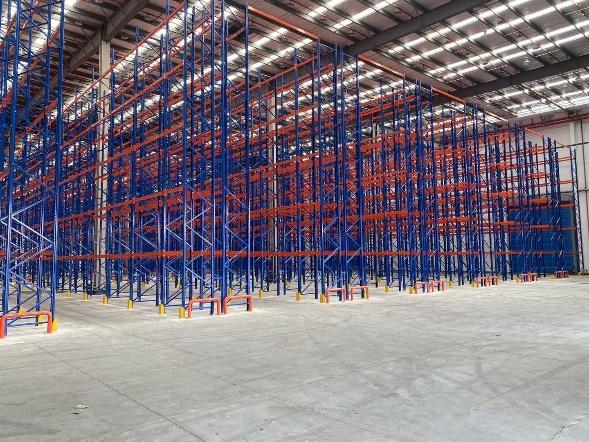
Our racking solutions are designed to evolve alongside your business, accommodating shifts in product dimensions, seasonal stock levels, or unexpected surges in demand. Instead of forcing your inventory into a fixed layout, the system can be reconfigured quickly, with adjustable beams and modular components that let you customize shelf heights and load capacities on the fly. This flexibility means you’re never boxed in by rigid storage constraints, and you can repurpose space without needing to invest in entirely new infrastructure every time your catalogue changes.
What sets these systems apart is their ability to integrate with your existing workflows seamlessly. Whether you’re managing bulky, irregular items or fast-moving consumer goods, the racking can be fine-tuned to improve picking accuracy and reduce travel time for forklifts. The layout itself becomes a dynamic tool — one that you can reconfigure during off-peak hours so that the next morning your team walks into a floor plan already matched to the day’s priorities. This kind of adaptability not only streamlines operations but also extends the lifespan of your facility by preventing the wasteful cycle of tearing down and rebuilding.
Beyond physical adjustability, the design philosophy embraces a future-ready approach. Components are sourced to be backward compatible, so you can expand or modify your setup years down the line without worrying about discontinued parts. The engineering prioritizes durable, lightweight materials that make reconfiguration a one-person task in many cases, cutting down on downtime and labor costs. Rather than being a static fixture, your racking becomes a responsive asset — ready to handle whatever your inventory demands next.
How Precision Engineering Cuts Installation Time by Half
At the heart of faster installations is the principle of eliminating guesswork. When components arrive on-site with tolerances measured in microns rather than millimeters, the assembly process shifts from one of adjustment to one of confident placement. Traditional methods often require field modifications—drilling, grinding, or shimming—to make parts fit together. Precision engineering, however, delivers elements that align the first time, erasing hours of back-and-forth troubleshooting.
Another major factor is the shift from sequential to parallel workflows. Because precision-fabricated modules are built to exact specifications in controlled factory environments, multiple sections of a project can be assembled simultaneously without fear of cumulative errors. This means foundations, structural steel, and complex mechanical systems can all be prepared concurrently, dramatically shrinking the overall timeline. The result is a process where on-site installation becomes more of a swift final assembly rather than a prolonged construction exercise.
Precision also reduces the dependency on highly specialized field labor. When interfaces are standardized and parts are interchangeable, a wider range of technicians can handle the work without bottlenecks. Simpler connections, repeatable procedures, and clear fitment indicators accelerate training and execution. Ultimately, this not only cuts direct installation time but also avoids delays caused by rework, making the entire schedule more resilient to unexpected site conditions.
Weight Distribution Tricks That Prevent Structural Fatigue
One often overlooked method involves designing load paths that deliberately shift under varying conditions. Instead of rigidly fixing every connection, certain joints are crafted to allow minimal, controlled movement. This fatigue-relief trick prevents stress from concentrating at a single point by letting the load “walk” through the structure as forces change. Think of a bridge that subtly flexes—its weight distribution adapts, giving the most stressed areas a momentary break.
Another approach is to stagger the strength of components in a way that creates a cascading failure buffer. By intentionally making some non-critical members slightly weaker, they absorb the brunt of an overload and fail first, acting like a fuse. This protects the main frame from sudden catastrophic fatigue, while the sacrificed parts are easily replaced. The weight effectively redistributes itself around the compromised zone until repairs are made.
Damping through tuned mass systems isn't just for skyscrapers—it works wonders in smaller frameworks subject to cyclic loading. A suspended weight, calibrated to oscillate out of phase with structural vibrations, siphons energy away from fatigue-prone joints. The trick is that it doesn't add stiffness; it simply redirects kinetic energy into harmless heat, smoothing out the peaks in stress that normally accelerate wear.
Why Bolted Frames Beat Welded for Reconfigurable Spaces
When spaces need to shift and adapt quickly, the mechanical simplicity of bolted connections becomes a major advantage. Unlike welded joints, which permanently fuse components together, bolted frames allow for disassembly and reassembly without specialized cutting tools or heavy machinery. This means a single team can take apart a structure, move it, and reconfigure it in a new layout within hours—something that's simply not feasible with welded construction. The ability to reuse not just the steel members but also the fasteners further reduces material waste and downtime during facility changes.
The long-term flexibility of bolted frames also shines in environments where layout experimentation is common. Manufacturers, research labs, and event venues often need to test different spatial arrangements before settling on a final design. Welded frames lock you into a fixed geometry from day one, making even minor adjustments an expensive, time-consuming ordeal. Bolted connections, on the other hand, invite iteration: you can loosen a few nuts, slide a beam over, and tighten everything back down without compromising structural integrity. This encourages a trial-and-error approach that leads to more optimized use of space over time.
Beyond pure reconfigurability, there's a practical economic argument for bolted frames that often gets overlooked. Welding demands skilled labor, controlled environments, and thorough inspections to ensure quality—all of which drive up cost and limit where assembly can happen. Bolted assemblies shift much of the work to controlled factory conditions where precision is easier to achieve, leaving only simple mechanical fastening for on-site crews. The result is a faster, cheaper construction cycle that doesn't sacrifice the strength or safety of the final structure, and one that remains ready for whatever changes come next.
The Hidden Cost of Ignoring Pallet Flow Dynamics
When pallet flow dynamics are overlooked, the result isn't just a slower lane—it's a cascade of small failures that quietly drain your budget. Gravity flow systems are designed around predictable weight distribution and controlled speed. But when loads shift unexpectedly or rack pitch isn't aligned with pallet types, the momentum that should carry goods smoothly instead turns into irregular surges. These surges don't just annoy handlers; they force constant adjustments, snags, and the kind of low-level chaos that no one reports because it becomes the new normal.
The damage might not be dramatic at first. You'll notice more pallet wrap tears, scuffed edges on boxes, or occasional product jostling that leads to minor damage claims. Workers start avoiding the "bad lanes" or develop awkward handling habits to compensate—little workarounds that tack minutes onto tasks and inflate labor costs. Over weeks and months, that one troublesome flow lane eats into throughput margins that you can't easily measure in a single shift. It's a slow bleed of efficiency that traditional metrics don't flag until you compare month-over-month output across lanes.
Ignoring flow dynamics also accelerates wear on equipment. Rollers, brakes, and lane dividers that are constantly fighting erratic motion need replacement far sooner than those in properly tuned systems. But the larger hidden cost lies in opportunity: when flow isn't fluid, you lose the ability to leverage full lane density or safely mix varied pallet sizes. You're essentially paying for capacity you can't use, while maintenance budgets swell and picking accuracy dips. The real price of neglecting these dynamics isn't in the dramatic breakdowns—it's paid daily in lost margin and gradual competitive erosion.
FAQ
They focus on modular designs that adapt to various warehouse layouts, using high-grade steel and intelligent engineering to maximize vertical space while ensuring easy access and durability.
By enabling dense storage configurations and seamless integration with forklift systems, the racks reduce retrieval times and optimize inventory flow, which directly cuts operational costs.
Absolutely, the manufacturer offers tailored solutions including adjustable beam levels, special coatings for cold storage, and integration with automated picking systems.
They serve a wide range from e-commerce and automotive to food and beverage, each with specific weight capacities and configuration requirements.
All racks undergo rigorous testing for load capacity and seismic compliance, and they adhere to international standards like FEM and RMI, with certifications to back it up.
They offer installation guidance, on-site inspections, and a responsive service team to handle any issues, plus a warranty that covers structural integrity for years.
With a strong logistics network, they deliver worldwide and often partner with local teams for assembly, ensuring minimal disruption to warehouse operations.
Chinese manufacturers combine cost efficiency with advanced manufacturing techniques, delivering high-quality racks at competitive prices without compromising on innovation or service.
Conclusion
Modern warehouses constantly fight the battle of doing more with less square footage. One Chinese pallet rack manufacturer has turned that challenge into an opportunity by focusing on vertical potential within tight footprints. Rather than forcing a standard template onto every project, they build racking setups that flex with inventory shifts—whether it’s handling oversized items or fast-turnover SKUs. The engineering behind these systems cuts out chaotic on-site trial and error; parts arrive prepped and clearly marked, slashing typical assembly timelines by nearly half so operations get back online faster. But speed doesn’t come at the expense of longevity. The design deliberately reworks load dispersion paths, steering stress away from weak points that normally lead to fatigue cracks. This quiet focus on how weight really flows through uprights and beams adds years to the rack’s usable life.
Equally important is the deliberate shift to bolted frames rather than permanently welded joints. In facilities where storage zones morph with seasonal demand or evolving product lines, bolt-together connections allow reconfiguration without weakening the structure—a modular backbone that grows with the business. The real savings, though, surface when you examine material flow. Too many warehouses overlook how pallet momentum, rack pitch, and beam alignment influence daily efficiency. Poor dynamics create bottlenecks, increase fork truck wear, and slowly damage goods. This manufacturer integrates those fluid movement patterns directly into the design, so the racking doesn’t just hold inventory, it actively supports smoother, safer throughput. The result is a storage strategy that sidesteps hidden cost traps and aligns with how today’s logistics actually operate.
Contact Us
Contact Person: Johnny
Email: [email protected]
Tel/WhatsApp: +86 18151010686
Website: https://lydstorage.com