

China Power Line Inspection Drone Simulator: Virtual Training for Safer Grid Maintenance
2026-08-31
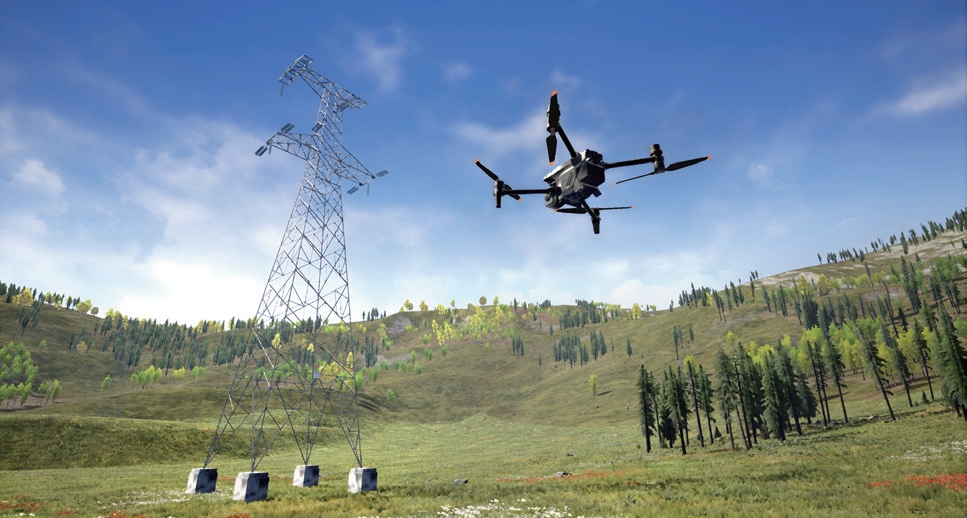
Keeping China’s power grid safe means training for the worst conditions without ever risking a live line. The China Power Line Inspection Drone Simulator turns that need into a virtual proving ground—letting crews practice high-voltage inspections, fault response, and tight maneuvers before they ever lift off. Built with SRIZFLY, this simulator closes the gap between classroom theory and real-world grid maintenance, so every flight hour adds confidence where it matters most.
Virtual Flight Hours Before Anywhere Near Live Lines
The gap between sim time and real-world stress doesn't close on its own. You can nail every maneuver in a virtual environment and still freeze the first time a rotor wash bounces off a tower crossarm. Before you ever point a drone or a full-size aircraft at an energized line, put in enough virtual hours that the stick inputs stop being decisions and start being reflexes. Set up scenarios with gusting crosswinds, sudden signal degradation, and tight clearance boxes. Re-fly the same approach until you can talk through each step without looking at the telemetry. The point isn't to build false confidence; it's to burn out the hesitation that gets people hurt around live conductors.
Live lines leave almost no room for correction. A simulator gives you the one thing the field won't: repetition without consequence. Take advantage of it. Load terrain scans from the actual corridor you'll be working, if the software allows, and practice keeping the sensor aimed while the airframe drifts. Work the emergency drills until they're boring. Then switch off the visual aids and fly the line with only basic instruments for a while. That added difficulty is what makes a real sortie feel slow and readable instead of overwhelming.
A lot of pilots treat simulator time as a box to check before flying. Around live lines, that habit is dangerous. Don't log hours just to satisfy a requirement; log them to build a margin. If you can handle a simulated wire strike scare without yanking the controls, you're closer to ready. If you can't, stay in the sim and keep working. The live environment will still be there tomorrow. Let your first real approach to a hot line come after the virtual cockpit has already taught your hands what to do.
How Chinese Grid Crews Build Muscle Memory in Simulators
The first time a trainee steps into the high-voltage simulator hall at a provincial grid training base, the air smells of ozone and hot metal. Here, every switch, insulator, and relay panel is a faithful replica of the field gear, down to the slight resistance of a disconnect handle when it's been sitting in the cold. Instructors don't talk about 'learning outcomes'—they talk about making your hands smarter than your head. A line worker may repeat a single isolation sequence forty times in one afternoon, not because the procedure is complex, but because in a real fault, there is no time to remember; the body must already know.
The simulators are engineered to punish hesitation. A wrong sequence doesn't just flash a red light—it triggers a simulated arc flash, complete with a bass thump through the floor and a sudden drop in ambient lighting. That kind of feedback seeps into the nervous system faster than any written exam. Over weeks of rotating through storm scenarios, cable joint failures, and midnight transformer trips, crews develop a shared rhythm. One seasoned trainer compares it to learning a dialect: at first you translate every sentence, then one day you just speak. By the time a crew walks out of that hall, their hand signals, tool passes, and lockout tags move like a single animal.
What sets this apart from older training methods is the deliberate repetition of the boring parts. A junior lineman might spend three consecutive shifts doing nothing but grounding and testing a de-energized line, while a more experienced partner throws random faults from a control booth. The goal isn't to memorize a checklist—it's to carve a groove deep enough that fatigue, cold, or pressure can't knock you out of it. When a real windstorm snaps a crossarm at 2 a.m., the crew doesn't think about what to do next; their hands are already reaching for the right tool, their eyes already scanning for the nearest safe work zone. That's muscle memory, built one simulated failure at a time.
Realistic Wire Physics Without the Field Risk
Working with live conductors and tensioned cables carries an inherent danger that no amount of classroom instruction can fully replicate. This module strips away that exposure while preserving the tactile unpredictability of real wire behavior. Every strand responds to pull, release, and lateral force with the same slack, recoil, and oscillation you would see on a job site—without the risk of arc flash, falls, or snapped lines.
The physics engine accounts for material stiffness, environmental wind, and even the subtle weight shift when a lineman transfers tools along a span. Instead of relying on canned animations, each interaction is calculated in real time, so the same maneuver can produce slightly different outcomes depending on angle, speed, and contact point. That variance is what builds muscle memory that actually transfers to the field.
Because the danger is removed, trainees are free to make mistakes, repeat difficult sequences, and explore edge cases that would never be permitted around energized equipment. Instructors can pause mid-scenario, rotate the view, or overlay force vectors to show exactly why a conductor moved the way it did. The result is a deeper understanding of wire dynamics without ever stepping inside a hazardous zone.
Why Simulated Emergencies Make Better Inspection Pilots
Real emergencies rarely give second chances, but simulated ones do. For inspection pilots, drilling engine fires, sudden hydraulic loss, or complete electrical failure in a simulator creates a mental library of failure signatures. When something similar appears during a routine check, the pilot recognizes the early warning not from a checklist but from having felt the aircraft misbehave under controlled stress. This practiced recognition cuts through the noise of routine inspections.
Simulation also strips away the false comfort of stable conditions. An inspection pilot who only flies in calm weather and clean systems tends to scan for the obvious: cracks, leaks, loose fasteners. But introduce a simulated generator overload or a pitot-static blockage mid-inspection, and the pilot learns to watch how one anomaly cascades into another. That habit of tracing interactions rather than isolated defects is what separates a box-ticker from a genuinely observant inspector.
There is also a less visible benefit: emotional regulation. A pilot who has repeatedly managed a simulated in-flight fire or loss of instrumentation is less likely to freeze or rush when a real gauge flickers during a post-maintenance test flight. The body learns that rising heart rate and dry mouth are not commands to abandon procedure. That composure keeps the inspection focused on evidence, not on the fear of what might happen next.
Inside the Training That Prevents Costly Drone Crashes
Most people assume flying a drone is about thumb reflexes and a clear line of sight. The real training goes much deeper. Pilots spend hours in mock environments where they must diagnose a failing battery mid-flight, compensate for a lost GPS lock, or land safely after one motor quits. Each scenario is repeated until the correct sequence of actions becomes muscle memory, because in the field there is no time to consult a manual.
One of the most effective tools is the after-action review. After every simulated crash or near miss, instructors pull telemetry data and replay the exact moment things went wrong. Trainees see not just what happened, but why their reaction was too slow or too aggressive. A common pattern is overcorrecting after wind shear, which turns a recoverable wobble into a full spin. Learning to trust the drone's stabilization system, instead of fighting it, often marks the difference between a safe landing and an expensive pile of carbon fiber.
The final stage is deliberately uncomfortable. Trainers cut power at random intervals, fog the camera lens, or degrade the control link without warning. The goal is to build a calm, almost detached decision-making process. Pilots learn that the first step in any emergency is not to fix the drone, but to control altitude and choose a safe flight path. This habit, drilled over dozens of hours, is what prevents small errors from becoming six-figure insurance claims.
From Classroom Controls to Confident High-Voltage Missions
Stepping into the training bay for the first time, the switchgear mockups feel almost too forgiving. Every breaker is labeled, every fault is staged, and the instructor can pause the scenario before anyone breaks a sweat. That controlled repetition is where muscle memory starts, but it's not the same as hearing the hum of a live 13.8 kV bus with your own ears.
Moving from classroom controls to field voltage takes more than a signed checklist. It means learning to trust your meter leads, double-checking isolation points with your own hands, and recognizing the subtle change in air pressure when a breaker closes under load. Confidence doesn't come from memorizing procedures; it grows each time you suit up, swap the lockout tag, and make the final call without looking over your shoulder.
By the time a technician walks into a real substation, the classroom panels have done their job. They taught respect for the voltage without letting fear run the show. The result is a person who can think clearly when the unexpected happens, who stays calm during a sudden trip, and who knows that high-voltage missions are just controlled decisions repeated in a louder room.
FAQ
It recreates real-world power line inspection scenarios using drones, letting trainees practice maintenance tasks without putting themselves or the grid at risk.
Field technicians, drone operators, and grid maintenance crews who need hands-on experience before working near live power lines.
By simulating hazards like unstable weather, electromagnetic interference, and unexpected obstacles, it builds decision-making skills in a controlled environment.
It focuses on the specific challenges of power line inspection, including cable proximity, tower structure navigation, and defect identification on insulators and conductors.
Yes, scenarios can include rain, wind, low visibility, and varying terrain, so trainees learn to adjust their flight and inspection approach accordingly.
Routine visual inspections, thermal imaging checks, corrosion detection, and troubleshooting of common line faults are all part of the training modules.
Not at all. It offers layered difficulty levels, so new pilots can learn fundamentals while experienced operators refine advanced maneuvers and emergency responses.
Fewer physical drone crashes, less travel to remote tower sites, and reduced downtime during on-the-job training all add up to significant savings.
Conclusion
Trainees at Chinese grid companies now log dozens of virtual flight hours before their drones ever spin up near live conductors. The simulator recreates actual line sag, wind gusts, and magnetic interference that can destabilize a small rotorcraft, so muscle memory forms without a single meter of clearance being risked. Instructors push crews through routine tower inspections and then throw sudden faults at them—broken insulators, unexpected crosswinds, a bird strike on a rotor. These simulated emergencies force pilots to decide in seconds whether to climb, hold, or abort. Because the physics model mirrors the real behavior of inspection drones, a bad habit that would cause a $20,000 crash gets corrected in the training room, not on a 500 kV line.
The progression is deliberately slow: classroom control drills first, then low-risk virtual circuits, and only later high-voltage missions with live feedback. Crews learn to read voltage sag, conductor spacing, and tower geometry from the sim's visual and haptic cues. Repeated exposure to wire proximity warnings and battery fade builds a calm, automatic response that real field work rarely allows time to develop. Grid operators report fewer near-misses and lower repair bills since adopting the simulator, partly because pilots stop overcorrecting in tight spaces. By the time a trainee flies alongside actual energized lines, the controls feel familiar, the emergency checklists are second nature, and the drone is less likely to end up wrapped around a phase wire.
Contact Us
Contact Person: Niles Liu
Email: [email protected]
Tel/WhatsApp: 8619945009803
Website: https://srizfly.com/