

China RPET Bag Solutions for Eco-Friendly Brands and Retailers
2026-10-27
Every eco-conscious brand eventually hits the same wall: finding a bag that's genuinely sustainable without sacrificing durability or style. That's where China's RPET bag manufacturing comes in, and one name keeps surfacing in conversations among serious retailers—CHALLENGE WOLVES. They’ve quietly become the go-to partner for companies tired of greenwashing and ready to ship bags made from recycled PET bottles that actually hold up in daily use. If you're sourcing for a brand that promises real environmental impact, the choices you make about materials and suppliers matter more than your marketing copy. Here's what you need to know before you place your next order.
Tracing RPET from Bottle Bales to Finished Fabric
The journey of recycled polyester begins far from the mill, in compacted bales of post-consumer PET bottles. Each bale carries a material identity that is rarely uniform—different colors, cap residues, and label adhesives all arrive together. Before any spinning happens, sorters and wash lines break these bales down, separating clear from colored polymer and stripping away contaminants. The goal isn't just cleanliness; it's traceability. A single batch might pull from dozens of collection points, so processors rely on lot codes and inbound inspections to map exactly which bales feed which flake output.
Once the flake is extruded into chip and then melt-spun into filament, that trail can get murky. Blending, re-granulation, and multi-line production often mix input sources. This is where digital batch records and physical tagging become essential. Some mills now attach QR-linked labels to every super-sack of flake, letting downstream spinners and weavers scan a bag and see its upstream bale history. That level of granularity isn't universal, but it's growing—especially as brands demand proof that a finished fabric truly contains the recycled content claimed on the hangtag.
At the fabric stage, tracing RPET means reconciling yarn lot numbers with greige roll tickets and dye batch logs. A single cut of fabric may blend yarns from three different extrusion days. Makers who value transparency keep lot-level records from bale intake through knitting or weaving, then into finishing. When that chain stays intact, a finished fabric can be linked back not just to a generic recycled claim, but to specific bale lots, processing dates, and even the regional collection stream. That's the difference between a vague sustainability story and a defensible material trail.
Low Minimums Without Sacrificing the Custom Details
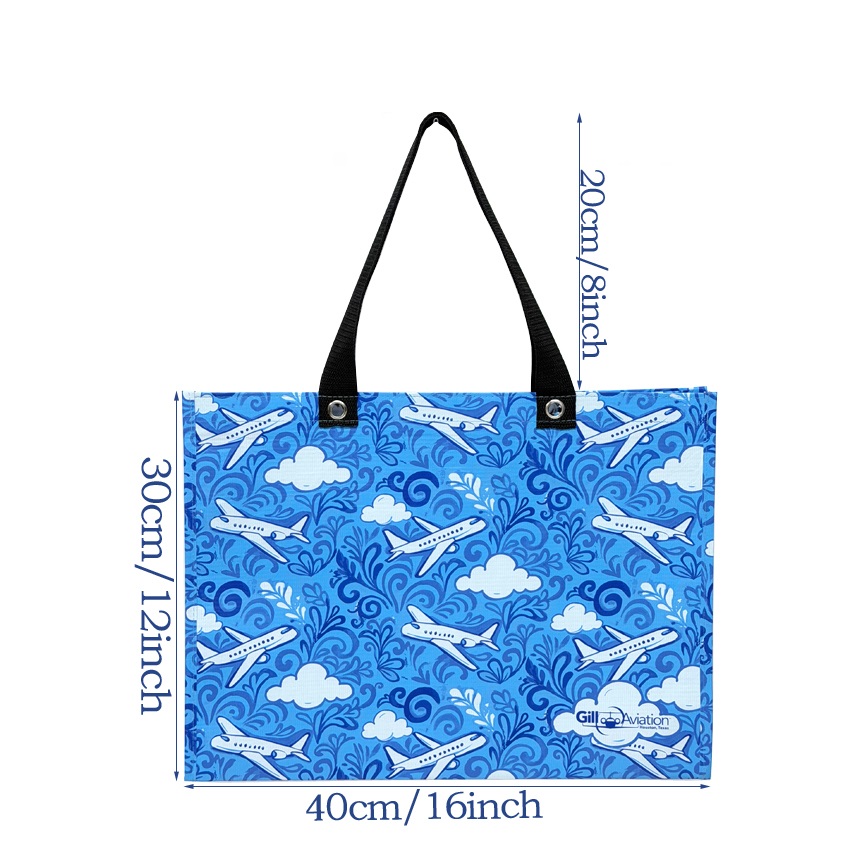
Small runs usually come with a trade-off: you get the basic version, and all those unique touches get pushed to a higher tier. We take a different approach. Even at our lowest order quantity, you can still customize the details that actually matter—think contrast taping, custom neck labels, or a signature stitch color.
Because production happens in-house, there's no need to wait until a certain volume before the good options unlock. You pick the fabric, the finishing, and the placement. A ten-piece order gets handled with the same care as a large wholesale run, down to the last thread trim.
That means you can test a new design, launch a limited drop, or restock a bestseller without buying more than you need. The details stay intact; only the quantity changes.
Load Testing, Stitch Strength, and the Gusset Question
Load testing rarely tells the whole story. Most people yank on a seam and call it a day, but real failure happens over hundreds of cycles. The weakest point isn't always where the fabric tears—it's often where the stitching starts to creep. If you only test to destruction once, you miss the slow fatigue that turns a solid bag into a liability after a season of hard use.
Stitch strength depends on thread type, tension, and stitch length, not just the number of rows. A heavy-duty nylon thread can still snap early if the tension is too high, because the fabric gets perforated like a tear-off notepad. Testing individual stitches under a microscope reveals more than any pull test—tiny fractures in the fiber, uneven tension between top and bottom threads, or skipped loops that look fine from the outside.
The gusset question keeps coming up in gear design. A gusset adds material and complexity, but without it, stress concentrates at the crotch or corner seam. Whether to include one depends on the load path—sometimes a well-placed dart does the same job with less bulk. I've seen packs with no gusset outlast ones with a poorly designed diamond insert, simply because the stitching followed the natural force lines instead of fighting them.
Color Matching and Print Techniques That Avoid the Recycled Look
Getting colors to feel fresh instead of rehashed starts with moving beyond the standard swatch book. Most recycled looks come from relying on overly familiar pairings—think muted teal with beige, or washed-out coral with gray. To break that chain, pull hues from unexpected sources: the faded edge of a vintage poster, the residue left by copper oxidation, or the particular green of a 1970s kitchen appliance. When you sample these offbeat references and adjust them slightly in the midtones, the result feels curated rather than copied.
Print techniques themselves can also sabotage a design if they default to a smooth, uniform finish. A flat digital print on bright white stock tends to scream "template." Instead, experiment with tactile contrast: use a coarse uncoated paper for large color fields, then overprint a single accent color with a subtle offset registration shift. Or try a split-fountain gradient that moves from a warm chip to a cool shadow, then let the ink sit heavy in certain areas. These small imperfections—intentional misalignment, ink pooling, a slightly toothy surface—make the palette feel lived-in rather than mass-produced.
Finally, avoid the trap of matching every color perfectly to a brand guide. When every hue lines up exactly, the layout takes on a sterile, engineered quality. Let one color sit a half-step lighter or darker than expected, or shift a secondary tone toward a neighboring hue on the wheel. Pair a muted olive with a punchy, almost electric lavender, or ground a bright persimmon with a dirty chalk white. The friction between slightly off-kilter tones is what keeps the eye moving and convinces viewers the design was composed by hand, not generated from a recycled palette.
Factory Audits, Compliance Paperwork, and Real Traceability
Most factory audits look impressive on paper. A stack of signed documents, a few photos of clean floors, and a certificate on the wall can pass a desk review without anyone ever stepping onto the production line. But real traceability doesn't come from paperwork alone. It comes from walking the floor unannounced, matching raw material lots against finished goods, and asking a line worker how they handle a rejected batch—not just reading the SOP binder. The gap between what's filed and what's actually happening is where most supply chain risks hide.
Compliance paperwork often gets treated as the finish line, when it's really just the starting point. A factory can show you a valid audit from six months ago, but that tells you nothing about last week's night shift or the subcontractor they quietly brought in to meet a deadline. True traceability means being able to pull a single unit off the shelf and walk backward: which lot of fabric, which dye run, which sewing line, which inspector signed off—and having those records match the physical reality. When you force that level of detail, suddenly the audit isn't a box-ticking exercise. It becomes a mirror that shows you exactly where the story falls apart.
Reordering Made Predictable: SKU-Level Consistency with One Partner
When every reorder feels like a gamble, the problem usually isn't demand forecasting—it's fragmentation. Working with a single partner who tracks stock at the SKU level changes the equation. You stop patching together order histories from multiple spreadsheets and start seeing exactly which variants move, which sit, and which need a nudge before they become dead stock.
That level of visibility makes replenishment almost boring in the best way. The same partner handles the unglamorous details: pack sizes, lead times, regional substitutions. No more back-and-forth over whether the 12-pack or the 6-pack was the one that sold through last month. The data stays clean because it comes from one source, and the reorder suggestions reflect what actually happened on the shelf, not what a generic algorithm assumes.
FAQ
RPET bags come from recycled plastic bottles, which keeps single-use plastics out of landfills and gives them a second life as durable, reusable carriers. For brands trying to reduce their footprint without sacrificing strength or style, they hit a sweet spot between responsibility and everyday function.
China has a mature recycling infrastructure and a dense network of factories that specialize in RPET fabric weaving, coating, and stitching. That concentration means you can find manufacturers who already understand technical requirements, offer competitive pricing, and can scale from sample runs to container loads without a steep learning curve.
Reputable suppliers provide certification such as GRS (Global Recycled Standard) or RCS (Recycled Claim Standard). You can also request batch-level documentation tracing the resin back to post-consumer bottles. A factory tour or third-party inspection adds another layer of confidence.
Most Chinese RPET bag makers offer a wide range of options: custom sizes, colors, printing techniques (screen, heat transfer, embroidery), zippers, pockets, and even lining made from recycled materials. The key is to share a clear spec sheet early so the factory can suggest feasible combinations.
It varies by factory and complexity, but many Chinese manufacturers start around 500 to 1,000 units for a simple custom design. More intricate construction or special hardware can push the MOQ higher. Some suppliers are flexible for first-time buyers if you negotiate a slightly higher unit price.
After artwork approval and deposit, production typically takes 25 to 45 days depending on order size and customization. Sea freight to major Western ports adds another 20 to 40 days. Air freight is faster but much costlier, so most brands plan ahead and use ocean shipping.
Watch for inconsistent stitching, weak handles, or uneven lamination on coated RPET fabric. Ask for a pre-production sample and set clear tolerances for color and dimensions. A third-party inspection before shipment can catch problems while they are still fixable.
Conclusion
China’s RPET bag sector has moved beyond basic green claims. When we talk about traceability, it starts with bottle bales—sorting, washing, pelletizing, spinning, and weaving into fabric that actually feels good in hand. That chain matters, but only if the factory audits and compliance paperwork match the story. Many suppliers say they’re eco-friendly yet can’t show batch-level proof. We keep minimums low without cutting corners on custom details, so smaller brands can order exactly the handles, zippers, or lining they want while still getting genuine recycled material.
Durability depends on load testing and stitch strength—especially when a gusset is involved, because that bottom panel is where bags fail first. We test every seam and weight capacity before shipping. The other challenge is avoiding the “recycled look.” Our color matching and print techniques—solid Pantone hits, matte or soft-touch coatings, and clean screen or offset printing—make RPET bags look as refined as virgin polyester. Finally, working with one partner gives SKU-level consistency for reorders. From the first production run to the fifth, colors, dimensions, and fabric hand won’t drift, so brands can plan product lines with confidence.
Contact Us
Contact Person: Tony
Email: [email protected]
Tel/WhatsApp: +8615859766913
Website: https://www.cw-pak.com