

China Silicon Carbide Ceramic: Properties, Benefits, and Industrial Applications
2026-10-10
Silicon carbide ceramic is no longer a niche material confined to laboratories. From semiconductor manufacturing to electric vehicle power modules, it is reshaping how industries handle extreme heat, wear, and corrosion. But why has China become a pivotal hub for this advanced ceramic? And what specific properties make it indispensable across so many high-stakes applications? In this article, we explore the key benefits and industrial uses of China's silicon carbide ceramic—and highlight how HUAYI TECH is contributing to this material revolution.
Why China’s Silicon Carbide Ceramic Is Outperforming Expectations in Extreme Heat
China's silicon carbide ceramic has moved beyond laboratory curiosities because manufacturers refined pressureless sintering and doping strategies, achieving dense bodies with minimal grain growth at temperatures where most oxide ceramics begin to soften. This keeps flexural strength above 400 MPa even after hours at 1400°C, a threshold that used to trigger microcracking in earlier domestic batches.
Thermal shock resistance is another surprise. By engineering a bimodal particle distribution and adding small amounts of boron and carbon as sintering aids, Chinese producers raised thermal conductivity to around 120-150 W/m·K, letting components shed heat quickly during rapid cycling. In furnace linings and semiconductor wafer carriers, this has cut replacement intervals by nearly half in field trials.
Oxidation behavior under prolonged heat has also improved. A dense, self-healing silica layer forms at 1300-1500°C without spalling, because controlled residual porosity limits internal gas pressure. That gives Chinese silicon carbide an edge in kiln furniture and waste incineration, where European and Japanese grades often need protective coatings.
The Hidden Manufacturing Advantages Behind Chinese SiC Ceramic Components
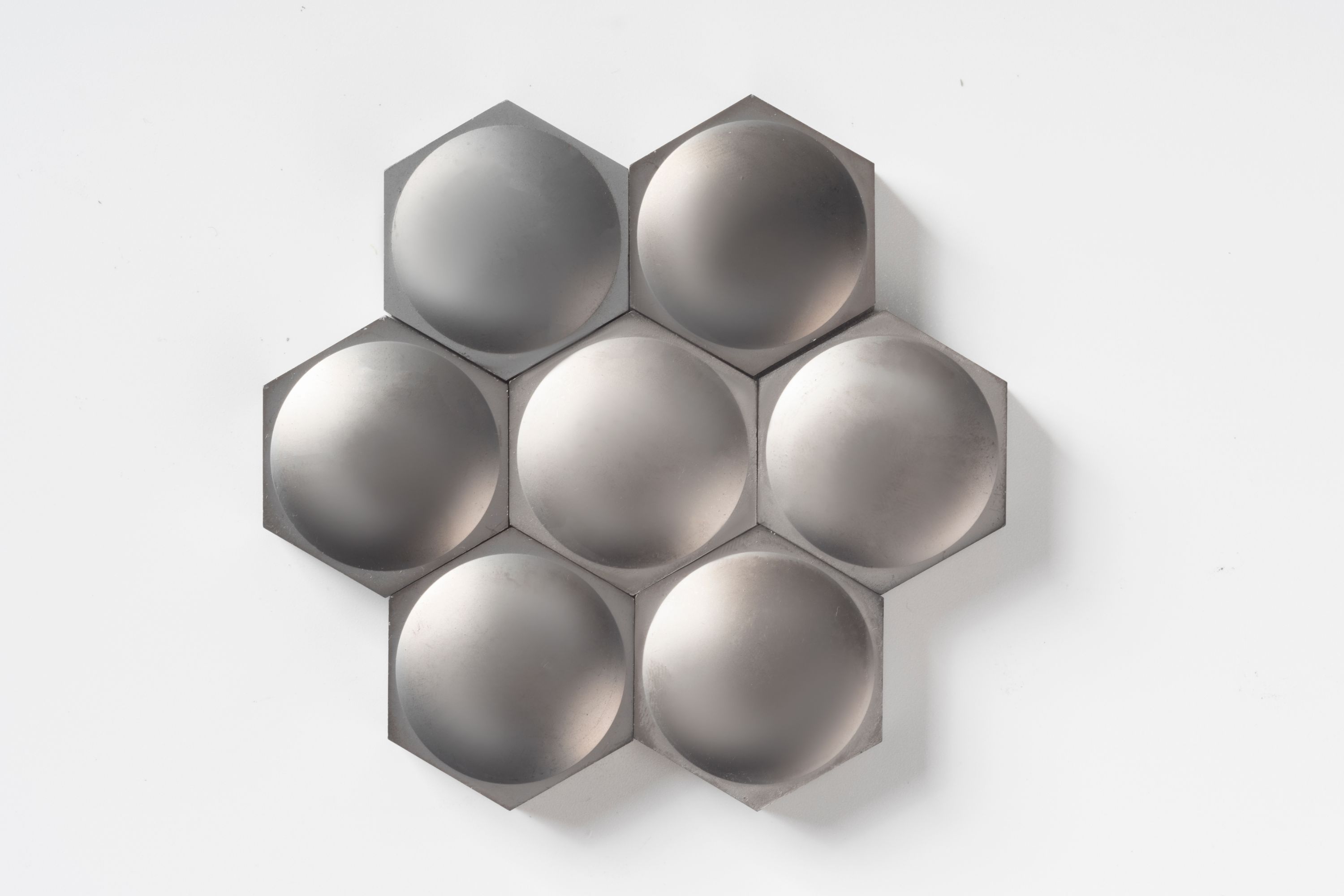
Most discussions about Chinese silicon carbide ceramics focus on price or raw material access, but the real edge lies in how factories orchestrate production from powder to finished part. Instead of relying on imported, pre-treated powders, many Chinese manufacturers run their own synthesis lines, tweaking purity, particle size distribution, and sintering additives in-house. This vertical integration removes a major quality bottleneck: external powder suppliers often deliver batches with subtle variations that force downstream adjustments. By controlling the entire chain, a plant can lock in consistent shrinkage rates and density, which translates directly into fewer cracked rings, seal faces, or armor tiles at the end of the line.
Another overlooked advantage is the sheer density of complementary workshops clustered in industrial zones. A SiC ceramic component rarely leaves the factory as a standalone piece; it gets lapped, coated, brazed to metal, or machined to micron tolerances. In provinces like Shandong or Jiangsu, a manufacturer can send a batch across the street for diamond grinding, then a few kilometers away for nickel plating, and still have it back the same afternoon. This tight geographic loop shortens lead times and allows rapid prototyping changes without the cross-border logistics that burden Western or Japanese suppliers. The result is not just lower cost, but faster iteration cycles that keep production lines flexible.
Finally, there is a quiet but critical investment in process know-how around difficult shapes and large-format parts. While many overseas firms specialize in small, simple discs or thin plates, Chinese workshops have accumulated experience in pressureless sintering of thick-walled tubes, complex impellers, and long beams that are prone to warping. Engineers there have learned to design graphite setters and support structures that minimize distortion during high-temperature densification. This tacit knowledge—built through thousands of trials and failures—allows them to take on jobs that others quote with high scrap rates or refuse altogether. It is not captured in patents or promotional brochures, but it shows up in the delivered part's flatness and dimensional stability.
Thermal Shock and Chemical Resistance: Properties That Set Chinese SiC Apart
Silicon carbide from Chinese manufacturers has quietly built a reputation for surviving conditions that would crack or corrode lesser materials. The secret lies in the crystal structure itself—tightly bonded silicon and carbon atoms resist abrupt temperature swings without micro-fracturing. In practical terms, this means a SiC heat exchanger tube can go from a 1200°C furnace straight into a room-temperature airstream without flinching. Repeated thermal cycling, day after day, simply doesn't produce the fatigue you'd see in alumina or zirconia.
Chemical resistance is another quiet advantage. Molten salts, hot acids, and even aggressive alkali vapors barely etch the surface of well-sintered Chinese SiC. Unlike oxide ceramics that slowly dissolve in HF or strong bases, SiC forms a passive silica layer only under specific oxidizing conditions, leaving it essentially inert in reducing atmospheres. This makes it a go-to material for burner nozzles in waste incineration and for pump seals handling corrosive slurries—applications where a single leak means costly downtime.
What really sets Chinese SiC apart isn't a single property but how these two combine. A cyclone liner that shrugs off thermal shock but slowly corrodes is useless; so is a chemically inert plate that cracks on first heat-up. Chinese producers have learned to balance grain size, sintering aids, and post-treatment to push both limits simultaneously. The result is a material that stays dimensionally stable and surface-smooth after thousands of hours in environments that would turn most engineering ceramics into powder.
From Semiconductor Fabs to Kiln Linings: Where Chinese SiC Ceramics Excel
Silicon carbide ceramics from China have quietly become the backbone of two very different industries: chip manufacturing and high-temperature industrial processing. In semiconductor fabs, these materials show up as wafer carriers, susceptors, and focus rings that must survive plasma etching and rapid thermal cycling without flaking or contaminating the silicon. Chinese manufacturers have pushed the purity and density of sintered SiC to the point where particle generation is negligible, which matters more than most people realize when a single stray particle can kill a $50,000 wafer.
The same family of ceramics also earns its keep inside rotary kilns, incinerators, and aluminum reduction cells. There the demands are less about cleanliness and more about mechanical toughness under thermal shock, abrasion from moving solids, and chemical attack from molten slag or salt. Chinese SiC kiln linings often outlast traditional alumina or magnesia bricks by a factor of three or more because the material combines high thermal conductivity with a low expansion coefficient. That means the lining sheds heat quickly instead of cracking from uneven temperature gradients.
What ties these applications together is a production ecosystem that has learned to tune microstructure for failure mode. Fabs want a fine-grained, closed-pore body with no free silicon; kilns can tolerate more porosity but need a coarser, interlocking grain structure. Chinese suppliers increasingly offer both grades without the premium pricing Western buyers used to expect, which is why you see their SiC ceramics specified in places from TSMC cleanrooms to cement plant preheaters.
Wear and Tear Meets Its Match: Chinese Silicon Carbide in Heavy Industry
When a slurry pump impeller chews through quartz sand day after day, the replacement interval has less to do with maintenance schedules than with how long the material can hold an edge. Chinese silicon carbide has quietly changed that calculation. Sintered and reaction-bonded grades emerging from Ningxia and Henan now hold hardness values above 9.2 on the Mohs scale, but the real story is fracture toughness. Foundries have learned to tune the grain size and binder phase so a liner plate resists both abrasion and the occasional impact that used to shatter cheaper ceramics.
In steel mills and coal preparation plants, the material shows up in places that rarely get photographed: chutes, cyclones, burner nozzles, mechanical seals. A coal-water slurry pump lined with Chinese silicon carbide typically lasts three to five times longer than a chrome-alloy equivalent, without the weight penalty. That longevity matters not just for part cost but for downtime. One maintenance crew in Shanxi kept track and found that switching to SiC elbows cut unscheduled stoppages on a dense-medium line by nearly half over a season.
The shift is not about a single breakthrough formula. Suppliers differentiate by application: porous SiC for kiln furniture, dense SiC for armor and seals, nitride-bonded SiC for high-temperature wear. What ties them together is a production scale that keeps per-kilogram prices low enough for heavy industry to treat silicon carbide as a consumable rather than a specialty ceramic. That is the real match for wear and tear: not hardness alone, but affordable, repeatable hardness delivered where the abrasion is worst.
Electrification, EVs, and Energy Storage: The Expanding Role of China’s SiC Ceramics
China's push toward electrification has turned silicon carbide ceramics from a niche material into a strategic backbone. In the EV sector, these ceramics are no longer just used in power modules; they now appear in on-board chargers, DC-DC converters, and even thermal management components. The shift from silicon to SiC allows higher switching frequencies and lower energy losses, which directly translates into longer driving ranges and smaller cooling systems. Chinese manufacturers have responded by scaling up production of high-purity SiC substrates and sintered ceramic parts, driving down costs faster than many Western analysts predicted.
Energy storage systems add another layer of demand. Grid-scale batteries and residential storage units require inverters that can handle high voltage and temperature swings. SiC ceramics provide the needed dielectric strength and thermal conductivity, but China's advantage lies in vertical integration. From raw powder synthesis to final ceramic metallization, domestic supply chains now cover nearly every step. This has allowed Chinese firms to produce SiC heat sinks, substrates, and sealing rings at volumes that make them competitive not just in price, but in supply reliability during semiconductor shortages.
What often gets overlooked is the role of SiC ceramics in the charging infrastructure itself. Ultra-fast DC chargers operate at 800V and above, pushing conventional insulation materials to their limits. SiC-based ceramic components inside the charger's power stages reduce arcing risks and improve heat dissipation under continuous load. As China builds out its national charging network, the demand for these ceramics follows a different growth curve than EV production alone—more tied to peak power handling than vehicle count. This dual demand from vehicles and infrastructure is quietly reshaping the global SiC ceramic market, with Chinese producers now setting the pace for both technical specs and cost benchmarks.
FAQ
The material typically combines high-purity α-SiC powder with pressureless or reaction sintering, which yields a dense body with Vickers hardness above 2200 HV and thermal conductivity around 120 W/m·K. Chinese producers have refined raw material purification and furnace uniformity, so the grain boundaries stay clean and the properties remain consistent across large batches.
In pump seals, sandblasting nozzles, and kiln furniture, the payback comes from longer service life versus metals or resin-bonded abrasives. A SiC mechanical seal face can outlast tungsten carbide in abrasive slurries by a factor of three while cutting maintenance downtime, so the initial higher cost is usually recovered within months.
Reaction-bonded silicon carbide (RBSC) contains some free silicon, typically 8–15%, which limits its use above 1350°C but makes near-net shapes cheaper and easier to machine. Sintered silicon carbide (SSiC) is more expensive and harder to form, but it keeps full strength up to 1600°C and resists strong acids and alkalis, so it fits chemical processing and high-temperature applications.
Yes, many tier-one Chinese manufacturers now supply vacuum chucks, wafer boats, and focus rings with purity above 99.5% SiC and surface roughness below Ra 0.2 µm. They use dedicated cleanrooms and perform particle-count testing, which matches the requirements of 8-inch and 12-inch fabs, though buyers should still verify batch-level data for plasma etch resistance.
The key checks are density (usually >3.10 g/cm³ for SSiC), four-point bending strength (typically 380–450 MPa), Weibull modulus for reliability, and ultrasonic C-scan for internal flaws. Also confirm dimensional tolerances, especially on seal faces or precision components, because post-sintering grinding is the main source of variation between suppliers.
Labor and energy costs, plus integrated raw-material supply chains, allow many Chinese factories to offer SSiC at 20–40% below European or Japanese equivalents for similar specifications. Smaller buyers benefit from lower minimum order quantities for standard shapes like rings, tubes, and plates, and many suppliers are willing to do custom sizes without heavy tooling charges.
In aluminum casting, SiC thermocouple protection tubes and riser tubes withstand molten aluminum attack far better than graphite, which erodes and contaminates the melt. In waste incineration and cyclone separators, SiC liners retain hardness and oxidation resistance at 1400°C, while alumina tends to crack under thermal shock because of its lower thermal conductivity and higher expansion coefficient.
Several plants have switched to iso-static pressing and vacuum sintering, which lowers residual porosity below 0.5% and reduces the size distribution of pores. Adding small amounts of boron carbide and carbon as sintering aids, plus controlled atmosphere ramp rates, helps densification without grain growth, leading to higher fracture toughness and better wear resistance in finished components.
Conclusion
China's silicon carbide ceramic has moved beyond niche use, proving itself in environments where temperatures would cripple standard alumina or zirconia. The material survives repeated thermal cycling, shrugging off deep gradients that crack conventional refractories, and it resists attack from acids, alkalis, and molten slag. This resilience comes from manufacturing refinements unique to Chinese producers: pressureless sintering with carefully controlled grain boundaries, tighter purity tolerances on raw SiC powder, and cost-effective net-shape forming. Those process advantages allow complex components like wafer boat supports, kiln shelves, and heat exchanger tubes to be made at scale without sacrificing density or hardness.
In semiconductor fabs, these ceramics hold up under plasma etching and rapid thermal processing, while in kiln linings they extend campaign life by months. Heavy industry sees them in pump seals, abrasive slurry nozzles, and cyclones, where wear resistance cuts downtime. The push toward electrification amplifies demand: EV power modules need substrates that dissipate heat and block high voltage, battery dry rooms use SiC rollers, and energy storage systems rely on corrosion-resistant seals. Because Chinese makers can adjust porosity and secondary phases, the same base material shifts from electrically insulating to thermally conductive as needed. That adaptability, paired with consistent batch quality, is why designers now specify Chinese SiC ceramics for both legacy furnaces and next-generation power electronics.
Contact Us
Contact Person: Junting Leo
Email: [email protected]
Tel/WhatsApp: +86 18615009766
Website: https://www.huayimaterial-china.com/