

Chinese Sampling Valve Selection and Application Guide
2026-09-01
Sampling valves are critical components in many industrial processes, yet selecting the right one for Chinese applications can be challenging due to varying standards and operating conditions. This guide demystifies the selection process, covering key factors such as material compatibility, pressure ratings, and connection types. Whether you're upgrading existing systems or designing new ones, understanding how AVM sampling valves perform in these environments can save time and prevent costly errors. Read on to discover practical tips for choosing and applying the ideal sampling valve in China.
Why Dead Volume Matters More Than Cv in Sampling Valves
Most engineers reach for Cv as a shortcut when comparing valves, but that habit falls apart with sampling valves. Cv tells you how much fluid moves through an open valve under a given pressure drop—useful for continuous process lines, almost irrelevant for a valve that spends most of its life closed. In a sampling valve, what matters is the fluid left behind after the valve shuts: the dead volume trapped in seat crevices, seal cavities, or unmachined corners. Once that residue enters your analytical system, Cv cannot correct the result.
Dead volume drives purge cycles and cross-contamination. A valve rated for high Cv can still hold 10 microliters in a side pocket, and in trace analysis that is enough to shift a 1 ppb measurement by several hundred percent. Sampling valves should be evaluated by swept volume, internal wetted surface area, and whether the flow path collapses to zero volume when closed—not by how much flow they pass when open. A compact valve with modest Cv but zero dead volume will outperform a large-bore valve with internal cavities every time.
Think of Cv as a line-sizing metric and dead volume as a sample-integrity metric. When you select a sampling valve, read the cross-section drawing first, not the flow coefficient table. If the drawing shows dead legs, threads, or unswept corners, reject the valve regardless of Cv. This shift in priority is what separates sampling systems that run repeatable analyses from those that fight unexplained spikes.
Seal Materials That Survive Chlorides, Solvents, and Steam Cycling
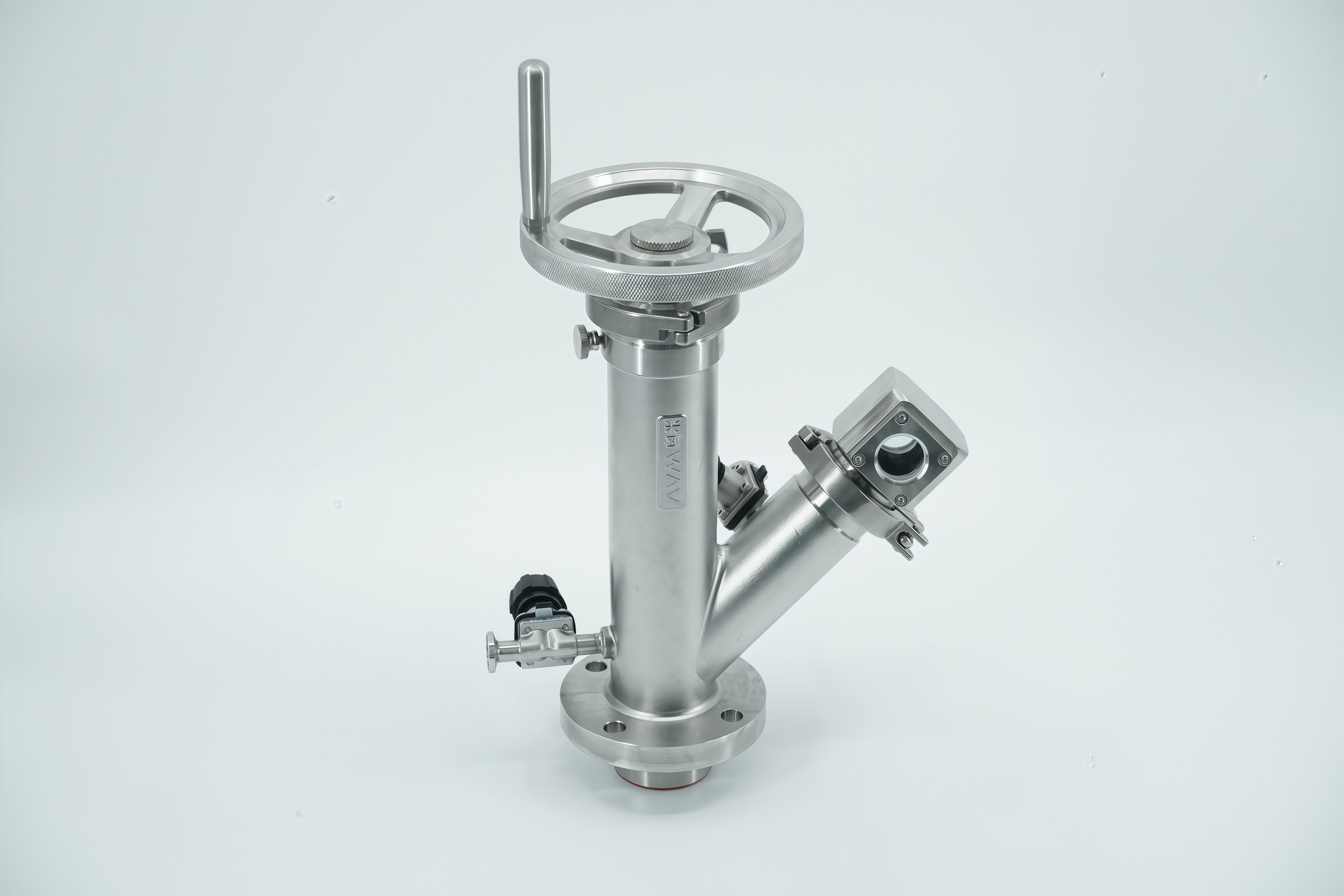
Chlorides, aggressive solvents, and repeated steam cycling rarely attack a seal the same way twice. Pitting from chloride ions often starts at the surface finish, while solvent absorption can swell an elastomer enough to change its compression set. Add thermal cycling from steam and you get a fatigue mechanism that doesn’t show up on a single-immersion datasheet. That is why seal selection for these conditions has to start with the specific combination of chemicals and temperature swings, not just a compatibility chart.
PTFE remains a workhorse for chlorides and most solvents, but its tendency to creep under load means it needs a well-designed energizer—usually a stainless steel spring or an elastomer core—to keep sealing force as temperatures cycle. EPDM handles steam and hot water well, and resists many polar solvents, yet it will degrade rapidly in hydrocarbon-based solvents or oils. FKM offers better solvent resistance but can lose strength after prolonged exposure to steam above 150°C. For the harshest crossover conditions, perfluoroelastomer (FFKM) compounds cover both chemical and thermal demands, though the cost often forces a more targeted use only at critical sealing points.
The weak link is seldom the material alone. Steam cycling causes condensation flashes that can trap chloride-laden water at the seal interface, accelerating crevice corrosion on metal hardware and stress cracking on the polymer. A seal that survives constant steam may fail after a few hundred cycles because the dynamic movement strips away protective oxide layers or causes micro-tearing. Testing should therefore include thermal shock with a contaminated condensate, not just dry heat or static chemical immersion, and the final design should pair the chosen seal material with a surface finish and groove tolerance that keep the seal energized without over-compressing it.
Selecting Between Ball, Needle, and Diaphragm Sampling Valves
Choosing among ball, needle, and diaphragm sampling valves usually comes down to what you are pulling from the line and how clean the cut needs to be. Ball valves handle thick, particle-laden fluids without clogging, but their large internal cavities can trap residue, which makes them less attractive when cross-contamination is a concern. Needle valves give you fine metering control for low-flow gas or liquid sampling, though the narrow flow path is not forgiving with slurries or sticky media. Diaphragm valves, with their minimal wetted surface and crevice-free body, are the workhorse for high-purity or sanitary applications where every drop has to count.
There is no universal winner here. If you are grabbing a quick sample from a slurry line and can tolerate a flush between grabs, a ball valve is often the simplest and most reliable choice. For analytical sampling where you need to throttle down to a trickle, a needle valve makes more sense. When system integrity, cleanability, or trace-level contamination control drives the decision, a diaphragm valve usually proves worth the extra cost. Match the valve internals to the sample's viscosity, cleanliness requirements, and the operator's tolerance for maintenance, and the choice becomes much less abstract.
Pressure and Temperature Ratings: What the Nameplate Doesn't Tell You
A nameplate typically lists a single maximum pressure at a single reference temperature, often implying the component is safe right up to that point. In practice, materials lose strength as temperature climbs, so the allowable pressure drops along a curve that isn't shown on the tag. Carbon steel, stainless steel, and alloys each follow different de-rating paths, and a fitting rated for 300 psi at ambient may only be good for 180 psi at 500°F. Without checking the applicable pressure-temperature table for the specific material group and product standard, you're guessing.
What the nameplate also omits is how the rating applies to the entire assembly, not just the part in your hand. A flange's rating assumes certain bolting, gasket, and alignment conditions. If you swap in a softer gasket or use under-torqued bolts, the joint may leak well below the stamped class. Similarly, a valve body may carry a Class 300 mark, but its seat, packing, or actuator could limit the real operating window—especially when thermal cycling or minor pressure spikes are present.
Finally, corrosion, erosion, and fatigue change the safe operating envelope over time. The nameplate describes new, clean, undamaged material. Once wall thickness is reduced by pitting or the part has seen thousands of pressure cycles, the original rating no longer holds. That's why many sites impose their own de-rated limits based on inspection history and service conditions, rather than treating the stamped numbers as a permanent guarantee.
Actuation Choices When Sampling Points Are Hard to Reach
Reaching a sampling point tucked behind an obstacle or buried inside a narrow cavity often forces a rethink of the actuator itself. Standard rotary or linear drives assume a clear line of motion, but once you lose that, the choice shifts toward compliant mechanisms or tendon-driven systems that can snake past obstructions without needing a bulky housing at the tip. A thin flexure with a piezoelectric stack, for instance, gives sub-millimeter positioning inside a gap where a conventional servo would simply jam.
The trade-off rarely gets discussed in spec sheets: remote actuation adds friction, hysteresis, and a loss of stiffness at the point of contact. If you route cables through a curved guide to reach a deep sampling site, the force you apply at the handle is not what arrives at the probe. Engineers compensate with closed-loop feedback from tiny strain gauges or optical encoders near the end effector, but that only works if the sensor can survive the same cramped, dirty environment as the actuator.
In practice, many field systems combine two layers. A coarse, high-torque drive positions the main arm near the difficult spot, while a secondary microactuator—often shape-memory alloy or a magnetically driven flexure—performs the final delicate approach. This split keeps the heavy, reliable hardware in the open and leaves only a minimal, disposable tip inside the hard-to-reach zone. The result feels less like a single robot arm and more like a surgeon using a long, precise finger.
Drainage, Orientation, and Piping Details That Prevent Contamination
Effective drainage starts with a consistent slope across every horizontal surface, usually between 1/8 and 1/4 inch per foot, so that washdown water and product residues never pool. Floor drains are positioned away from high-traffic processing zones and equipped with removable strainer baskets that trap solids before they reach the main line. Any low point in the piping must include a cleanout or a drop leg designed to be opened and flushed during sanitation cycles.
Equipment orientation matters just as much as the pipes themselves. Open processing vessels are angled slightly toward their drain outlets, and overhead rails, conduits, or utility lines are routed so condensation cannot drip onto exposed product contact surfaces. Where piping must cross above a filling or packaging area, a drip pan or shielded chase is installed to deflect any incidental leakage away from the production line.
Piping details focus on eliminating dead legs and crevices where bacteria can thrive. Tees are replaced with swept elbows, and instrument ports use short, self-draining connections that comply with the 1.5D or 2D rule for branch length. Backflow prevention devices are placed at every hose station and utility drop to stop contaminated water from being pulled into the potable supply, while air gaps at drain connections maintain a physical separation between process waste and the sanitary sewer.
FAQ
Look closely at how the valve handles dead volume and how easily it can be flushed between grabs. A well-designed unit will have a short, drainable path and seals that don't trap product; cheaper options often hide stagnant pockets that skew later results.
For aggressive acids or chlorides, moving from standard 316 stainless to Hastelloy C-276 or adding a thick PFA lining can pay off quickly. Don't overlook the seat and packing—PTFE is common, but reinforced PTFE or PEEK holds up better under temperature swings.
Many provinces now push for closed systems that recycle purge gas or return liquid to the process instead of venting to atmosphere. That means selecting valves with integrated needle assemblies and leak-tight septa, plus documenting the system's emissions during permitting.
It can cut spare parts inventory and training time, but only if the valve covers enough pressure and temperature range. Watch for cases where a unit runs hot slurries—the same diaphragm material may fail there even though it works fine in ambient solvent service.
Daily use shortens seal life, so plan on inspecting the diaphragm or piston seal every two to three months. After any steam purge, let the valve cool before closing fully, and keep a spare seal kit on site because food-grade elastomers can swell with certain oils.
Manual valves remain attractive for low-frequency sampling where a PLC integration cost isn't justified. They also give operators tactile feedback when the process is sticky, and troubleshooting is simpler without solenoid or positioner issues.
Ask for cross-section drawings, not just marketing photos. Check the internal angle of the sample path—anything less than 135 degrees from the main flow can trap product. Also request surface roughness measurements on the actual wetted parts, not a generic brochure value.
Retractable designs help when you need to insert a probe into a flowing line without shutting down, or when the sample point tends to plug with solids. They cost more and need more maintenance, so reserve them for slurries, viscous polymers, or reactor contents that stratify.
Conclusion
When specifying sampling valves for Chinese process plants, the usual focus on flow coefficient often misses the point. Dead volume inside the valve body and its connection points dictates whether a grab sample truly represents the line fluid. Even a high-Cv valve can trap stale product, requiring excessive flushing before each use. Seal selection becomes equally critical in aggressive service: chlorides attack standard PTFE and metal seats, aromatic solvents can swell elastomers, and repeated steam sterilization cycles degrade many polymers. Experience shows that bellows-sealed diaphragm valves with perfluoroelastomer or graphite-filled PTFE packing hold up better than simple ball or needle designs when switching between hot condensate and cold solvent. Needle valves, while offering fine throttling, create long, narrow dead legs that are hard to purge; ball valves have low pressure drop but often retain liquid in the ball cavity; diaphragm valves provide the smallest internal volume and easiest clean-in-place behavior.
Pressure and temperature ratings on a sampling valve nameplate are frequently misleading: they may be derived from static test conditions, not the cycling or vacuum often seen during sampling. A valve rated for 150 psi at 200°C can still leak at 50 psi when hammered by water slug or thermal shock. For sampling points located behind reactor skirts or on top of distillation columns, manual actuation is not practical. Pneumatic actuators with spring-return or manual override, fitted with position indicators, reduce operator risk and ensure repeatable sampling sequences. Finally, the piping around the valve matters as much as the valve itself. A downward-sloping sample line with a low-point drain prevents liquid pooling; orientation of the valve outlet away from steam traps and vents minimizes cross-contamination; and using short, welded connections instead of threaded fittings eliminates crevices where bacteria or process residues can hide. Proper drainage and dead-leg elimination are the difference between a representative sample and a compliance failure.
Contact Us
Contact Person: Ananda
Email: [email protected]
Tel/WhatsApp: 8619016718200
Website: https://www.wzaomi.com