

Chinese Spiral Freezer: Unlocking Efficient Freezing Solutions
2026-05-06
Imagine a freezing technology so advanced that it locks in freshness faster than ever before, slashing energy costs while boosting production. Enter the world of Chinese spiral freezers—engineered to deliver rapid, uniform chilling for everything from seafood to baked goods. At the forefront of this innovation, Worldbase brings you cutting-edge systems that redefine efficiency, whether you're scaling up a small operation or running a 24/7 line. With their space-saving vertical design and precision airflow, these freezers don't just freeze products—they preserve quality, texture, and taste with unmatched reliability. What sets them apart? It's not just the technology; it's the promise of a smarter cold chain, made accessible through local expertise and global standards. Ready to take your freezing process to the next level? Let's explore how these solutions transform challenges into opportunities.
How Spiral Freezers Cut Energy Costs Without Sacrificing Speed
Spiral freezers have reshaped industrial freezing by packing a lot of capacity into a small footprint, and that compact design itself is a big energy saver. Unlike sprawling tunnel systems, the vertical spiral arrangement minimizes the surface area exposed to ambient temperatures, so the cold air stays where it’s needed. The result is a system that brings products down to temperature fast without burning through power.
Many models now come with variable-frequency drives on fans and compressors, which means they only run at full tilt when the freezer is loaded. During lighter cycles, the motors ramp down, slashing electricity use without affecting the core freeze time. Add in tight-sealing doors and modern insulation materials, and you’ve got a machine that holds the cold in and keeps energy waste out.
In practice, food processors find they can push through the same volume in less time while seeing a noticeable dip in monthly utility bills. This balance of speed and efficiency stems from engineering that keeps airflow uniform and heat transfer consistent, so there’s no need to overcompensate with longer dwell times or lower setpoints. It’s a smarter way to freeze, plain and simple.
The Hidden Engineering Behind Rapid Food Freezing
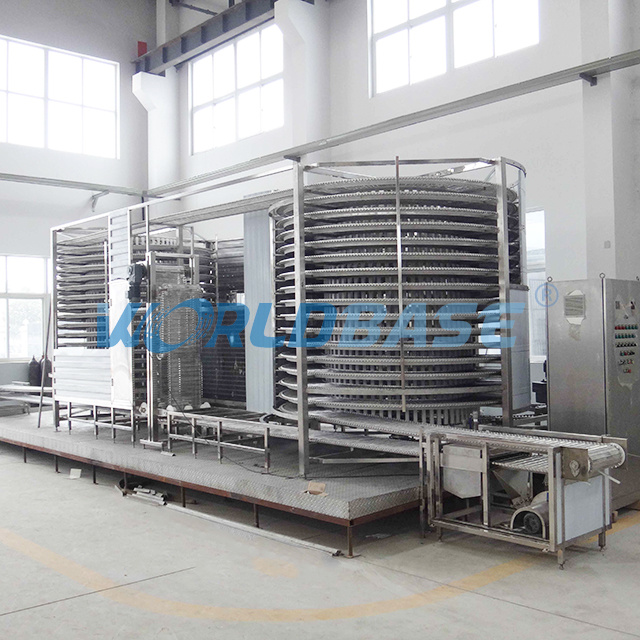
Most people think freezing food is as simple as dropping the temperature below zero, but the real magic lies in speed. Ordinary slow freezing creates large, jagged ice crystals that rupture cell walls, turning strawberries into mush and steak into a leaky mess. Rapid freezing, however, exploits thermodynamics and fluid dynamics to outrun nature’s destructive tendencies. By blasting food with ultra-cold air or immersing it in cryogenic fluids, engineers force water molecules to flash-freeze into microscopic crystals almost instantly. The result isn’t just preserved food—it’s food that tastes nearly as fresh as the day it was picked.
The core challenge is overcoming the “heat transfer bottleneck.” Food is a horrible conductor of heat, and its thermal center often lags dangerously behind its surface. To solve this, industrial freezers use boundary-layer disruption—think hurricane-force jets of -40°F air that peel away insulating films of moisture around each pea or shrimp. Some systems deploy liquid nitrogen tunnels that boil at -320°F, enveloping products in a violent yet controlled vapor dance. It’s a carefully orchestrated battle where every second counts, pushing the freezing front through the food’s core faster than ice can wreak havoc.
Behind the scenes, engineers also wrestle with the physics of phase change. Water turning to ice releases latent heat, which can actually warm the surrounding area and slow down the process—a paradoxical self-sabotage. Advanced models use computational fluid dynamics to map temperature gradients and adjust fan speeds or conveyor belts in real time. Even the shape of air nozzles and the spacing of food pieces are tuned to maintain turbulent flow. The result is an invisible symphony of physics that keeps our frozen pizzas crisp and our fruits intact, all without a second thought from the consumer.
Why Food Manufacturers Are Switching to Chinese Spiral Freezers
The global food processing landscape is quietly undergoing a shift, and at the center of it is the growing preference for spiral freezers manufactured in China. For years, European brands dominated the market with reliable but often expensive equipment. Now, a combination of competitive pricing, rapidly improving build quality, and surprisingly quick customization has made Chinese alternatives hard to ignore. It’s not just about being cheaper—it’s about getting a machine that fits a specific production line without the long wait times and rigid specifications often seen elsewhere.
Another quiet driver is how service and support have evolved. Many Chinese manufacturers now station engineers in key markets or offer remote diagnostics that resolve issues in hours, not days. This wasn’t the case a decade ago. Food manufacturers are pragmatic; they need reliable uptime and spare parts that don’t take weeks to arrive. The shift toward Chinese spiral freezers is less about nationalism or trade dynamics and more about these machines finally meeting the practical, everyday demands of modern food production.
There’s also a design philosophy at play that resonates with smaller and mid-sized producers. Instead of over-engineering every component, Chinese builders often focus on energy efficiency and footprint reduction, delivering freezing performance that matches the needs of most products without unnecessary complexity. This keeps maintenance simpler and operating costs lower. As energy prices remain volatile, that kind of practical thinking is exactly what many factory floors are looking for.
Maximizing Production Floor Space with Vertical Freezing Systems
Traditional horizontal freezing tunnels demand extensive floor layouts, often consuming prime production real estate that could be better utilized for processing or packaging. By shifting to a vertical configuration, these systems stack product flow upward rather than outward, immediately reclaiming valuable square footage. This architectural pivot allows facilities to maintain—or even increase—throughput without expanding their physical footprint, a critical advantage in crowded industrial kitchens or bakeries where every meter counts.
Vertical freezing units integrate seamlessly into existing workflows, often fitting into narrow corridors or between processing lines that would otherwise sit idle. The upright design uses gravity to assist product movement, reducing the need for lengthy conveyors and complex material-handling infrastructure. Operators can load and unload at ergonomic heights, minimizing strain while keeping the system's footprint remarkably compact. It’s a practical solution that turns underused vertical space into a productive asset, rather than letting it go to waste.
Beyond the immediate space savings, adopting a vertical freezing approach can reshape how a plant grows. Instead of costly expansions or off-site storage, production managers can rethink layout priorities, dedicating more area to value-added activities. The reduced footprint also simplifies sanitation and maintenance access, since equipment is more contained. For businesses watching their bottom line and spatial constraints, vertical freezing isn’t just a freezer—it’s a strategic space management tool that adapts to the realities of modern, cramped facilities.
A Closer Look at Hygienic Design in Modern Freezers
Modern freezers are no longer just metal boxes that keep things cold. Their interior architecture has quietly evolved, with smooth, crevice-free liners and integrated shelving that minimize the places where spills and bacteria can hide. Instead of sharp corners and overlapping seams, many models now feature seamless, thermoformed plastic walls that curve gently into shelves, making routine wipe-downs genuinely effortless. This design shift isn't just about aesthetics; it directly addresses cross-contamination risks in busy kitchens where raw ingredients and prepared foods share limited space.
On the air circulation front, hygienic design takes a less visible but equally impactful turn. Antimicrobial seals and gaskets made from materials like silver-infused EPDM rubber inhibit the growth of mold and mildew in the damp, dark folds of door linings. Fan-assisted cold air distribution systems have been re-engineered to prevent dead zones where pathogens could linger, keeping temperatures uniform without creating excessive condensation. Some units even incorporate UV-C light modules within the air channels, neutralizing airborne microbes as air circulates—a feature that remains hidden from view but works continuously.
Perhaps the most practical leap forward is found in the humble drip tray and defrost management. Historically, these components were a breeding ground for slime if not cleaned obsessively. Nowadays, hydrophobic surfaces and angled drainage channels ensure that water from automatic defrost cycles flows quickly into sealed, removable collection basins, often with antimicrobial coatings. The result is a freezer that not only preserves food longer but also defends itself against the microbial buildup that often plagues older designs—all without requiring special cleaning agents or extra steps from the user.
Future-Proofing Your Cold Chain with Advanced Freezing Tech
Modern cold chains demand more than just keeping things cold—they require precision, resilience, and intelligence. Advanced freezing technologies like liquid nitrogen tunnel freezers and impingement systems drastically reduce freezing time, locking in product quality at a molecular level. This not only preserves taste and texture but also extends shelf life, giving you a tangible edge in competitive markets. By integrating real-time thermal monitoring and adaptive controls, these systems automatically adjust to load variations, eliminating hot spots and ensuring consistent product integrity from inlet to outlet.
The shift toward modular, scalable equipment means you can future-proof your operations without massive upfront overhauls. Hybrid units that combine cryogenic and mechanical refrigeration let you fine-tune energy usage while maintaining throughput, slashing operational costs. Meanwhile, data-driven insights from IoT sensors feed into predictive maintenance algorithms, flagging issues before they escalate into downtime. This proactive approach transforms your cold chain from a cost center into a strategic asset, ready to adapt to evolving food safety standards and unpredictable demand patterns.
Ultimately, investing in advanced freezing tech is about building a supply chain that learns and evolves. With features like automated defrost cycles and remote diagnostics, you can run leaner, safer operations while reducing waste. As consumer expectations around freshness and sustainability intensify, these innovations position you to meet tomorrow’s challenges head-on—without compromising on quality or efficiency.
FAQ
A spiral freezer is a type of industrial freezer that uses a helical conveyor belt to move products through a refrigerated chamber. Products enter at one end and travel upward or downward in a continuous spiral, exposing them to cold air evenly, which rapidly freezes them while preserving texture and quality.
Chinese manufacturers focus on combining robust engineering with cost-effectiveness. They integrate advanced control systems, durable stainless steel construction, and flexible customization options, often delivering units that meet international standards at a more competitive price point.
It maximizes product throughput in a compact footprint. The spiral design ensures consistent airflow around each item, reducing freezing time significantly. Quick freezing locks in freshness and minimizes ice crystal formation, which helps maintain product integrity better than slower, batch-style freezers.
Food processing sectors that handle high volumes of individually quick-frozen products—like seafood, poultry, baked goods, and ready meals—see the biggest advantages. They allow continuous production lines, improving output and maintaining consistent quality.
Regular cleaning of the belt and evaporator coils, lubrication of drive components, and inspection of the belt tension and alignment are key. Monitoring refrigerant levels and defrost cycles also prevents ice buildup and keeps energy consumption optimal.
Yes, many now incorporate energy-efficient compressors, advanced insulation panels, and optimized airflow designs to reduce power usage. Some models use natural refrigerants like ammonia or CO2, lowering global warming potential and aligning with sustainability goals.
Conclusion
Chinese spiral freezers are redefining industrial freezing by combining energy efficiency with high throughput. Their design minimizes heat exchange losses, often using advanced air impingement and optimized coil arrangements to cut power consumption without slowing the line. This balance is rooted in sophisticated engineering: from precisely angled airflow patterns that ensure uniform cold distribution to variable-speed drives that adapt compressor and fan operation to real-time load. As a result, processors achieve fast, consistent freezing even for delicate products like berries or seafood, locking in quality while lowering operational costs.
The shift toward these systems is also driven by practical production needs. Their vertical configuration stacks conveyor tiers, dramatically reducing the footprint and freeing up valuable floor space. Hygienic design is integral, with sloped surfaces, quick-release belt systems, and fully welded seams that eliminate niches where bacteria could thrive—streamlining sanitation and meeting stringent food safety standards. Increasingly, global manufacturers are adopting Chinese spiral freezers not just for cost advantages, but for their intelligent automation and IoT-ready controls that future-proof cold chains. By integrating predictive maintenance and remote monitoring, these freezers keep the cold chain resilient against evolving market demands, making them a strategic asset for any modern food processing facility.
Contact Us
Contact Person: Mr Yang
Email: [email protected]
Tel/WhatsApp: +8613809083091
Website: https://en.worldbase.cn