

Cooling Gel Mattress Topper Factory: How Premium Sleep Products Are Made
2026-11-24
Ever wonder what actually happens inside a cooling gel mattress topper factory before one ends up on your bed? It’s not just foam and fabric slapped together. At Kunbao, the process is built around a stubborn problem: nights that get too hot. From gel viscosity checks to temperature-controlled curing, each step shapes that cool, supportive layer people fight over. Here’s a closer look at how premium sleep products are made—and why the details matter more than you’d think.
Sourcing Gel That Stays Cool When It Matters
Finding a gel that holds its cooling effect under real-world conditions comes down to a few overlooked variables. Most suppliers will show lab numbers, but the real test happens after the jar has been opened, left in a warm room, or applied to skin that is already overheated. Ask for samples that have been through temperature cycling, not just fresh batches, and pay attention to how the texture changes when it warms up slightly. A formula that feels icy for two minutes and then turns thin or sticky is not doing the job.
The base material matters more than the marketing. Look for gels built around high-water-phase systems with humectants that hold moisture without trapping heat, and avoid versions overloaded with alcohol or synthetic menthol substitutes that spike a quick chill but evaporate fast. During sourcing, request third-party viscosity and cooling-retention data at skin temperature, and compare it against your own simple bench test: a small amount spread on the inner wrist should keep a noticeable cool sensation for at least ten to fifteen minutes without turning tacky.
Supplier conversations also reveal a lot. The ones worth working with will talk openly about batch consistency, preservative systems that survive warm storage, and packaging that does not accelerate heat loss. If a vendor only emphasizes the immediate cooling flash, dig deeper. A dependable gel should perform when a customer is already uncomfortable, not just during a quick demo in an air-conditioned room.
The Pouring Floor Keeping Every Batch Even
Concrete doesn't wait for anyone. On the pouring floor, timing is everything, and the difference between a mediocre pour and a clean one often comes down to how evenly the mix is distributed. Workers move in a rhythm that looks almost rehearsed—one guiding the chute, another working the vibrator, a third checking the level. When the flow hesitates, even for a few seconds, the batch can start to set in pockets, leaving weak spots that no amount of finishing will hide. The floor becomes a live surface, shifting under boots and tools, and keeping it even is less about strength than about attention.
What looks like brute labor is actually a quiet negotiation with gravity and slump. A batch that arrives too dry won't spread without dragging, too wet and it slides past the forms. The crew learns to read the mix by how it folds off the chute, how it responds to a rake, how it takes the edge of a screed. Small adjustments happen constantly—not with words, but with hand signals and the angle of a wrist. That consistency across the entire slab is what separates a floor that will crack within a season from one that stays flat under years of traffic.
By the time the last wheelbarrow empties and the power trowel begins its slow circles, the real work has already been decided. Evenness isn't added at the end; it's built into every pass, every pause, every decision about where to pour next. The floor underneath your feet never tells you how many small corrections kept it level. It just holds, evenly, without drama, the way a well-run pour is supposed to end.
Layer Bonding That Puts Breathability First
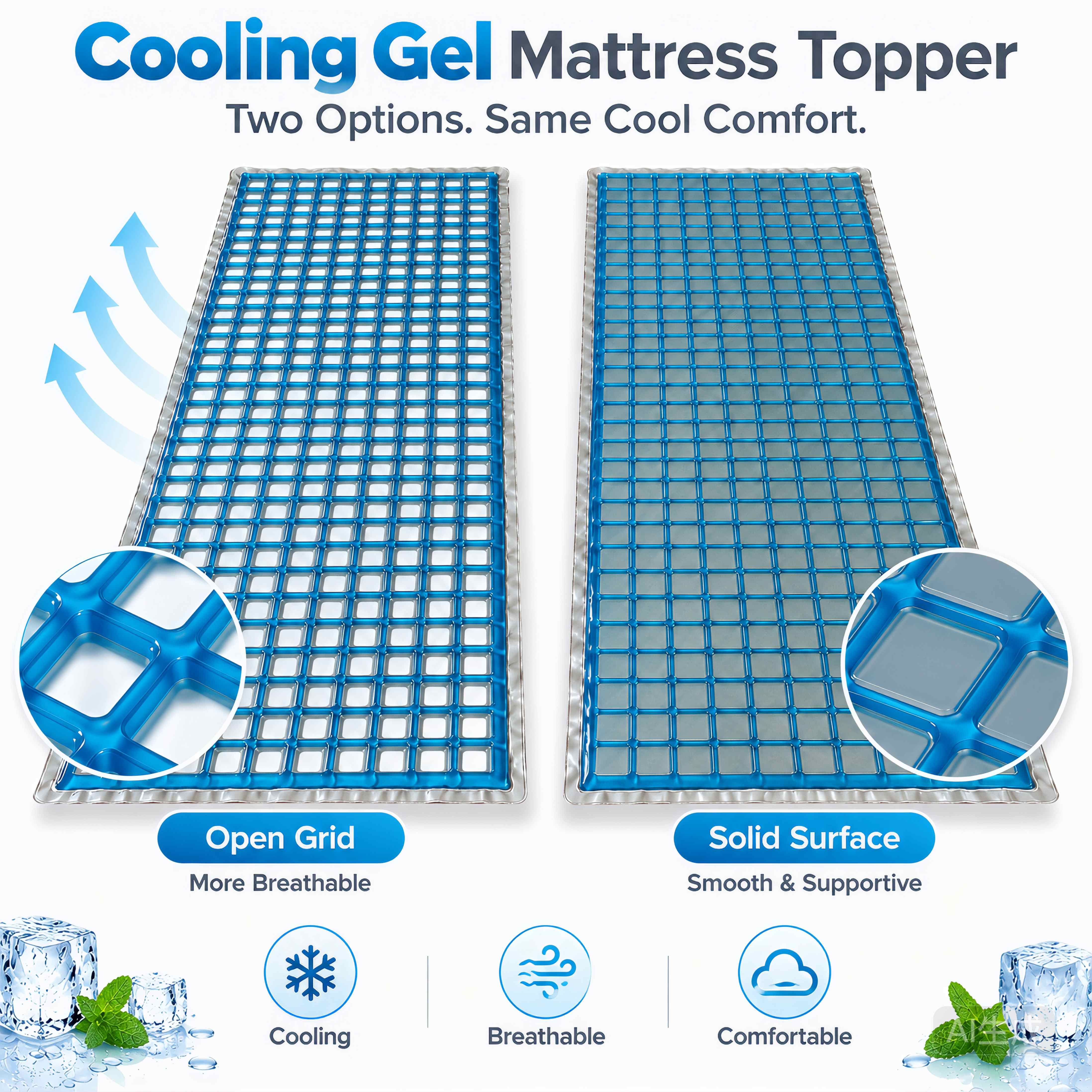
Most bonded fabrics earn their weather protection by sealing every layer into an almost airtight sandwich. This construction takes a different route. The bonding points are spaced and the adhesive is applied in a fine, open pattern, so moisture vapor has room to move outward instead of collecting against your skin.
That spacing matters more than it looks. Rather than relying on a continuous glue film that blocks airflow, the layers stay connected at enough points to remain stable, while the gaps between those points give warm, humid air a way out. You notice the difference during sustained effort, when the fabric feels less clingy and more even-tempered.
The advantage is that breathability is not an afterthought added with vents or mesh panels. It comes from the way the layers are joined in the first place, which keeps the hand of the fabric lighter and the interior drier without sacrificing bond strength.
Real-World Testing Beyond the Usual Checklist
A product can pass every item on a standard checklist and still stumble the moment it leaves the lab. Real-world testing means paying attention to the messy conditions that rarely make it into formal test plans: a phone running low on storage while connected to a patchy network, a screen dimmed by direct sunlight, or a user switching between several apps without closing any of them. These overlapping pressures create failures that isolated test cases simply never see.
The most useful approach is not to add more cases to the same checklist, but to change the setting entirely. Send a small group out with the product on a crowded commute, in an underground car park, or at the back of a busy café. Let them use it for hours without a script. The moments of lag, unexpected heat, or dropped connection they report are often more revealing than a hundred pre-planned steps, because they expose how the product behaves when nobody is guiding it.
What matters in this kind of testing is accepting disorder rather than controlling it. Once you stop treating real-world variables as noise and start treating them as part of the test, the product’s weak points become easier to spot. Those small, unglamorous failures outside the checklist are frequently the ones that decide whether someone keeps using the product or quietly walks away.
Trimming and Finishing Without Dulling Performance
Every pass across a workpiece should leave a crisp edge, not a ragged reminder that the tool is losing its bite. Most trimming and finishing operations ask a lot from the cutting edge in a short window. The edge geometry here spreads contact pressure evenly, so the blade slices through fibers, flash, or excess material instead of grinding it away. That keeps the finish clean without forcing you to swap inserts halfway through a run.
Heat is the quiet enemy. Once a cutter starts to drag, surface speed drops, friction climbs, and the edge folds long before the carbide actually wears out. A shallow relief angle paired with a polished flute face clears chips quickly and keeps the working zone cooler, which preserves sharpness across longer cycles in dense hardwood, reinforced polymers, or thin-gauge metal. Those are usually the first materials to show tear-out and burrs.
Finish quality does not have to be a separate step. The same edge that trims the excess can also burnish the remaining surface, leaving a ready-to-coat or ready-to-assemble result. Because the tip resists micro-chipping, dimensional control stays consistent without dialing back feed rates. The cut is quieter, vibration drops, and you spend less time on secondary sanding or edge cleanup.
Packing for Freshness From Factory to Bedroom
Freshness starts the moment a product leaves the production line. Instead of relying on a single layer of plastic, each item is sealed in breathable, low-odor film that keeps out dust and humidity without trapping the faint smell of new materials. Small desiccant strips are tucked into the corners to pull moisture away during transit and storage.
The real difference shows up in the roll-packing step. The core is compressed just enough to fit into a manageable box, but not so tightly that the foam or fiber loses its ability to recover. That balance means fewer creases and a quicker bounce-back once the package is opened in your bedroom. Air vents near the seal let residual factory air escape slowly, so the first breath when unboxing is neutral rather than sharp or chemical.
By the time the package reaches your door, it has already done most of the waiting. You get a product that smells clean, feels dry, and looks like it was made days ago rather than weeks ago. That is the whole point of packing for freshness: not just surviving the journey, but arriving ready to be used.
FAQ
The gel is mixed under vacuum and poured through a moving dispensing head that follows a pre-mapped zigzag path across the foam. Temperature-controlled tables keep the gel viscous enough to spread evenly before it cures, and workers check the edges with a light meter to catch thin spots.
The main differences come down to foam density, gel coverage, and seam reinforcement. Premium runs use open-cell foam with a higher density and multiple gel passes rather than a single thin coat. The cover is also sewn with double-needle stitching and corner straps, while budget models often skip those steps.
Typically the receiving area handles large buns of open-cell polyurethane foam, gel polymer base, a catalyst, distilled water, release paper, and rolls of knitted fabric for the cover. Some factories also keep phase-change microcapsules on hand for toppers that need longer heat absorption.
The foam is unrolled or cut from a slab, then passed through a skiving machine to level the surface. After that it goes into a drying tunnel to remove moisture and any leftover gases from block storage. This keeps the gel bond strong and reduces bubbling later.
Inspectors pull samples from each batch and run them through a cooling rebound test, a peel test, and a wash-cycle simulation for the cover. They also use a light table to spot uneven gel distribution. Any batch with visible cracks or a thickness drift of more than a small tolerance is quarantined.
Foam blocks are aired out in a ventilated curing room for a set number of hours before cutting. The gel mixture is also allowed to degas under vacuum, and the finished toppers spend time on open racks rather than going straight into boxes. That extra dwell time removes most of the sharp chemical note.
A lasting cooling effect usually comes from layering. The top gel pulls heat away quickly, while a deeper layer of open-cell foam lets air move sideways instead of trapping it. Some factories add ceramic or graphite particles into the gel, which spreads heat across the surface and releases it more steadily.
Once the toppers pass final inspection, they are rolled around a wide-diameter core with a layer of release film facing the gel side. The rolled bundle is then placed in a thick poly bag and heat-sealed. If the topper is boxed, corner inserts keep the roll from shifting during transit.
Conclusion
Inside a cooling gel mattress topper factory, the work begins with gel sourcing that prioritizes heat response under real sleeping conditions. Suppliers are asked to provide samples that are tested for viscosity, rebound, and thermal stability, not just lab data, because a gel that feels cool for a few minutes but warms up quickly will not survive the production line. On the pouring floor, the team adjusts nozzle speed, temperature, and bed leveling constantly to keep every batch even. A slightly thicker edge or thinner center changes how the topper distributes body heat, so the line relies on both automated sensors and manual checks. Once the gel layer settles, it is bonded to breathable fabric with a method that leaves airflow channels open instead of sealing the surface.
Testing goes beyond the usual checklist. Workers use heated plates and thermal imaging to measure how quickly the material releases heat under pressure, then flex samples repeatedly to catch delamination before trimming. Trimming and finishing are done with low-pressure blades and rounded corners so the gel is never crushed or pulled away from the fabric. After a short stabilization period, each topper is folded or rolled gently and sealed in a moisture-resistant liner that keeps out dust and odors. This keeps the product fresh from the factory floor to the bedroom, with the focus staying on even cooling, breathability, and a finish that does not dull performance.
Contact Us
Contact Person: Catherine Peng
Email: [email protected]
Tel/WhatsApp: +86-13434169510
Website: https://www.kbcoolgel.com/