

Copper Pipe Manufacturing Guide from Raw Materials to Finished Tubing
2026-10-25
Copper pipe doesn’t just happen—it’s drawn, annealed, and tested until it earns its place in your system. This guide walks the full journey from raw copper billet to finished tubing, spotlighting the make-or-break choices behind wall thickness, pressure rating, and service life. You’ll see why each stage matters more than most catalogs admit, and how one manufacturer—Jiangsu Baowu New Materials—turns that process into a repeatable standard, not a gamble.
Scrap Yards to Smelters: Where Copper Pipe Raw Materials Begin
The journey of copper pipe begins long before it reaches a plumbing aisle. At scrapyards tucked into industrial districts, discarded copper wire, tubing, and sheet offcuts get sorted into bins based on grade and cleanliness. Workers strip insulation, cut away soldered joints, and separate the bright bare copper from tarnished or contaminated pieces. That initial sort matters more than most people realize: a single load of painted or greasy scrap can downgrade an entire bale, which is why yards often pay more for “#1 copper” and less for mixed or burnt material.
From there, the bundled scrap heads to secondary smelters or refineries. These facilities don’t simply melt everything down in one pot. They run a controlled sequence: shredding to increase surface area, magnetic separation to pull out ferrous bits, and then either a reverberatory or induction furnace depending on the desired purity. The molten copper gets sampled mid-pour, and if the oxygen or impurity levels drift outside spec, the heat gets adjusted with fluxes or further refining before it’s cast into anode plates or continuous rod.
What emerges from the smelter isn’t pipe yet. The refined copper—often 99.9% pure—moves on to extrusion and drawing plants. But the scrap-to-smelter phase sets the chemical baseline. Recycled content can make up a large share of the final alloy, but only if the earlier sorting and smelting steps are tight. That’s why some pipe manufacturers keep long-term contracts with specific scrap processors, treating them less like waste handlers and more like upstream raw material partners.
Inside the Melt: Controlling Temperature for Pure Copper
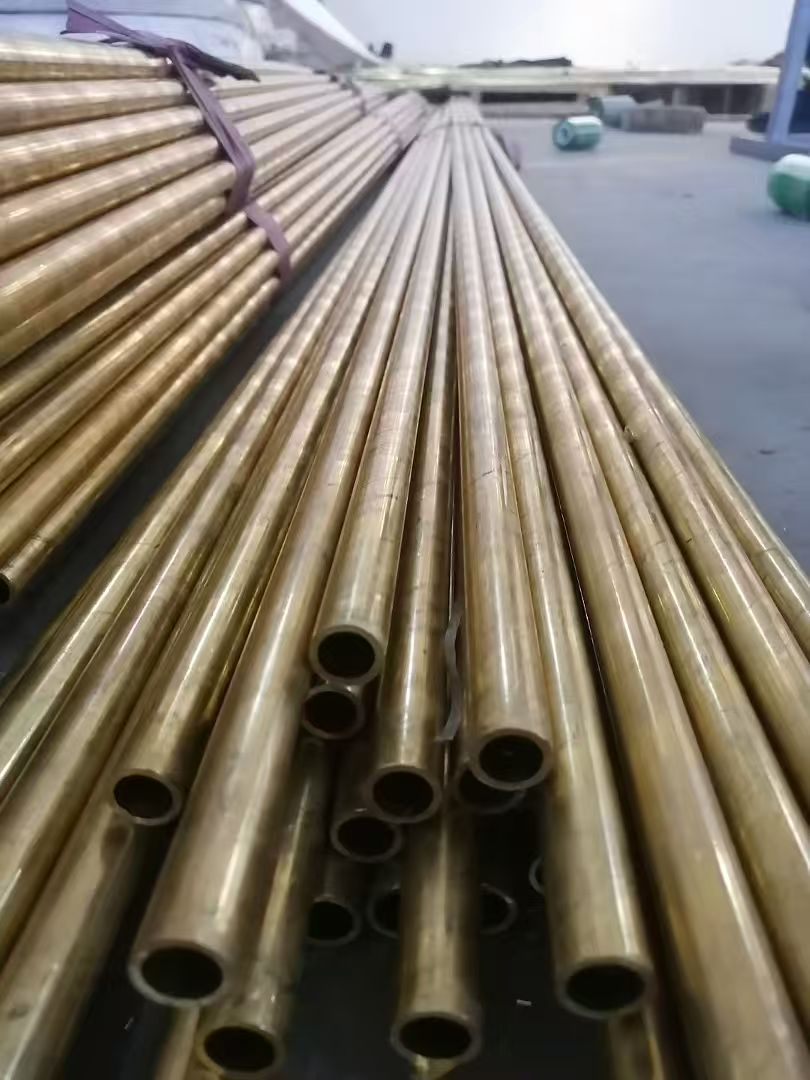
Melting pure copper isn't about cranking the furnace to its limit. Copper transitions to liquid at 1084°C, but holding it far above that temperature slowly turns it into a sponge for oxygen and hydrogen. Instead, bring the bath just 30–50°C past the liquidus and keep the dwell time short. A clean melt depends on restraint, not maximum power.
Temperature measurement deserves more attention than most foundries give it. Because copper's surface emissivity shifts as oxide films form, a non-contact pyrometer can drift badly between readings. An immersion thermocouple protected by an alumina or graphite sheath gives a truer picture. Check near the furnace wall, at the center, and near the bottom—thermal gradients in molten copper are easy to underestimate.
Before pouring, allow for heat loss between furnace and mold. For thin-section castings, aim for the upper end of the pouring range, often 1120–1180°C, to keep metal flowing before it freezes. Preheating ladles and molds is not optional; a cold tool can pull enough heat out of the stream to cause misruns or shrinkage. If oxygen-free copper is required, pair tight temperature control with a protective cover gas or vacuum to preserve conductivity.
The Billet Cast: A Hidden Determinant of Tube Quality
When a seamless tube fails unexpectedly—splitting under hydrostatic pressure or developing pinholes after only months in service—the root cause rarely lies in the rolling mill. More often, it traces back to the cast billet. The way molten steel solidifies into a round or square section sets limits on what later forming steps can achieve. Centerline porosity, segregation of carbon and alloying elements, and subsurface inclusions are locked in during casting and are not eliminated by piercing, elongation, or sizing. A billet that looks clean on the surface can carry weak planes that only become visible after the tube is drawn, expanded, or subjected to thermal cycling.
Different casting routes create very different starting microstructures. Continuous casting with poorly controlled secondary cooling tends to produce a fine columnar zone near the surface and a coarse equiaxed core, which can lead to center segregation and pipe-like shrinkage. Ingot casting, though slower, allows a deeper hot-topping practice to feed the last liquid, but it brings its own problems of macro-inclusions and variable chemistry from top to bottom. Even small differences in pouring temperature, mold oscillation, or electromagnetic stirring shift the distribution of non-metallic inclusions toward the inner or outer wall of the eventual tube. These subtle shifts show up only later as anisotropic mechanical properties or unexpected corrosion sites.
A tube mill can compensate for some billet defects through high reduction ratios and heat treatment, but the compensation is never complete. Oxide films trapped along prior grain boundaries, for example, remain as discontinuities that flatten into planar defects during rotary piercing. Sulfide stringers align with the working direction and lower transverse impact toughness. The practical lesson is that billet quality cannot be inspected into a tube after the fact; it must be engineered at the caster. Controlling superheat, protecting the stream from reoxidation, and using soft reduction near the final solidification point do more for tube integrity than any downstream nondestructive test. In this sense, the cast billet is less a raw material than a latent defect map that the forming process simply unfolds.
Hollowing Out: How a Solid Copper Log Gets Its First Hole
Turning a dense copper log into a hollow tube starts with a single, unglamorous step: drilling a straight pilot hole through the center. The log is clamped into a deep-bore machine, and a carbide-tipped drill bit works its way along the grain. It’s slow going — copper is gummy and tends to grab the bit, so the operator backs off every few inches to clear chips and let the metal cool. The goal is a perfectly centered hole with a consistent diameter, because any wobble here will echo through every later stage of the process.
Once the pilot hole is in, the real shaping begins with a process called trepanning. Instead of removing all the material as chips, a hollow core drill cuts a ring around the pilot hole, leaving a solid copper cylinder inside. This inner slug is what makes the method efficient — you’re not grinding the entire center into scrap, but reclaiming it as a usable piece of copper. The trepanning head advances slowly, lubricated with cutting oil, and the operator watches the chip formation closely. If the chips come off in long, stringy curls, the speed is right; if they’re dusty or broken, it’s time to adjust the feed.
After trepanning, the log finally has its first real hole. But it’s far from finished — the bore is rough, slightly undersized, and full of tool marks. The next steps are a series of reaming and burnishing passes to bring the inside diameter into spec and smooth out the surface. Each pass removes only a few thousandths of an inch, but that’s enough to turn a rough, workable hole into a clean, polished bore ready for further drawing or finishing. It’s a reminder that in copper work, the first hole is never the last word.
Cold Drawing: Tolerances Measured in Thousandths
Cold drawing pulls metal through a precisely shaped die to reduce its cross-section, and the resulting dimensions are often checked with a micrometer that reads in thousandths of an inch. This cold working process doesn't rely on heat to form the shape, which means the bar or wire ends up with far less variation than hot rolled stock. A typical tolerance for cold drawn rounds is plus or minus 0.001 inch, and on smaller diameters half a thousandth is not out of the question.
Keeping those numbers steady isn't automatic. The die—usually carbide or diamond—has to be shaped and polished carefully, and the lubrication and drawing speed affect how much the material stretches and springs back. Every pass through the die removes a controlled amount of stock, and the final pass is where the diameter is set within a band measured in thousandths. A machinist or operator checks samples at regular intervals with a micrometer and makes tiny corrections to the setup if the size begins to creep.
Such tight tolerances mean cold drawn bars and wire can be used in parts that need to fit together without extra machining, like shafts, fasteners, and hydraulic components. If a drawing calls for a diameter of 0.625 inch with a tolerance of ±0.001, cold drawing is usually the most practical way to hit that mark. The material arrives with a smooth finish and consistent size, ready for secondary operations or assembly.
Stress Relief and Final Inspection: The Last Steps Before Shipping
Once the machining and heat treatment cycles wrap up, residual stresses can linger inside the metal, waiting to warp a part the moment it's clamped into a customer's fixture. We don't take that gamble. Every batch goes through a controlled stress-relief cycle—often a low-temperature soak in our furnace—to let the material settle before it ever sees a shipping crate. It's a quiet step, easy to skip if you're rushing, but it's the difference between a part that stays true for years and one that twists out of tolerance on the first thermal swing.
After stress relief, the final inspection isn't just a checkbox. We pull critical dimensions back onto the CMM and compare them against the original CAD, not the printout from last week. Surface finish gets checked under a profilometer, and any threads or bores are verified with go/no-go gauges. If a single feature drifts beyond the agreed tolerance, the whole lot gets quarantined for rework—no exceptions, no quiet waivers. That's been our rule since the beginning, and it's why our repeat orders come from shops that have been burned before.
Only when the stress-relief log and the inspection report are signed off does the crate get built. We apply a rust-preventive film that won't gum up during storage, wrap sharp edges in edge protectors, and bolt the parts to a custom-fitted pallet so they can't shift in transit. The shipping label gets scanned with a final photo of the packed crate sent to the customer. It's a small ritual, but it closes the loop: what left the furnace calm, and passed the gauges clean, arrives exactly as we promised.
FAQ
Most mills begin with high-purity copper cathode or carefully sorted copper scrap, which is melted and refined to meet ASTM or EN composition limits before casting.
Casting sets the grain structure and impurity distribution. A clean, controlled cast reduces internal defects like porosity and inclusions, so later drawing and annealing produce consistent wall thickness and pressure ratings.
Extrusion or piercing converts a solid billet into a hollow shell with uniform wall dimensions. This rough tube is easier to cold-draw to precise sizes and reduces the number of drawing passes required.
Cold drawing pulls the tube through a die and over a mandrel, reducing diameter and wall thickness while improving surface finish, straightness, and mechanical strength through work hardening.
Annealing is performed between drawing passes or at the end to soften the work-hardened copper, restore ductility, and relieve internal stress, which allows further reduction or makes the tube easier to bend on site.
Manufacturers typically inspect dimensions, surface condition, and straightness, then run eddy-current or hydrostatic tests to detect hidden flaws, plus confirm mechanical properties and sometimes cleanliness for medical or HVAC use.
The temper designation depends on the amount of cold work and final annealing. Hard-drawn tube retains high strength from drawing, while annealed or soft tube is fully recrystallized for maximum ductility and easier forming.
Conclusion
Copper pipe doesn't start as pipe. It begins as discarded wire, old plumbing, and offcuts hauled from scrap yards to smelters, where the real work of turning mixed metal into something usable kicks off. Temperature control in the melt is unforgiving: too hot and you burn off copper or pull in unwanted oxygen; too cool and impurities never separate. A good melter watches the furnace like a hawk, adjusting burners and testing samples until the pour is clean enough to cast. That casting step rarely gets the credit it deserves. The billet that emerges from the mold sets the grain structure for every foot of tube that follows. A billet with shrink cavities, trapped gas, or uneven cooling will show those flaws later as cracks, weak spots, or surface defects. So although it looks like a rough log, that first solid shape is already deciding what kind of pipe you'll end up with.
From there the solid log gets its center opened up, usually by rotary piercing or extrusion, which is less like drilling and more like forcing a pointed mandrel through near-molten-hot metal. Once there's a rough hollow shell, cold drawing takes over. This is where tolerances get serious: drawing the tube through progressively smaller dies and over internal plugs squeezes the wall thickness down to a few thousandths of an inch while hardening the copper. Each pass changes the dimensions and the temper, so operators track reduction ratios carefully. Finally, stress relief annealing relaxes the work-hardened metal without undoing the dimensional gains, and inspectors check surface finish, wall thickness, and straightness before bundling. Nothing leaves the plant until it passes. That's the quiet, repeated discipline behind every coil or straight length you see on a job site.
Contact Us
Contact Person: Zoe Liang
Email: [email protected]
Tel/WhatsApp: 86 189 2128 6299
Website: https://www.jycomat.com