

Corn Flakes Production Line in China: Redefining Breakfast Cereal Manufacturing
2026-07-27
Ever wondered what magic turns golden corn into your morning bowl of crispy flakes? It's not magic—it's engineering brilliance, and at the forefront is MINGDE's state-of-the-art corn flakes production line in China. Far from ordinary, this line is redefining breakfast cereal manufacturing with unmatched efficiency and innovation. Join us as we explore the technology behind the crunch.
From Kernel to Flake: Tracing Corn’s Path in China’s Modern Production Lines
In the vast cornfields of Heilongjiang, the journey of a single kernel begins long before harvest. Modern agricultural machinery, guided by GPS and soil sensors, ensures that each plant receives the precise amount of water and nutrients. Once the cobs reach peak ripeness, they are mechanically stripped and cleaned, leaving behind uniform, golden kernels ready for the next stage. This initial phase, often overlooked, is where data-driven farming sets the foundation for quality and consistency in every flake that ends up in a breakfast bowl.
From the silos, the corn moves into sprawling processing facilities where steam, pressure, and rollers transform it. The kernels are first steeped in warm water and a mild alkaline solution, a step that softens the hull and loosens the starch. After a gentle cook, they pass through a series of flaking rollers—massive cast-iron cylinders that press each grain into paper-thin sheets. The exact temperature and moisture at this point are tightly controlled; too dry and the flake shatters, too moist and it clumps. Chinese factories have refined this balance over decades, often incorporating rapid drying tunnels that lock in a signature crunch without the need for additives.
Before packaging, the flakes travel along conveyor belts under optical sorters that scan for color imperfections, discarding any burnt or irregular pieces. A light spray of vitamins and minerals—customized to local dietary guidelines—mists the surfaces in a final, invisible coat. The packaging lines hum with a rhythm honed by years of incremental innovation, sealing the flakes in laminated pouches with nitrogen gas to preserve freshness. Tracing this path reveals not just a manufacturing feat, but a deep integration of technology, agricultural science, and cultural adaptation that makes a simple corn flake a product of China’s modern industrial ingenuity.
Precision Engineering Behind Every Crispy Bite
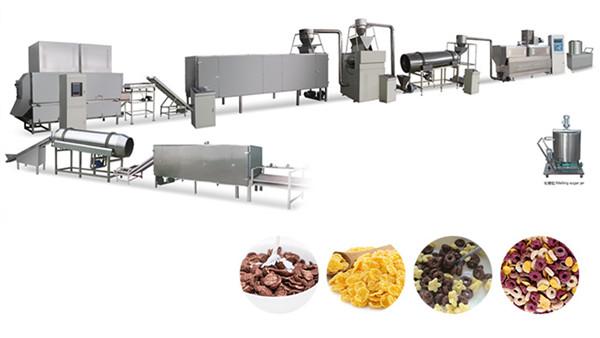
Every crisp we make begins with a meticulous selection of raw ingredients, but that's just the start. Our proprietary slicing technique ensures each piece is uniform to the micron, creating an even surface that interacts perfectly with heat. It's this obsession with consistency that means every bite shatters with exactly the right amount of resistance—never too hard, never too soft.
The frying process is calibrated like a scientific experiment: oil temperature, immersion time, and moisture removal are synchronized to lock in flavor while expelling just enough water to achieve that signature crunch. We don't just cook our crisps; we engineer a multi-sensory experience where the initial snap gives way to a melt-in-the-mouth finish, a transition you can actually hear.
But what truly sets us apart is the post-fry precision. After frying, each crisp is gently tumbled in a proprietary blend of seasonings that cling to the micro-ridges formed during cooking—a topography invisible to the naked eye but essential for delivering a burst of flavor from the first contact to the last lingering note. It's the kind of detail that turns a simple snack into something remarkably deliberate.
Sustainable Sourcing and Eco-Conscious Processing Methods
Every material we choose begins with a question: what does it take from the earth, and what does it give back? Sourcing isn't just about finding the finest ingredients—it's about tracing their journey from seed to shelf. We partner directly with growers who treat soil as a living resource, rotating crops and avoiding synthetic chemicals. This attentiveness yields ingredients that are not only cleaner but richer in their natural profile, because healthy land simply produces better botanicals.
Processing methods often get overlooked, yet they can make or break a product's environmental footprint. Instead of relying on energy‑intensive extraction or harsh solvents, we lean on low‑temperature mechanical pressing and supercritical CO₂ techniques. These approaches preserve the delicate compounds in plants while slashing water use and eliminating toxic waste. It's a quieter, slower way of working that respects the fragility of each harvest.
The real test comes in the details—how we handle byproducts, for instance. Spent botanicals don't end up in landfills; they're composted and returned to the farms that grew them, closing a loop that feels almost old‑fashioned in its simplicity. Packaging, too, follows this ethos: we prioritize post‑consumer recycled materials and design refill systems that people actually want to use. None of this is groundbreaking in isolation, but woven together, it forms a pattern of care that runs through everything we make.
Custom Formulations for Global Palates and Nutritional Needs
Crafting food products that appeal to diverse global tastes requires more than just translating labels—it demands a sensory deep-dive into local culinary traditions. From the smoky, slow-cooked richness favored in parts of Latin America to the delicate balance of umami and fermentation prized across East Asia, each formulation must honor regional texture preferences, spice tolerances, and even the expected mouthfeel of everyday staples. Our approach involves collaborative workshops with local chefs and consumer panels, ensuring that a snack bar’s crunch or a beverage’s sweetness level feels instinctively familiar, never foreign.
Nutritional needs vary just as dramatically, shaped not only by public health guidelines but by genetic predispositions and lifestyle realities. We map micronutrient gaps prevalent in different populations—such as vitamin D deficiency in northern climates or iron needs in regions with predominantly plant-based diets—and embed targeted fortification without compromising taste or stability. This precision nutrition strategy extends to managing macronutrient profiles for markets where energy density is critical versus those prioritizing satiety and low-glycemic impact, all while navigating complex regulatory limits on additives and claims.
True customization comes to life through agile manufacturing techniques that allow for small-batch tweaks without sacrificing scale. Whether it’s swapping a protein source to align with Halal or vegan expectations, adjusting fiber blends for digestive comfort across age groups, or incorporating locally revered superfoods like moringa or sea buckthorn, our modular production systems make it viable. The result is a portfolio where every product feels intentional—rooted in universal safety standards yet vividly tailored to the palates and health priorities of each community we serve.
Why Chinese Corn Flakes Are Setting New Quality Benchmarks
Corn flakes used to be a simple, predictable breakfast option, but Chinese producers are changing that perception entirely. Drawing on rich agricultural resources, they source premium non-GMO corn from specific regions like Jilin, where the cool climate yields grains with a naturally sweet flavor and crisp texture. This focus on top-grade raw materials isn't just a marketing point—it’s the foundation for a product that tastes remarkably fresh and clean, without the stale, processed notes often found in conventional brands.
What really sets these cereals apart is the fusion of modern processing with a deep respect for texture and nutrition. Instead of standard high-heat methods that can strip away nuance, many manufacturers employ gentle flaking and precise roasting techniques that lock in the corn’s inherent crunch and subtle aroma. There’s also a strong emphasis on clean labels—you’ll rarely see artificial additives or excessive sugar. Some are even fortified with traditional ingredients like black sesame or red date powder, offering a wholesome twist that feels both familiar and innovative to Asian consumers.
The result is a line of corn flakes that doesn’t just imitate Western counterparts but elevates the entire category. International buyers and local shoppers alike are noticing the difference: a product that holds its integrity in milk longer, delivers a more nuanced taste, and aligns with the growing demand for transparency in food sourcing. As word spreads, Chinese corn flakes are quietly redefining what consumers should expect from a humble bowl of cereal—proving that quality knows no borders.
The Human Touch in High-Tech Cereal Manufacturing
When you walk through a modern cereal plant, the first thing that strikes you isn’t the gleaming stainless steel or the rhythmic hum of automated lines. It’s the people. They’re not standing at conveyor belts flipping flakes by hand—machines do that faster and more consistently than any human ever could. But these operators, technicians, and tasters bring something algorithms can’t replicate: a quiet, almost intuitive sense for when the oats aren’t toasting evenly, or when the crunch of a puffed grain is just a shade off from what it should be. That kind of insight isn’t written in a manual; it’s earned through years of standing beside the same ovens and listening to the same mixers, developing a feel for the living, breathing personality of the production line.
Technology has swept through cereal manufacturing like a wave, bringing in-line sensors that measure moisture to the decimal point, robotic packers that never tire, and AI-driven systems that tweak cooking temperatures in micro-adjustments. Yet these tools don’t replace the human element—they amplify it. A skilled operator doesn’t just watch screens; she knows that on humid days, the cornmeal behaves differently, so she overrides a preset drying cycle by a handful of seconds. A taster on the morning shift might catch a faint bitterness in a trial batch and trace it back to a supplier’s new grain shipment before a spectrometer ever flags the issue. These moments aren’t failures of the system; they’re proof that great cereal still needs a human palate, a human nose, and a human judgment call.
There’s also a kind of stewardship that doesn’t show up on efficiency charts. Long-time employees often become the unofficial memory of a factory—the ones who recall how a recipe tweak from 2003 made the flakes crispier, or why a certain silo’s vibration pattern means it’s about to clog. They mentor younger technicians not with formal lectures, but by saying, “Here, let me show you what to listen for.” In an industry racing toward lights-out production, these unscripted lessons keep knowledge alive and embed a sense of ownership that no sensor can replicate. The machines may run the line, but it’s the people who make sure each box that leaves the plant still has a little soul in it.
FAQ
China’s line integrates smart automation, from precise ingredient mixing to real-time quality monitoring. This reduces manual errors, speeds up output, and ensures consistent texture and taste, turning a labor-heavy process into a sleek, data-driven operation.
It uses modular equipment and scalable systems. Sensors track moisture, temperature, and thickness at every stage, automatically adjusting parameters to maintain perfection even when running 24/7. This balance of volume and precision is what sets it apart.
Advanced robotics, AI-driven sorting, and IoT-connected machines allow for predictive maintenance and minimal downtime. The line can switch between recipes in minutes, offering flexibility that old-school factories simply can’t match.
Beyond cost efficiency, Chinese manufacturers offer end-to-end solutions—from sourcing non-GMO corn to eco-friendly packaging—all under one roof. The combination of speed, customization, and strict compliance with global food standards is a game changer.
Absolutely. The line is designed for quick changeovers. By tweaking extrusion settings and adding alternative grains, it can produce gluten-free, organic, or fortified flakes without slowing down, keeping pace with shifting consumer demands.
Stainless steel components, automated CIP (Clean-in-Place) systems, and metal detectors at multiple checkpoints eliminate contamination risks. Every batch is traceable from raw kernel to box, meeting HACCP and ISO standards effortlessly.
It means moving from rigid, high-waste processes to agile, sustainable ones. China’s approach minimizes energy use, recycles heat, and cuts waste, all while delivering a product that rivals the best in the world. It’s a blueprint for the future of food production.
Conclusion
In the heart of China's industrial landscape, the journey from kernel to flake is a meticulously choreographed dance of technology and tradition, redefining how the world thinks about breakfast cereal manufacturing. The process begins long before the machinery hums to life—with sustainable sourcing that respects both the environment and local farming communities. By securing non-GMO corn through transparent supply chains and employing eco-conscious methods like water recycling and energy-efficient milling, production lines minimize waste while maximizing quality. Once inside the facility, advanced cleaning, degerming, and steam-cooking systems prepare the grain with surgical precision. This isn't just mass production; it's an engineered art form where every parameter—from moisture content during conditioning to the exact temperature of flaking rollers—is fine-tuned to achieve that iconic golden crispness. The result is a corn flake that shatters expectations, not just in taste and texture, but in how deliberately it's been created to appeal to global palates, with customizable formulations that can reduce sugar, boost protein, or enrich with locally relevant vitamins and minerals without ever compromising the satisfying crunch.
What truly sets Chinese corn flake manufacturing apart, however, is the seamless integration of high-tech automation with a human touch that no algorithm can replicate. On the factory floor, computer-controlled toasting ovens and real-time moisture sensors work in harmony with skilled operators who rely on sensory expertise—listening for the perfect snap, watching for even browning, and smelling for that toasty aroma that signals a batch is ready. This symbiotic relationship between machine precision and human intuition elevates quality control beyond industry norms, reducing breakage and inconsistent browning to near-zero levels. Meanwhile, rapid cooling tunnels and gentle conveying systems preserve flake integrity, ensuring every spoonful delivers the same crisp experience from box to bowl. The commitment to excellence extends to packaging lines that flush with nitrogen for freshness and use recyclable materials, completing a cycle of innovation that respects both the consumer and the planet. It's a holistic redefinition of cereal manufacturing—one where Chinese production lines don't just meet international standards, they set new benchmarks that the rest of the world is now racing to match.
Contact Us
Contact Person: LILY SUN
Email: [email protected]
Tel/WhatsApp: 0086-13969103791
Website: https://www.snackfoodmachinery.com/