

Custom 3 Axis Milling Center – Mastering Precision Machining for Complex Parts
2026-07-19
Precision machining isn’t just about cutting metal—it's about breathing life into complex designs where every micron matters. At the heart of this art lies the custom 3 axis milling center, a workhorse reshaped by WINNRUI CNC to push boundaries. As parts grow more intricate and tolerances tighter, the demand for milling solutions that blend speed, accuracy, and adaptability has never been higher. This blog dives into how custom 3 axis systems master complexity, unlocking new possibilities for engineers and manufacturers.
The Heart of Precision: How a 3-Axis Mill Tackles Complex Geometries
At first glance, a 3-axis mill seems limited to flat, orthogonal cuts, but its true genius lies in how it orchestrates these simple movements into complex shapes. By combining precise X, Y, and Z motions with carefully chosen toolpaths, the machine can carve out intricate pockets, smooth contours, and precise holes that would be impossible by hand. The spindle’s rigid, high-speed rotation and the table’s fluid movement allow the cutter to follow tightly curved profiles, removing material layer by layer with micron-level accuracy.
Mastering complex geometries on a 3-axis mill often comes down to the art of workholding and setup. Skilled machinists use custom fixtures, precision vices, and rotary indexers to present the workpiece from multiple angles, effectively expanding the machine’s reach far beyond its linear axes. By flipping and repositioning the part between operations, they can machine undercuts, angled surfaces, and deep cavities—transforming what seems like a constraint into a deliberate, repeatable process.
The real heartbeat of precision is the software that translates a 3D model into a language the mill understands. CAM systems calculate optimal toolpaths, avoiding collisions while maintaining constant tool engagement, which is critical for preserving surface finish and dimensional tolerance. Even on a basic 3-axis platform, strategies like high-speed adaptive clearing and trochoidal milling allow the cutter to trace complex contours without overloading it, proving that complexity isn’t about having more axes—it’s about using the ones you have with finesse.
Beyond Standard Machining: Tailored Solutions for Intricate Parts
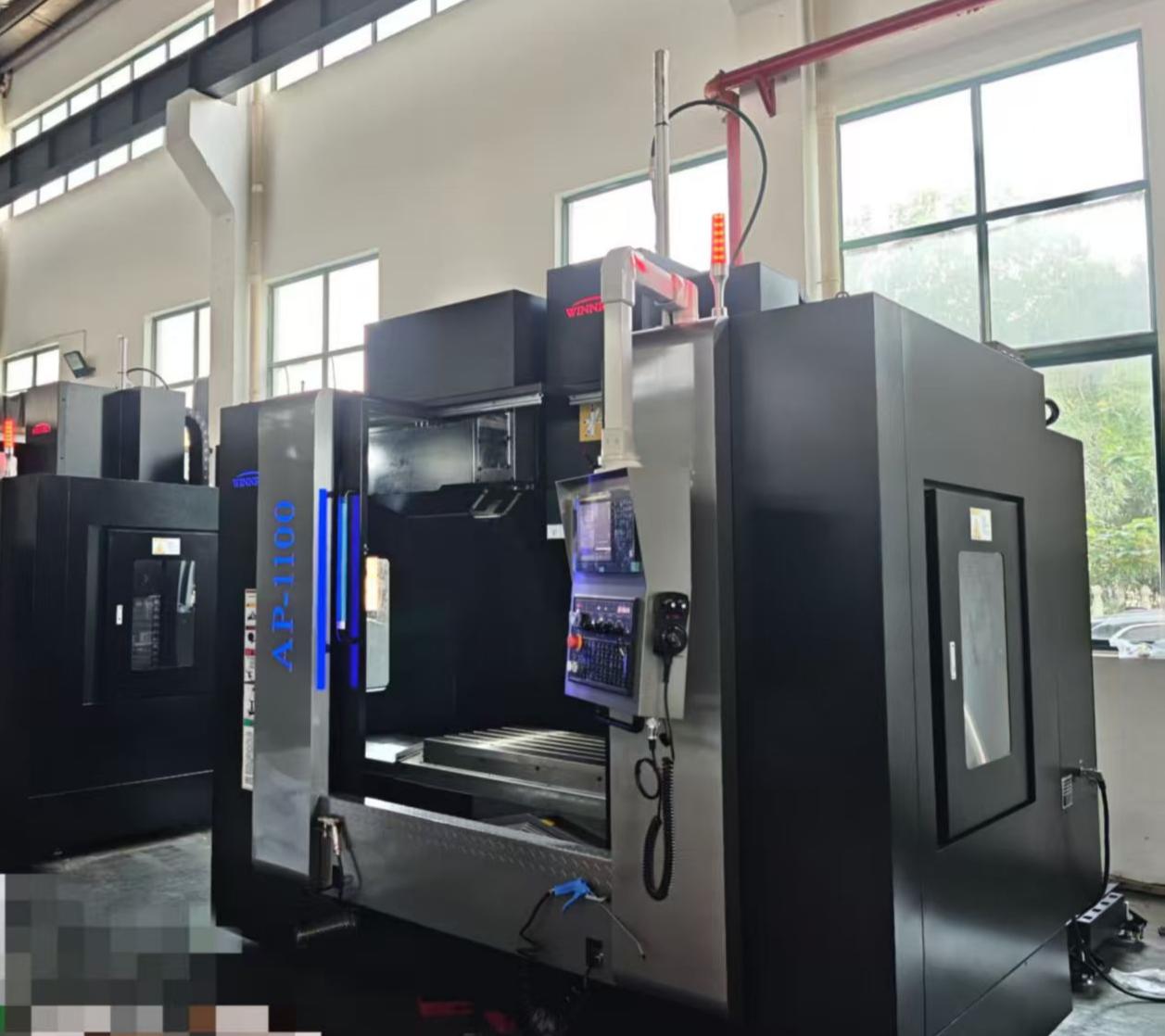
When off-the-shelf processes fall short, we step in with custom approaches that tackle the most complex geometries and demanding tolerances. Every project starts by dissecting the part's unique challenges—hidden cavities, thin walls, or unusual material pairings—and engineering a strategy that no generic setup can replicate. Our team blends unconventional toolpath logic with adaptive fixturing, ensuring that even the most convoluted shapes emerge with precision and consistency.
This isn't just about making something work; it's about refining the entire manufacturing chain to suit the part's personality. We often combine operations that normally live in separate silos, reducing handling and preserving critical reference points. From exotic alloys that eat through standard cutters to micro-scale features invisible to the naked eye, the solution is built around the part's actual demands, not a catalog of available options.
From Blueprint to Perfect Finish: The Custom Milling Journey
Every custom milling project begins not with a machine, but with a conversation. We listen closely to your vision, studying your blueprints and sketches to understand not just dimensions and tolerances, but the purpose behind the part. This early collaboration allows us to identify potential refinements in material selection, grain direction, or feature integration that can elevate the final piece beyond the original concept. By treating each blueprint as a living document, we ensure the transition from paper to practice is seamless and intentional.
Once the plan is solidified, our artisans and advanced CNC systems take over. The hum of spindles and the scent of fresh-cut timber fill the workshop as raw lumber is transformed through a choreographed sequence of cuts, joints, and profiles. We monitor every pass, adjusting speeds and toolpaths in real time to account for the unique character of the wood—a knot here, a subtle grain shift there. This balance of automated precision and human judgment is where consistency meets soul, resulting in components that fit together with a satisfying, almost magnetic certainty.
The journey concludes with a finish that does more than protect—it reveals. Hand-sanding between coats, careful tinting, and a final hand-rubbed wax or oil bring out depth and warmth that no shortcut can replicate. The result is a piece that bears the marks of its making: crisp edges, silky surfaces, and a cohesive aesthetic that honors the original blueprint while standing as a testament to the craft itself. From that first sketch to the last buff, you’re left with something built not just to function, but to endure and inspire.
Unlocking Unmatched Accuracy in Every Cut
The foundation of precise cutting lies in the seamless integration of advanced sensor feedback and micro‑adjustments that happen in real time. Instead of relying on fixed parameters, the system continuously reads material density and grain direction, allowing the blade or laser to adapt within milliseconds. This eliminates the slight deviations that accumulate over long production runs, delivering parts that match the digital design down to the last micron.
Every mechanical component, from the guide rails to the drive motors, is tuned to remove backlash and vibration before they can influence the outcome. The result is a process where repeatability isn’t a target but a built‑in characteristic—the first piece off the line measures identically to the ten‑thousandth. Operators spend less time compensating for drift and more time optimizing throughput, all while maintaining a level of finish that needs no secondary correction.
Beyond the hardware, the cutting intelligence learns from each pass, mapping thermal expansion and tool wear into the motion path. This predictive compensation ensures that accuracy doesn’t fade halfway through a shift. Whether you’re slicing delicate composites or thick alloys, the final edge remains crisp and true to the intended geometry, reducing scrap and unlocking design possibilities once thought impractical.
Engineering Mastery: Why Three Axes Are All You Need
In precision machining, the elegance of a three-axis system lies not in its limitations, but in its masterful focus. While multi-axis machines boast complexity, the three-axis approach forces a deeper understanding of tool paths, workholding, and material behavior. This constraint breeds mastery: when you can’t tilt the workpiece or swivel the cutter, you learn to think geometrically, coaxing intricate forms from rigid orthogonality. It’s a discipline that turns potential drawbacks into a foundation of exacting skill.
The real power of three axes emerges when you consider kinematics and rigidity. Fewer moving joints mean less cumulative error, higher stiffness, and a more predictable cutting environment. For a vast majority of parts—from engine blocks to mold cavities—the orthogonal setup is not just sufficient; it’s optimal. By eliminating unnecessary degrees of freedom, you gain tighter tolerances, simpler setups, and a deeper connection to the physics of chip formation. Mastery here isn’t about knowing what’s possible with more axes, but extracting maximum value from three well-honed ones.
Complex Parts, Simplified: The Art of Custom Milling
Every intricate design once started as a tangle of impossible angles and razor-thin tolerances. Custom milling steps in where standard tooling gives up, carving away excess with a surgeon’s precision. It’s not just about removing material—it’s about rethinking the entire workflow so that a single block of metal transforms into a fluid, functional masterpiece. The real magic happens when the spindle dance is choreographed to dodge undercuts and thread through narrow cavities, turning complexity into a clean, repeatable process.
The difference often lies in the subtle choices: toolpath strategies that minimize chatter, multi-axis setups that eliminate multiple refixturing steps, or custom ground cutters that reach what others can’t. Skilled machinists blend instinct with technology, tweaking feeds and speeds not from a textbook but from the hum of the machine and the curl of the chip. This artful approach means parts that would normally require assembly of several pieces emerge whole, stronger, and ready to perform.
What gets lost in discussion is the narrative of the part itself—the way its final form hints at the method. Custom milled components don’t shout their complexity; they wear it lightly, with blended radii and seamless pockets that feel inevitable. In industries where failure isn’t an option, this quiet sophistication replaces a stack of drawings with a single elegant solution, proving that even the most tortuous geometry can be tamed with patience and the right cut.
FAQ
A custom machine lets us optimize spindle reach and tool changer orientation specifically for the part’s geometry. This means deeper, more awkward pockets can be accessed without sacrificing rigidity, which is often a problem on generic equipment.
We integrate thermal compensation directly into the control loop and use strategically placed coolant dwells. The fixtures themselves are chilled before the run, and we monitor expansion in real time to adjust offsets on the fly.
It’s about simplicity and throughput. If a part only needs three axes but has heavy stock removal or benefits from a highly specialized workholding, a dedicated 3-axis machine can be made far more rigid and faster in cycle time without the extra joints introducing backlash.
We’ve had great results with sintered ceramics and glass-filled polymers. The key is tuning the acceleration curves to avoid micro-chipping – something that’s easier to do when you can tailor the drive parameters to the material’s brittleness.
Absolutely. Since the probing routines are coded into the G-code stream, they happen during tool changes or idle spindle moments. It’s near-instantaneous verification, and any deviation triggers an automatic offset correction before the next pass.
Chip evacuation is critical for unmanned runs. We design the guarding and auger placement around the part’s chip formation pattern. For stringy materials like titanium, we’ll even incorporate high-pressure through-spindle coolant to break chips before they pile up.
We often reverse-engineer the original manufacturing constraints. That means if a 1960s airframe bracket needs to be reproduced, we can set up dedicated soft jaws and even mimic old-school feed rates that prevented work hardening – preserving the part’s metallurgical integrity.
Conclusion
A custom 3-axis milling center redefines what’s possible when machining intricate components, turning challenging geometries into flawless realities. At its core lies a relentless pursuit of precision—every axis movement, spindle rotation, and tool path is orchestrated to conquer complexity without compromise. Far from being a limitation, the three-axis configuration becomes a deliberate design choice, channeling engineering focus into rigidity and repeatability that multi-axis setups often sacrifice. This is where tailored solutions take shape, moving beyond generic machining to address the unique demands of parts that standard equipment can’t handle. From the first digital blueprint to the final surface finish, each step is calibrated to preserve design intent, ensuring that even the most delicate features emerge with crisp accuracy. The process blends advanced CAM strategies with time-tested mechanical stability, allowing the machine to navigate undercuts, tight corners, and fine details with a surgeon’s touch.
What sets this approach apart is the symphony of control—spindle harmonics, chip evacuation, and thermal compensation all tuned to unlock unmatched accuracy in every cut. It’s not about adding more axes; it’s about mastering the three that matter, proving that simplicity can outperform complexity when backed by deep engineering insight. Complex parts become less daunting when the milling center anticipates material behavior, adapts to tool wear, and maintains micron-level precision across long production runs. The art lies in simplifying the convoluted: breaking down seemingly impossible tasks into a sequence of deliberate, optimized passes. Whether it’s a prototyping challenge or a high-mix production run, the custom 3-axis mill delivers consistent, high-fidelity results that mirror the original vision. In an industry often chasing the next technological leap, this focus on foundational excellence reminds us that true mastery isn’t about having more—it’s about doing more with absolute command.
Contact Us
Contact Person: Tim
Email: [email protected]
Tel/WhatsApp: +86 15522553731
Website: https://www.winnrui-cnc.com/