

Custom Purlin Roll Forming Machine Manufacturer from China and How to Choose the Right Partner
2026-11-26
Ordering a purlin roll forming machine from China is easy. Getting one that actually matches your custom profiles, tolerances, and production floor? That takes a sharper look at the manufacturer behind the quote. With so many suppliers repeating the same claims, the real difference usually shows up in engineering support, customization depth, and after-sales response. Here we break down what to check before you commit, and how Beenew approaches the details that often decide long-term performance.
What Custom Really Means on a Purlin Line
Custom on a purlin line rarely has much to do with a longer list of hole locations. It starts with the tooling arrangement and whether the forming stations are laid out for the profiles, strip widths, and yield strengths a shop actually runs. A line set up for light-gauge residential C sections will punish a crew trying to push heavy commercial Z sections through the same pass sequence.
The difference shows up most during changeover. A truly custom purlin line lets operators switch from one profile to another by adjusting the things that matter most on their jobs, flange width, lip return, punch spacing, and cut length, without tearing down half the machine. That often means servo sizing, quick-change punch cartridges, and shear tooling sized for the shop's usual bundle lengths rather than a generic range that looks good on paper.
Custom also has to fit the building and the people working in it. Coil loading direction, available floor space, how finished purlins get stacked, even the plant's power supply shape the line more than an extra color touchscreen. If a supplier is not asking about those conditions, the line is probably standard with a few options bolted on.
The Factory Floor Details That Matter More Than the Quote
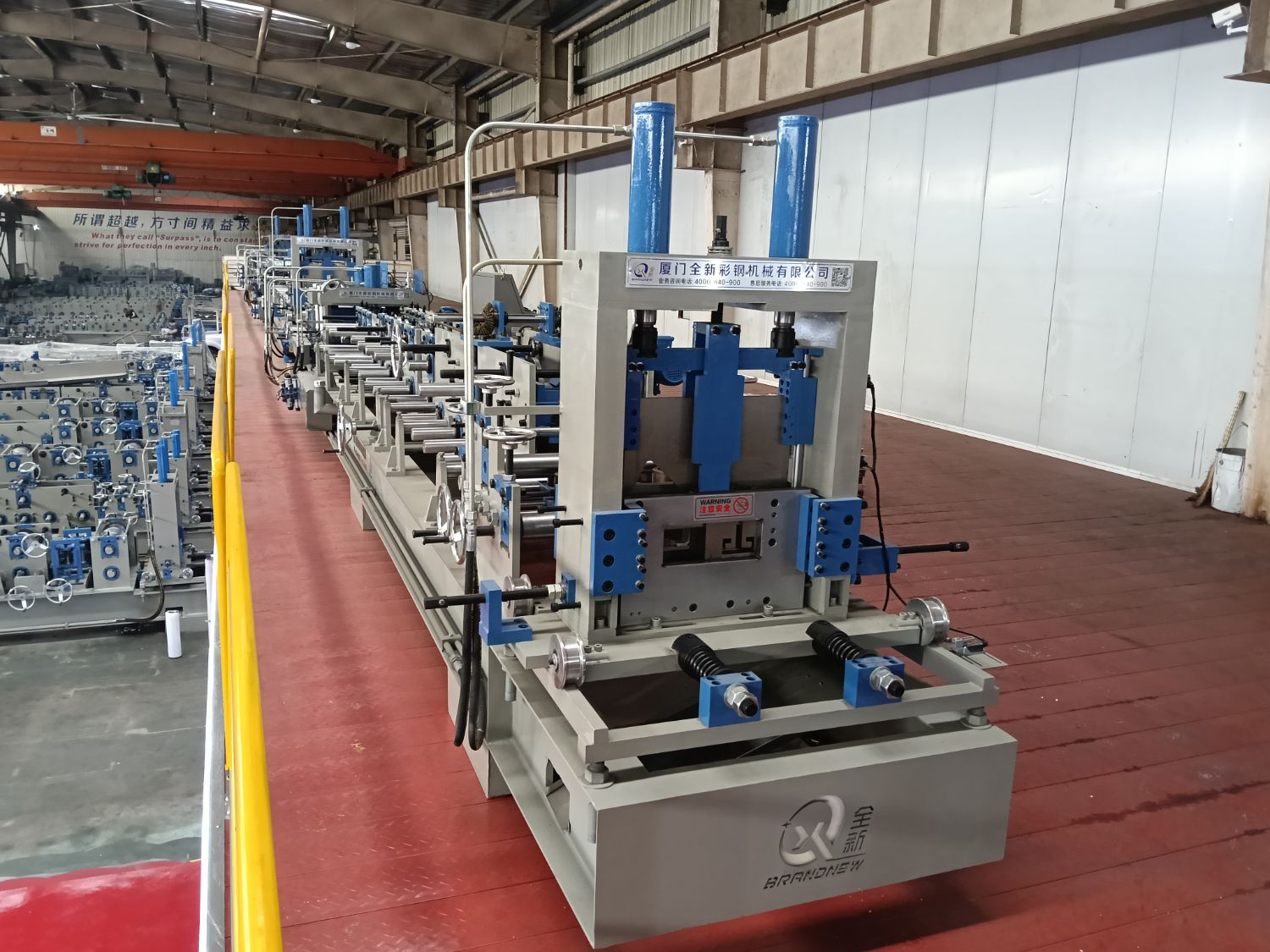
Most buyers fixate on the per-unit price or the shipping quote, but the real story unfolds on the factory floor. The lighting, the spacing between workstations, the way raw materials are staged, and how quickly a line switches from one product to another tell you far more about true cost than any spreadsheet ever will. A clean but slightly worn floor isn't a red flag; it usually means the line has been running consistently. A showroom-clean production area with no work in progress, on the other hand, can signal staged perfection rather than daily rhythm.
Watch how operators handle the moments between tasks. Do they wait for instructions, or do they adjust jigs and check their own output? Look at the small trays near each station, the handwritten notes taped to machines, the placement of reject bins. These details reveal whether the factory has internalized quality or merely performs it during audits. You'll also want to notice how material flows from one section to the next. A factory that keeps buffer stock close to the line can absorb a supplier delay without halting your order, while one that runs lean with zero tolerance may be cheaper on paper but fragile in practice.
Finally, compare the floor you see on a scheduled visit with the floor during an unannounced walk-through. The difference between the two is often where hidden costs live. Tooling that gets switched out smoothly, operators who can explain why a tolerance matters, and supervisors who know exactly where every batch stands are worth more than a lower quoted rate. The factory floor is where your unit price is either protected or quietly eroded, ten seconds at a time.
Matching Punching Patterns and Load Charts to Your Jobs
Matching a punching pattern to a job starts with the material, not the print. Thick or high-tensile sheet changes how much force each hit demands, so a layout that looks compact on screen can overload a station once the ram meets the workpiece. Check the load chart for every tool in the pattern against the actual gauge, and treat a station running above 80 percent of its rated load as a candidate for rework rather than an accepted risk.
Spacing and sequence matter just as much as tonnage. Dense clusters near one edge can pull the sheet or wear the guide rails unevenly, especially when several heavy hits land in the same corner. Rotate the part, stagger the hit order, or swap a single large punch for a cluster tool only when the hole spacing and material thickness line up with the chart. A small change in sequence can keep the press frame balanced and the tooling alive longer.
For heavier jobs, splitting a demanding pattern into two lighter passes often beats forcing the machine to its limit. If the load chart shows a tool approaching peak capacity, increase the tool clearance or slow the feed before the job runs. What you are really matching is not just a shape to a hole, but the entire tooling setup to the way your machine handles pressure at that thickness.
Chinese Suppliers Worth a Second Conversation
The first exchange with a supplier rarely tells you much about how they actually work. Chinese manufacturers often stay reserved until they sense real interest, so a second conversation can reveal the flexibility and problem-solving mindset that initial emails never show. Some of the most dependable partners I have met started out sounding almost indifferent, only to become highly responsive once the discussion moved from price lists to production details.
What makes certain suppliers worth another round of questions is how they handle friction. A factory that admits a previous order went wrong, explains the correction process, and suggests a concrete way to prevent repeat issues is far more valuable than one that promises perfection. During follow-up calls, pay attention to whether they ask about your end user, your packaging constraints, or your delivery deadlines without being prompted. Those small signs often separate teams that simply quote from teams that think alongside you.
It is also worth revisiting suppliers who seem slightly outside your immediate budget or scale. A short video call or a few specific technical questions can uncover hidden strengths, such as in-house tooling, tighter tolerance control, or a willingness to run smaller trial batches before committing. The goal of a second conversation is not to extract more discounts, but to see whether the supplier treats your project as a shared problem rather than a one-time transaction.
Questions That Separate Builders From Box Movers
Most people end the day exhausted but unsure what actually changed. They answered email, hit deadlines, and moved tasks from one column to another, yet none of it forced a single meaningful decision. Builders tend to sit with an uncomfortable question before diving in: if this task disappeared, would anyone notice? It is not an excuse to skip work. It is a filter that separates activity from leverage.
The second difference shows up in how far someone pushes the word “why.” A box mover hears “that is how we have always done it” and adjusts to the existing shape. A builder asks what problem the work actually solves, whether there is a simpler path, and whether the process exists to serve people or just to keep itself alive. Those questions often create a brief silence in the room because they reveal that a once-useful routine has become a comfortable delay.
The sharpest questions usually touch cost and consequence. Builders are willing to ask: if we could only do one thing today, what would it be? Will this matter a year from now? When the answer stays vague, they stop and reshuffle priorities instead of waiting for permission. Box movers avoid that pause because it threatens the feeling of progress. But movement without direction is still just moving boxes.
Testing After-Sales Support Before the Shipment Leaves
Run a pre-shipment drill where someone not involved in order processing contacts support with the same questions a buyer would ask after delivery. If the team can't resolve basic setup, missing parts, or return requests using the same materials included in the box, the package isn't ready to leave.
Check the physical touchpoints. Insert the warranty card, support email, and phone number in a place customers will actually see, then open a sample box as if it just arrived. Look for contradictions between the printed guide and the current return policy. A support promise that exists only on the website won't help when the customer isn't online.
Validate that the upstream fixes work. If a common fault is reported, confirm that replacement parts or a return label can be issued without a manager approval loop that adds days. The point is to catch broken handoffs before a customer has to deal with them.
FAQ
Start with the engineering team rather than the sales pitch. Request a sample profile drawing and ask how they would sequence the rollers, where they would place the pre-punching station, and what allowances they make for springback. A builder that can walk through those details before quoting is usually more dependable than one that only sends a catalogue.
It changes nearly everything. Thicker high-tensile strip needs a sturdier frame, larger shaft diameters, and more driven stations. If you run both thin and thick material on the same line, look for a design with independent top and bottom adjustments plus enough torque margin at the low end of your thickness range rather than a single fixed setup.
Shorter lead times often mean the factory is assembling from a standard platform or reusing an existing design. Fully custom lines take longer because the critical parts, including roll sets, punching units, and frame plates, may not enter production until your profile is validated. Ask what is already in stock and what is made to order so you can judge whether the quoted date is realistic.
Look for a complete run-off procedure. The factory should form your actual profile with your actual coil width, record the dimensional results, and share photos or video before crating. A responsible partner also marks each roll set clearly and provides a maintenance manual that matches the serial number of your machine, not a generic PDF.
Yes, but only if the changeover design is thought through. Replacing roll spacers with motorized or quick-change cartridges saves time, but the real difference is in the punching and shear area. Ask how long a full profile change takes for an experienced operator and whether the line includes saved recipes for width, hole spacing, and shear length instead of manual resetting.
Foundation requirements, power supply stability, hydraulic oil temperature control, and spare roll segments can add up quickly. Also consider the cost of keeping a few common wear parts in your own store. If the machine is designed around proprietary components that only the manufacturer can supply, your long-term maintenance expense will be higher than with standard bearings, encoders, and PLC parts.
Ask for references that run a similar profile and material range, not just any buyer. When you contact them, focus on how long the line has been running, what the first three months were like, and how quickly the factory responded after commissioning. The answers usually reveal more about after-sales behavior than any warranty wording.
Conclusion
Custom on a purlin line rarely stops at changing web width or flange height. It reaches into hole patterns that must match a customer's existing structural drawings, the way holes are spaced and elongated, and the load charts a machine has to honor across different steel grades. A factory floor often reveals more than a quotation: the roll tooling material, heat treatment depth, weld finish, and how easily operators can adjust the forming stands decide whether a line runs consistently at production speed. Buyers who skip those details end up with a machine that works in a video but not in their own shop.
When talking to Chinese suppliers, the useful conversations happen after the first quote. Ask which punching layouts they have actually built, not which ones they can draw. Request photos of completed orders with similar web sizes and hole pitches, and ask about bearing brands, motor ratings, and the control system's backup support. The difference between a builder and a box mover shows up in questions about pre-punching sequences, cut-off tolerance, and how the line handles high-strength steel. After-sales support should be tested before the shipment leaves: ask for a detailed spare parts list, a real response time for service calls, and a video of your exact configuration running the profile you need. If those answers stay vague, the lower price probably costs more later.
Contact Us
Contact Person: Sophie
Email: [email protected]
Tel/WhatsApp: 8615959271231
Website: https://www.beenew-rollformer.com/