

High-Quality Plate Compactor Makers You Can Trust for Your Projects
2026-06-18
Every construction or landscaping project demands tools that can take a beating and keep delivering. A plate compactor is one of those unsung heroes—without it, you're just hoping the ground will cooperate. But choosing the right one isn't about grabbing the first brand you see. You need a compactor that brings real engineering to the table, not just flashy specs. That’s exactly what Dynamic has built its reputation on. In this guide, we'll cut through the noise and show you what separates a trusty workhorse from a costly regret—and why Dynamic should be at the top of your shortlist.
Built to Last: The Engineering Behind Durable Plate Compactors
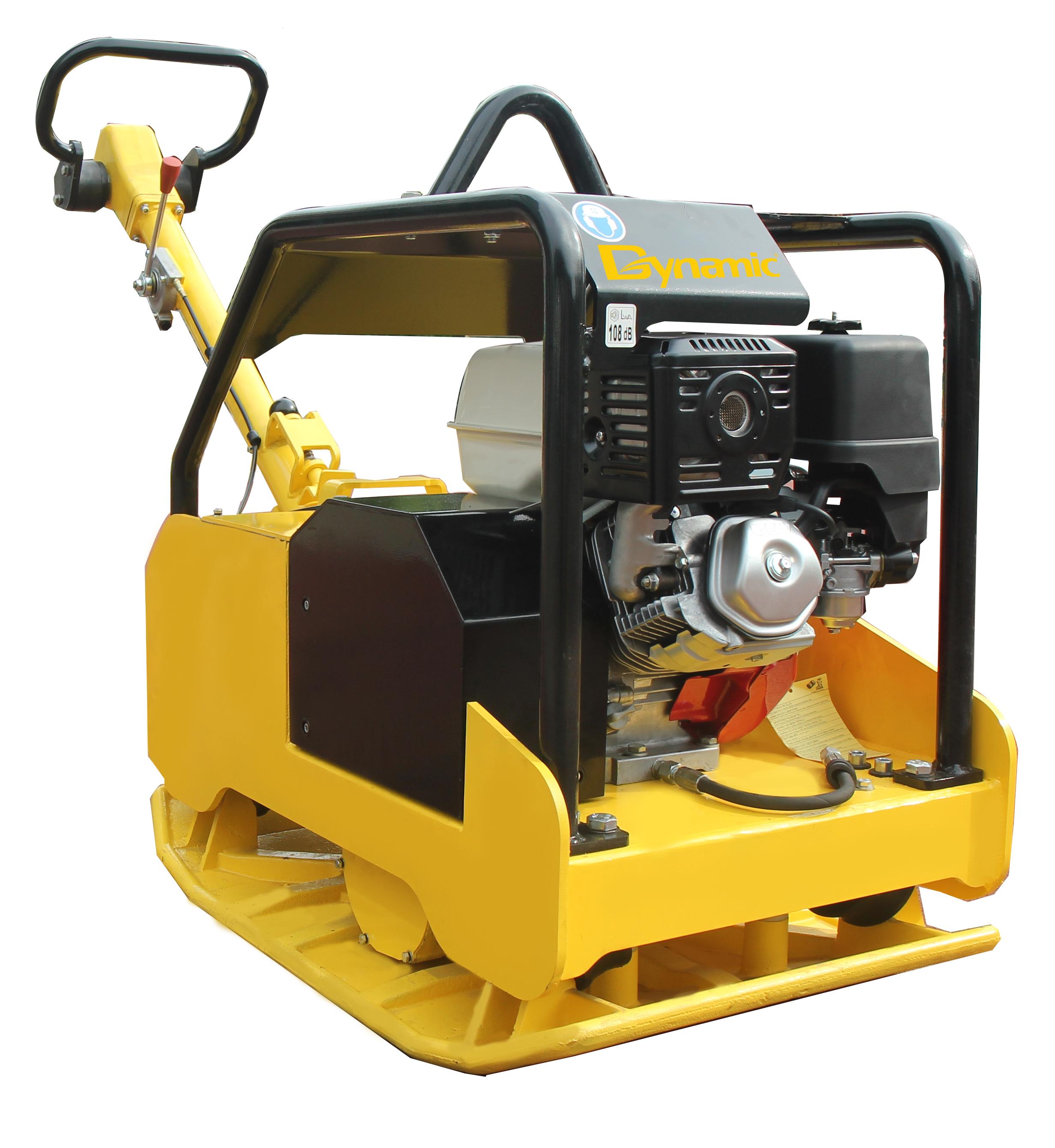
The longevity of a plate compactor starts with its heart—the base plate. Crafted from thick, high-grade steel, it resists warping and cracking under constant vibration and abrasive contact with soil and aggregate. The edges are often reinforced or beveled to reduce stress concentration, ensuring the plate holds its shape even after thousands of hours on the job. But the real secret is in the design: some manufacturers add strategic ribbing or cross-bracing underneath, which not only strengthens the plate but also improves compaction efficiency by directing more energy into the ground.
Inside the machine, the exciter assembly is engineered to handle relentless axial and radial loads. Bearings are typically oversized and sealed against dust, while the eccentric weights are precision-balanced to minimize side forces that can wear out shafts and housings. This attention to rotational dynamics means less vibration transmitted to the frame and operator, and more energy delivered squarely to the compaction surface. In premium models, the entire exciter unit is encased in an oil bath, continuously lubricating the bearings and cooling the system—extending service intervals dramatically.
Of course, durability isn’t just about the metal. Protective features like a heavy-duty engine guard roll cage or shock-mounted covers shield critical components from jobsite bumps and debris. Vibration-dampening mounts between the engine and the plate isolate sensitive electronics and fuel systems from constant shaking. Even the throttle and control linkages are designed with sealed pivots and corrosion-resistant materials to withstand rain, dust, and mud. All these elements work together, turning a simple vibrating plate into a tool that can endure years of daily abuse without skipping a beat.
What Sets Trusted Manufacturers Apart
Trust in manufacturing isn’t built on claims—it’s earned through consistent action and tangible proof. The manufacturers that stand out are the ones who treat every order like a test of their reputation, not just a transaction. They invest in quality control systems that catch flaws before products leave the floor, and they’re transparent when something goes wrong. That kind of accountability doesn’t come from a manual; it’s woven into how they operate daily.
Another mark of a reliable partner is their willingness to listen. Instead of pushing a one-size-fits-all solution, they ask questions, dig into your specs, and flag potential issues before you even notice them. This proactive mindset saves time and money, but more importantly, it shows they’re thinking about your success long after the invoice is paid. Their communication isn’t just prompt—it’s thoughtful.
Finally, you can spot a trusted manufacturer by their track record with pressure. When supply chains buckle or deadlines tighten, they don’t disappear. They problem-solve in real time and keep you informed. Longevity in this industry isn’t accidental; it’s proof that they’ve repeatedly delivered under real-world conditions, not just in a brochure.
Innovations That Improve Compaction Efficiency
Modern compaction equipment has evolved far beyond simple brute force. One of the most impactful shifts has been the integration of intelligent sensing and real-time feedback systems. Rather than relying on a fixed number of passes or operator intuition, machines now use accelerometers and stiffness-based measurement to map out exactly where the soil or asphalt has reached optimal density. This means less wasted fuel and time, because the roller only works where it's truly needed—adjusting amplitude and frequency on the fly to match the material's response. Operators get a visual map of the job site, turning guesswork into a precise, data-driven process that consistently delivers uniform compaction.
Another key area of progress lies in how machines direct their energy into the ground. Traditional circular vibratory mechanisms are being rethought, with some designs now switching to directional or oscillatory vibration. These alternatives focus energy in a way that better suits the material, reducing over-compaction risk and preventing aggregate crushing in asphalt. At the same time, advances in drum design—like split drums with independent vibration per half—let a roller handle tight turns without tearing the surface. For larger projects, continuous compaction control and networked machine-to-machine communication ensure that every roller in a fleet works in harmony, avoiding gaps and overlaps that used to plague multi-roller operations.
Power system innovations are also redefining what efficiency means on a job site. Hybrid and fully electric drive trains are starting to appear in compactors, cutting fuel consumption dramatically during idling and low-load phases. These systems recover braking energy into a battery pack, then redeploy it for high-demand vibration or traction moments. Beyond fuel savings, electric-powered vibration eliminates the parasitic losses of hydraulic circuits, delivering more consistent frequency regardless of engine speed. Combined with lighter, high-strength frame materials that reduce the machine's own weight without sacrificing drum force, these technologies push the boundaries of what's possible—more work done with less energy, lower emissions, and longer maintenance intervals.
Customer-Centric Support You Can Rely On
We’re not just a support team—we’re an extension of yours. Every inquiry is met with genuine care and a deep understanding of your unique needs, ensuring you never feel like just another ticket in the queue.
When challenges arise, our people step in with solutions before you even have to ask. That’s the kind of reliability that builds trust over months and years, not minutes and hours.
True customer-centric support isn’t a department; it’s a promise. Our commitment runs deep, woven into every conversation, every follow‑up, and every quiet moment spent improving your experience.
Custom Solutions for Specialized Project Needs
Every project brings its own set of demands, and off-the-shelf answers rarely fit the bill. We invest time in understanding the nuances of your goals before proposing any direction. This allows us to craft approaches that align with your timelines, technical requirements, and budget, rather than forcing your vision into a pre-existing mold.
Our team draws on cross-industry experience to design frameworks that adapt as your project evolves. Whether it involves unique material specifications, unconventional workflows, or compliance with niche standards, we build flexibility into the core of our planning. The result is a solution that feels native to your challenge, not an afterthought.
Close collaboration is the backbone of how we operate. Through regular check-ins and transparent communication, we refine our output to match your shifting needs. This iterative process not only reduces friction but often uncovers opportunities to enhance value in ways that rigid, one-size-fits-all methods overlook.
Decades of Experience in the Compaction Industry
Over the years, we’ve seen how the smallest details in soil density can make or break a project. It’s not just about running a roller back and forth—it’s knowing when the material is ready, how moisture affects the bond, and why patience during the curing phase pays off. Our team learned early on that listening to the ground itself, rather than just relying on readouts, often prevents costly mistakes. This hands-on intuition, built through thousands of sites, means we rarely encounter a compaction challenge we haven’t already solved in the real world.
Technology has changed considerably since our first projects, but our approach has always blended proven methods with careful adoption of new tools. We were among the early skeptics of intelligent compaction systems, but after cautiously integrating them alongside manual checks, we found the right balance—letting data confirm what experience already hinted at. This marriage of old-school feel and modern precision gives us an edge, especially on tricky subgrades or when local materials behave unexpectedly. It’s the kind of layered insight you only develop by being in the field decade after decade, through wet seasons, dry spells, and everything in between.
What truly sets long-standing experience apart is the ability to preempt issues before they surface. We’ve walked onto sites where the soil looked fine but smelled wrong—too organic—and immediately adjusted the spec before the lab results came back. That kind of foresight isn’t taught in classrooms; it comes from remembering similar failures twenty years ago and knowing how to avoid repeating them. Clients often tell us our recommendations feel conservative, but that’s simply experience talking—protecting their investment by never cutting corners on the invisible science that holds everything up.
FAQ
Look closely at their engineering choices—heavy-duty base plates, isolated handles to cut vibration fatigue, and engines from names like Honda or Yanmar. Transparent warranty terms and access to spare parts also signal they stand behind their work.
Some names keep popping up with crews: Wacker Neuson for sheer longevity, Bomag for asphalt precision, and Multiquip for rental-ready toughness. They all use thick-gauge steel and reinforced exciter assemblies that rarely need early repairs.
Skip the flashy spec sheets. Check the centrifugal force rating against plate size—too high and it’s jumpy, too low and it won’t settle deep lifts. Makers that publish soil-type guides and have field reps who actually demo equipment are usually the real deal.
Absolutely. Cohesive soils demand heavier plates and high amplitude, so look at reversible models from Bartell or Atlas Copco. Granular mixes get by with forward-only units, but brands like Weber MT still engineer them to avoid surface crushing.
Multiquip and Toro distributor networks are wide, with stocked parts and loaners. Smaller specialty builders like B.D.I. Machinery often give direct access to techs who understand your project. Check if training is included; it’s a hidden sign of their commitment.
Think adjustable eccentric weights to match soil conditions, integrated water tanks for asphalt cooling, and foldable handles for tight transport. Pulse-width modulated throttle controls and hour meters are standard on premium units, not just add-ons.
Yes, if you focus on build specifics. Nortrac and Evolution Power Tools source quality engines and thick base plates but trim costs on extras like reinforced frames. They work well for owner-operators who handle maintenance themselves and don’t need rental-fleet resilience.
Conclusion
When you need reliable compaction equipment, the engineering behind every plate compactor makes a meaningful difference. Trusted manufacturers invest in robust designs, using reinforced base plates, reliable engines, and components that withstand daily job site abuse. These choices aren’t accidental—they reflect decades of hands-on experience and a genuine understanding of what field conditions demand. Recent innovations like adjustable vibration frequencies, ergonomic handles, and lighter yet stronger frames have further raised the bar, allowing operators to achieve consistent densities faster without sacrificing long-term durability. It’s this balance of proven craftsmanship and forward-thinking improvement that separates manufacturers you can genuinely rely on from the rest.
Beyond the machine itself, what truly defines a manufacturer you can trust is how they support you after the sale. Responsive customer service, accessible technical advice, and readily available parts minimize downtime and keep projects moving. For unique applications—whether working on slopes, in tight spaces, or with non-standard materials—the best partners offer custom solutions adapted to your specific requirements. This level of commitment doesn’t develop overnight; it stems from a culture that values long-term relationships over quick transactions. When you combine thoughtful engineering with attentive support, you get plate compactors that not only perform exceptionally but also give you confidence throughout every phase of your work.
Contact Us
Contact Person: Annie
Email: [email protected]
Tel/WhatsApp: 8613391442963
Website: https://www.dynamic-eq.com