

High Quality Ultrasonic Coating Systems for Precision Thin Film Applications
2026-09-23
Precision thin film deposition has long demanded a balance between uniformity, material efficiency, and process control—qualities that traditional methods often struggle to deliver. Siansonic’s high quality ultrasonic coating systems are engineered to change that equation, offering a non-clogging, low-overspray approach that turns delicate coating challenges into repeatable successes. Whether you’re working with functional layers, protective films, or advanced energy materials, the way you coat matters more than ever. Here’s what makes ultrasonic technology from Siansonic worth a closer look.
Why Ultrasonic Energy Prevents Nozzle Clogging in Thin Film Deposition
Nozzle clogging in thin film deposition often starts quietly. A small amount of precursor solution dries at the orifice, leaving behind a residue that gradually builds up. Before long, the spray pattern shifts, droplets become inconsistent, and the deposited film loses uniformity. Traditional fixes—solvent flushing, needle cleaning, frequent replacement—interrupt production and still leave the root cause untouched. The fundamental issue is stagnant or low-shear regions near the nozzle tip where particles can settle and adhere.
Ultrasonic energy attacks this problem at the microscale. By coupling high-frequency vibrations directly to the nozzle or the fluid path, it generates rapid pressure oscillations that produce cavitation bubbles. These bubbles collapse near solid surfaces, creating shockwaves and microjets that dislodge particles before they can form a stable layer. At the same time, the vibration reduces the effective viscosity of the liquid at the boundary layer, keeping the flow more mobile and preventing the formation of dry spots where accumulation begins.
The result is not just fewer clogs but a more predictable deposition process. Nozzles stay open for longer runs, and the film thickness remains stable across the substrate. Maintenance shifts from reactive cleaning to scheduled, less frequent inspections. For production environments where downtime directly cuts into yield, the continuous presence of ultrasonic energy becomes a quiet safeguard—one that works without chemical additives or complex mechanical intervention.
Precision Thickness Control Down to Nanometer Repeatability
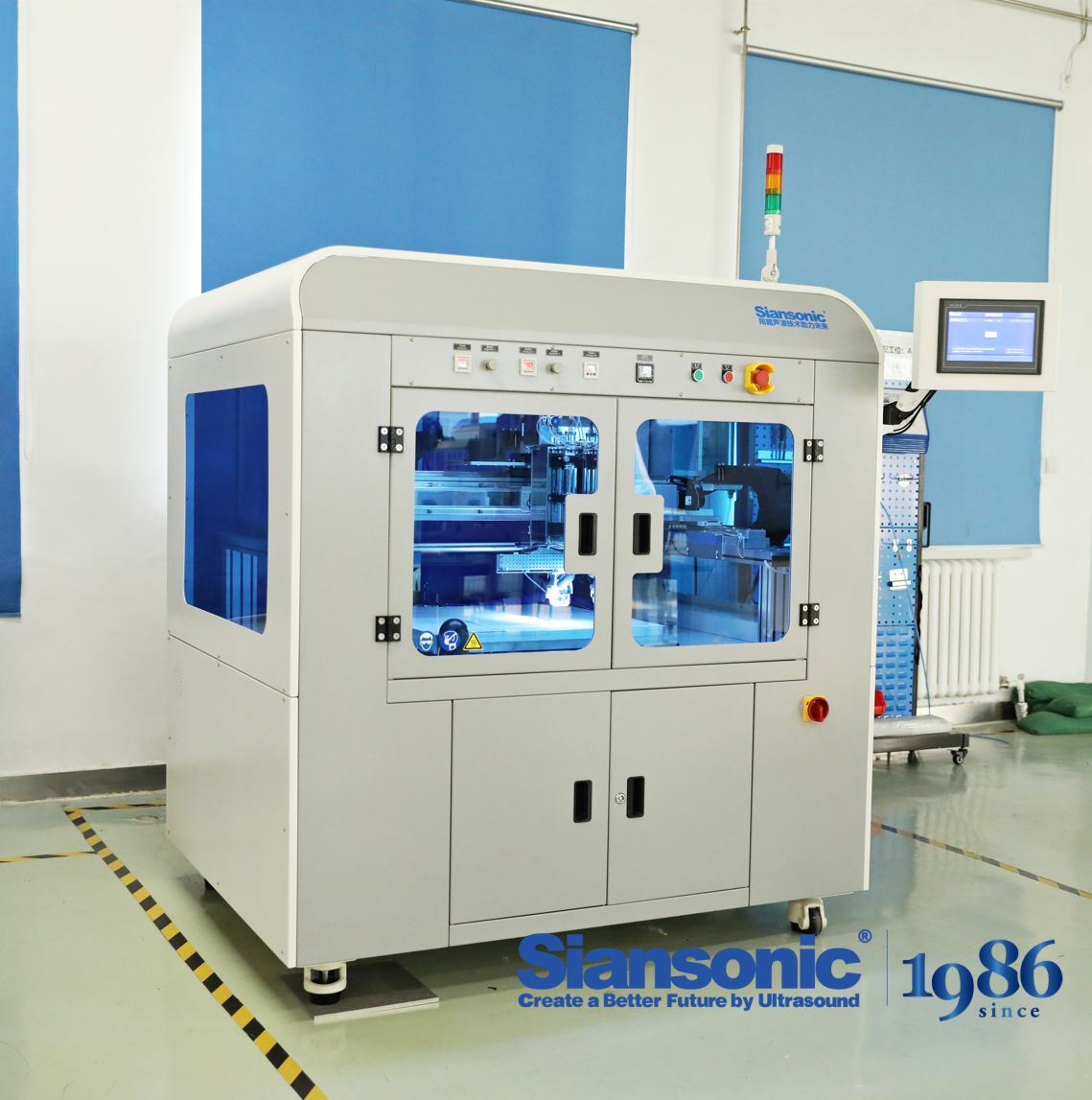
Achieving layer thickness uniformity at the nanometer scale demands more than a calibrated deposition tool. Our approach pairs real-time spectroscopic monitoring with sub-second feedback loops, allowing the system to correct drift before it becomes a measurable deviation. Whether you are stacking dielectric or conductive films, the process holds a repeatability window that stays within ±0.3 nm across full wafer runs, even when ambient conditions shift mid-batch.
Rather than relying on post-process metrology to flag issues, the control architecture continuously compares deposition rate against a reference model derived from earlier substrate batches. This closed-loop method reacts to tiny variations in precursor flow or chamber pressure, adjusting power or gas ratio on the fly. The result is a thickness distribution that looks flat not just on a single wafer, but across every wafer in a cassette, with day-to-day consistency you can set a clock by.
Operators often ask how this precision survives routine maintenance. The answer lies in automated baseline reacquisition: after any source swap or shield cleaning, the system runs a short characterization sequence and renormalizes its control parameters. No manual recalibration, no drifting offsets. Even on films as thin as 5 nm, the average thickness tracks the target within the width of a few atomic layers, making nanometer repeatability a practical outcome rather than a lab curiosity.
Coating Uniformity on Temperature-Sensitive and Flexible Substrates
Achieving a uniform coating on temperature-sensitive and flexible substrates demands a careful balancing act between process parameters and material constraints. Unlike rigid surfaces that tolerate aggressive thermal or plasma treatments, these substrates can deform, degrade, or lose functionality under conventional coating conditions. The key is to tailor deposition energy and exposure time so that the coating spreads evenly without overheating localized regions. For instance, adjusting the nozzle-to-substrate distance or pulsing the coating source can prevent heat buildup while maintaining consistent film thickness across flexible webs or contoured surfaces.
Substrate flexibility introduces additional complexity, as bending or stretching during the coating process often leads to thickness variations, especially near edges or creases. One practical approach is to pre-tension the substrate or use a chilled backing plate that supports it without restricting movement. Combining this with real-time monitoring—such as optical thickness sensors or thermal imaging—allows operators to fine-tune deposition in areas prone to nonuniformity. The result is a coating that adheres evenly even when the substrate is later folded, rolled, or exposed to thermal cycling.
Material choice also plays a decisive role. Low-temperature-curable formulations, including UV-initiated or two-part reactive coatings, can achieve high uniformity at ambient or mildly elevated conditions. These systems minimize the risk of substrate distortion while offering precise control over film build. For ultraflexible or extremely heat-sensitive films, aerosol-assisted or inkjet-based deposition methods provide a viable path, as they deliver coating droplets with minimal overall heat input, allowing one to coat intricate patterns without compromising the substrate's mechanical or thermal integrity.
Cutting Material Waste Through Low-Velocity Spray Dynamics
Overspray has long been the quiet thief in industrial coating operations, stealing material, inflating costs, and fouling surrounding equipment. Traditional high-pressure atomization chases speed but leaves a trail of airborne particulates that never reach the target surface. Shifting to low-velocity spray dynamics flips that equation: by reducing fluid exit energy, droplets follow a more direct, controlled path, meaning a higher fraction of the formulation actually lands where it's needed. The result isn't just cleaner booths—it's a measurable drop in raw material consumption per unit coated, often in the double-digit percentages after retuning nozzle geometry and air cap settings.
What makes low-velocity delivery particularly effective for waste reduction is its effect on rebound and bounce-back. When particles strike a surface at high speed, they tend to splash or fragment, creating secondary waste that never bonds. Slowing the spray creates a gentler arrival, allowing the coating to wet out and adhere on first contact. This is especially critical for complex geometries—inside corners, recessed flanges, and curved profiles—where turbulent, fast-moving mist gets deflected before coverage is complete. Operators often compensate for poor transfer efficiency by applying extra passes, which compounds both material use and rework. A low-velocity approach attacks the root cause, not the symptom.
The transition requires more than swapping a nozzle tip. Fluid viscosity, air-to-liquid ratio, and spray distance must be retuned as a system, since lower propulsive force demands tighter control over the liquid's breakup length. In practice, many shops find that modest reductions in atomizing air pressure—sometimes as little as 10 to 15 psi—yield substantial waste savings without sacrificing film build or appearance. The payoff appears quietly on the balance sheet: less coating purchased, less solvent evaporated, fewer filters clogged, and less hazardous waste hauled away. For operations chasing lean manufacturing goals, low-velocity spray dynamics function as a process-level material conservation strategy rather than a cosmetic tweak.
Scaling From Lab Prototypes to Continuous Roll-to-Roll Coating
Moving a coating process off a bench and onto a moving web forces choices that never surface in a static lab setup. The fluid that wets a small glass slide perfectly may bead up or streak at ten meters per minute, simply because the surface energy, viscosity, and drying profile shift under tension and speed. Early film tests often hide these problems until someone tries to coat a full roll and watches defects repeat every few hundred meters. That gap between a successful dip-coat in a fume hood and a stable slot-die run on a pilot line is where most scaling efforts stall.
The first hard step is usually controlling the coating window. In the lab, you can adjust thickness by changing concentration or withdrawal speed and just wait longer for drying. On a roll-to-roll line, thickness depends on pump flow, die-to-web gap, and line speed all at once. A slight drift in pump pressure or a tiny misalignment in the die lip creates long streaks that are hard to trace because they may start kilometers into the run. Operators learn to watch the wet film under a strobe light and to build in small deliberate perturbations just to see how the system responds; that kind of process intuition does not come from reading a standard operating procedure.
Eventually the real question is not whether you can coat a good ten-centimeter sample but whether the process stays in control for an hour, a shift, or a week. Drying becomes a bottleneck: a lab oven can hold a sample at 80 °C for as long as needed, but a web moving through a dryer only gets a few seconds of residence time. Solvent removal, film formation, and residual stress all change when the thermal history compresses by two orders of magnitude. Teams that recognize this early start by building a small pilot coater and deliberately running it to failure, because the defects found in a ten-minute trial are cheap compared to discovering them after a full production order has been accepted.
Long-Run Stability Without Manual Adjustment or Downtime
Most equipment drifts the moment it leaves the factory, slowly losing the tight tolerances that made it accurate. This setup takes a different route: instead of depending on scheduled tune-ups, it watches its own behavior in real time and makes tiny corrections long before any shift becomes noticeable. The result is a platform that stays within its original operating envelope for years, not weeks.
That hands-off reliability comes from a combination of closed-loop feedback, redundant pathways, and materials chosen specifically to resist wear. When one channel begins to degrade, the control logic redistributes the load without interrupting output. There is no error message, no call for a technician, and no pause in the work.
In day-to-day use, this means the equipment keeps producing while others are down for recalibration. It also removes the hidden cost of maintenance windows—the lost output, the overtime, the rushed inspections. Over time, the advantage compounds into a remarkably consistent performance record.
FAQ
Ultrasonic systems atomize the coating fluid through high-frequency vibration rather than air pressure, which gives much finer and more uniform droplets. That translates to tighter thickness control and less overspray, especially on delicate or small-area substrates.
Consistency comes from a combination of stable nozzle frequency, precise flow rate control, and accurate motion programming. High-quality systems maintain a narrow droplet size distribution, so the wet film lays down evenly before drying. Regular calibration of the liquid delivery and keeping the nozzle tip clean are just as important.
A wide range of low-to-medium viscosity fluids work well, including photoresists, conductive inks, polymer solutions, and nanoparticle suspensions. The key is matching the fluid's viscosity and surface tension to the nozzle's operating frequency, which a good vendor will help you verify with trials.
Yes, they're often preferred for those cases. Since the atomization doesn't rely on high-velocity air, the impact force is low, and the coating can be applied gently. That reduces damage to thin films, flexible electronics, or medical device components.
Most systems can deposit films from around 20 nanometers up to several microns in a single pass. Thicker coatings are possible by layering or adjusting flow rate and speed, but for very thick films other methods might be more practical.
The main task is cleaning the nozzle after each run to prevent buildup, along with periodic replacement of the piezoelectric transducer if it drifts outside its optimal frequency range. High-quality systems usually include monitoring features that alert you when the nozzle isn't performing as expected.
Absolutely. Many labs use benchtop units for feasibility work, then move to multi-nozzle or roll-to-roll configurations once the process is proven. The coating parameters transfer fairly directly, though you'll need to revalidate edge-to-edge uniformity on larger widths.
Lower frequencies, like 25 or 40 kHz, produce larger droplets and are good for higher flow rates. Higher frequencies, 60 to 120 kHz, give finer droplets and are better for very thin, precise layers. The choice depends on your target thickness, fluid viscosity, and how much overspray you can tolerate.
Conclusion
Ultrasonic coating systems for precision thin film work solve a stubborn problem that slows many deposition lines: nozzle clogging. Instead of pushing liquid through high-pressure orifices that trap particles and eventually foul, the ultrasonic nozzle vibrates at high frequency and breaks the fluid into a fine, low-energy mist without the narrow passages that cause blockages. This design choice feeds directly into tighter thickness control, often reaching nanometer repeatability, because the spray plume remains stable and uniform across the entire run. Temperature-sensitive and flexible substrates benefit as well; the gentle mist lands without impact, preventing thermal damage and producing even wetting even on delicate films.
Low-velocity spray dynamics also reduce material waste substantially, since nearly all the coating reaches the surface instead of ricocheting or being lost as overspray. That efficiency makes the shift from lab prototypes to continuous roll-to-roll coating far smoother: the same nozzle behavior works on a small test coupon and at full production speed without changing the setup. Over long runs, the system keeps its parameters steady and requires no manual adjustment, so operators avoid downtime from drift, clogging, or recalibration. The overall result is a coating line that maintains uniform thin films, batch after batch, on challenging substrates that would defeat conventional spray equipment.
Contact Us
Contact Person: Ivy Zhang
Email: [email protected]
Tel/WhatsApp: +86 1081502288
Website: https://www.siansonic.com/