

Hybrid Servo Press Brake Vendor: How to Choose the Right Partner
2026-10-08
Choosing a hybrid servo press brake vendor is rarely just about horsepower or tonnage. It’s about finding a partner who can read your bending challenges, reduce trial-and-error, and keep your production moving when orders shift. The wrong choice shows up later as slow setups, inconsistent angles, and support calls that go nowhere. That’s why HUNSONE focuses on more than machine specs—it builds vendor relationships around uptime, precision, and the realities of your shop floor. In this article, we’ll break down the key traits to look for before you sign anything, so you can choose a partner that actually earns its place in your workflow.
What Their Oldest Press Brake Still Running Tells You
An old press brake that still holds tolerance after decades of daily use says something the spec sheet never will: it was never designed to be disposable. Early machines carried heavier frame castings, simpler hydraulics, and control systems that a technician could trace with a multimeter and a wiring diagram. That kind of overbuilding wasn't an accident—it reflected an era when downtime cost more than extra steel, and buyers expected to pass equipment down rather than trade it in.
You can learn more from a 30-year-old press brake that still runs straight than from a dozen glossy brochures. Look at where the wear points are, how the gibs were adjusted, which seals lasted and which were replaced every few years. Those details reveal a maintenance philosophy that modern lightweight designs often ignore: accessible grease fittings, replaceable wear plates, and hydraulic circuits that don't require proprietary software to diagnose.
If your shop has one of these machines still bending parts every morning, treat it as a benchmark. It proves that precision doesn't have to come with planned obsolescence, and that a well-maintained mechanical system can outlive several generations of electronic upgrades. The next time you're comparing new equipment, ask yourself whether the manufacturer builds with that same long horizon in mind—or just until the warranty expires.
The Hidden Costs Hiding Behind a Low Bid
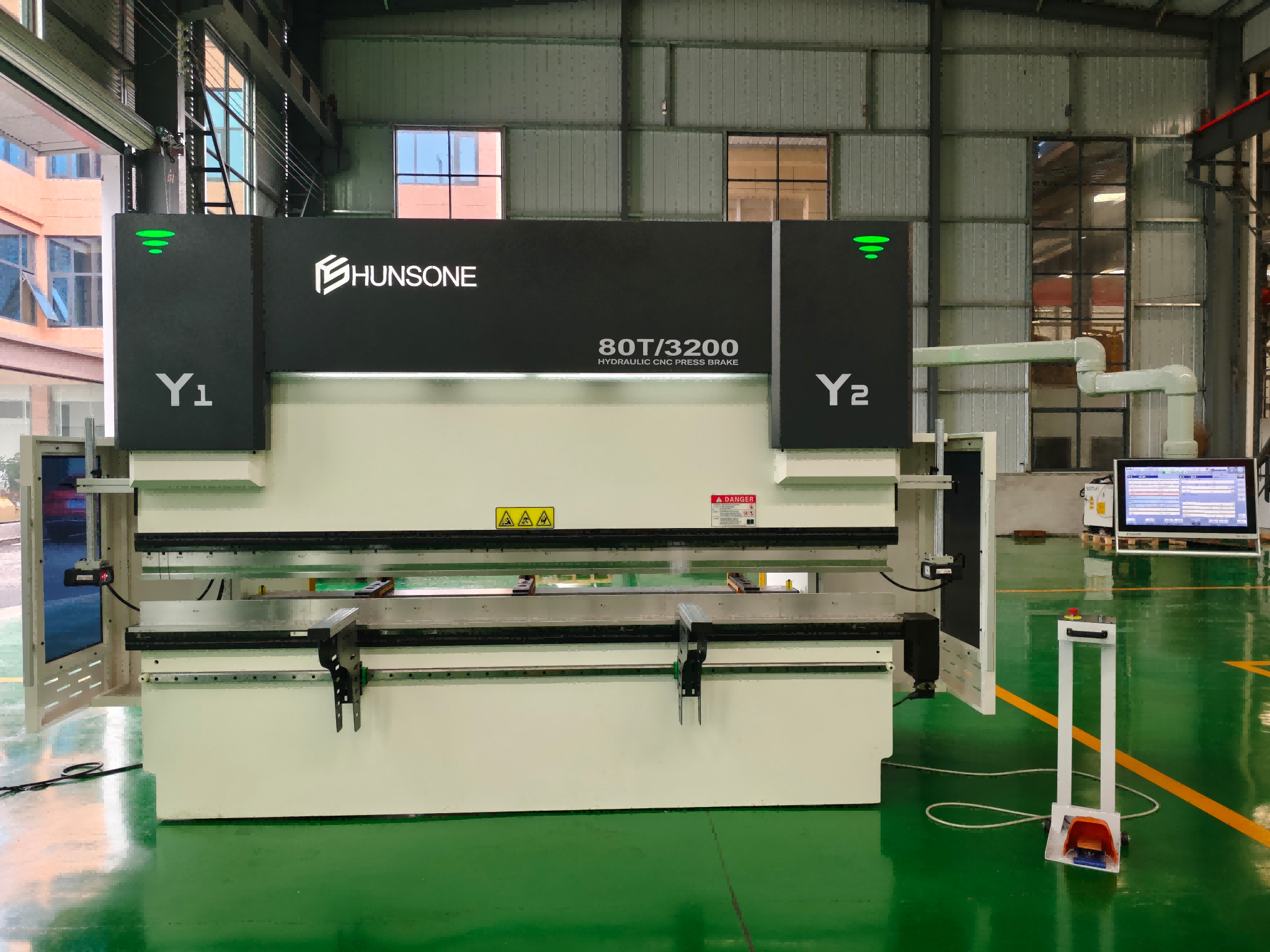
A bid that seems too good to be true usually comes with a string of quiet trade-offs. The quoted price may cover only the most basic scope, leaving out site preparation, permits, cleanup, or standard finishes that most buyers assume are included. Once the contract is signed, those omissions surface as change orders, each one nibbling away at the initial savings until the final invoice lands well above the second-lowest bid.
Beyond the paperwork, there is a slower kind of expense. Cheaper materials or rushed labor tend to fail early, pulling the project into a loop of repairs and replacements that no one planned for. A low upfront number can also signal thinner contractor margins, which often translates to fewer skilled workers on site, lighter oversight, or corners cut in places you will not notice until a problem appears months later.
Why Local Service Response Beats a Flashy Demo
When a piece of equipment fails, the last thing anyone needs is a polished slide deck. A local service team that shows up within hours—not days—can keep operations running. Flashy demos often highlight features that may never be used in real-world conditions, while response time directly impacts downtime, revenue, and safety.
There's also a matter of trust. A vendor that prioritizes on-the-ground support demonstrates commitment to your actual environment, not just a controlled demo. Local teams know the regional quirks—power fluctuations, weather patterns, supply chain delays—and can adjust on the fly. That kind of contextual knowledge doesn't come from a rehearsed presentation.
Finally, a fast local response often costs less in the long run. Every hour of waiting adds up in lost productivity, overtime, and missed deadlines. A demo may impress during the sales cycle, but when a critical system goes down at 2 a.m., the only thing that matters is who picks up the phone and how quickly they arrive.
How to Pressure-Test Their Build Quality Before You Commit
Don't just eyeball the finish—put some real force into it. Grab the item at its natural stress points and twist gently. Listen for creaks or ticking sounds; those are early warnings of joints that will loosen after a few weeks of use. If the surface coating scuffs from a light fingernail drag, imagine what a year of pockets or countertops will do.
Run your finger along every edge and seam. A sharp burr or uneven gap is a telltale sign that the mold or machining was rushed, and that same sloppiness likely lives inside the parts you can't see. Press down on large flat panels with your thumb—if they flex like a cheap plastic lid, the material is too thin to survive real-world bumps without cracking.
Mimic the abuse of daily life before you buy. Clench the item in your fist for a few seconds and release; does anything shift or stay deformed? Try scratching a hidden spot with your nail or a coin edge. If the paint or anodizing flakes off instantly, the whole unit will look beat-up within a month, no matter how good it looks on the shelf.
The Overlooked Gap Between Hybrid Claims and Real Bending
Hybrid material systems often arrive with impressive bending numbers pulled from idealized coupon tests, yet the distance between those figures and what happens in an actual loaded part is rarely discussed. A carbon/glass fiber stack, for instance, may show a clear gain in flexural strength when measured on a flat rectangular specimen, but the stress state in a curved or uneven component is nothing like the uniform beam theory behind that number. Interlaminar shear concentrates near free edges and thickness transitions, kicking off delaminations at locations the standard calculation never considers.
The shift of the neutral plane is another factor that gets glossed over. When two materials with markedly different stiffness are laminated together and bent, the neutral axis drifts toward the stiffer layer, forcing the more compliant side to carry a disproportionate share of tensile or compressive strain. Designers keep reaching for homogeneous beam formulas, and the result is premature matrix cracking or fiber buckling that no data sheet predicted. This explains why certain hybrid layups look promising in small-scale bending coupons but fall apart once the span-to-thickness ratio or curvature approaches something closer to a real structural element.
Even the test methods themselves widen the gap. Three-point and four-point bending apply a single monotonic load path, while actual components rarely bend without some combination of torsion, local indentation, or cyclic micro-motion. Hybrid interfaces accumulate damage under those mixed conditions in ways that a single flexural strength value cannot capture. A more honest evaluation of hybrid bending would replace the clean, uniaxial coupon with loading sequences that mimic service conditions, focusing on where and how the laminate fails rather than on a peak load that exists only in the lab.
Finding a Partner Who Asks About Your Parts First
You might think it sounds trivial, but the way someone opens a conversation about intimacy reveals a lot about their character. A partner who genuinely wants to know what you enjoy before diving in shows they see you as more than just a body. It’s not about interrogation; it’s about curiosity. When they ask what feels good for you, what areas are off-limits, or how you like to be touched, they’re signaling that your comfort and pleasure aren’t afterthoughts.
This kind of attention flips the usual script. Many people grow up learning to prioritize the other person’s needs while quietly hoping theirs get noticed. But finding someone who voluntarily puts your parts on the table first—not because they have to, but because they want to—can feel like a revelation. It shows that they’re not just checking boxes or rushing toward their own finish line. They’re interested in the actual map of you, and they’re willing to learn it slowly.
Of course, nobody is perfect, and even a thoughtful partner might forget to ask one time. The point isn’t to test them constantly. It’s to notice the pattern. Do they consistently check in? Do they adjust based on what you say? If yes, you’ve likely found someone who values mutual discovery rather than performance. And that’s a rare, grounding thing to hold onto.
FAQ
The real difference shows up in energy draw and repeatability. A hybrid servo uses an electric motor to drive the pump only when the ram needs to move, so idle periods consume almost nothing. You also get tighter angle consistency across long runs because the servo control adjusts oil flow in real time rather than relying on preset valve settings.
Ask how many service engineers cover your region, what the typical response window is for a down machine, and whether they stock critical drive and control components locally. A vendor who can walk you through a past emergency repair scenario, including parts delivery time, gives you far more useful insight than a brochure promise.
Even at one shift, the idle savings add up. If your operators pause between batches or the machine waits during material handling, a hybrid servo avoids constantly running a main motor at full load. Ask the vendor for a cycle profile calculation based on your actual part mix, not just a generic kWh rating.
Job shops usually benefit from variable speed bending and quick tool change features, while high-volume plants care more about integration with automated feeding and offline programming. The right vendor asks about your three most frequent part families before recommending any options, rather than pushing a fixed package.
Request a test bend on your own material with a written report showing angle deviation across at least 30 consecutive parts. Also ask for the machine's thermal stability data, such as how much the ram position drifts after two hours of continuous cycling. If the vendor hesitates on either, treat it as a warning sign.
The control determines how quickly your operators become productive. Look for a graphical interface that matches your team's existing skill level, offline simulation that mirrors the real bending sequence, and easy correction of springback. A machine with impressive specs but a clunky control will slow down every job.
Yes. Check the cost and availability of proprietary filters, seals, and servo drives. Ask about software update fees and whether remote diagnostics require a subscription. Also clarify who covers calibration after a crash or overload, because some vendors include one realignment while others charge separately for every service visit.
Conclusion
Choosing a hybrid servo press brake vendor goes far beyond comparing spec sheets or watching a polished demo. Start by asking how long their oldest installed machine has been running—and whether they still support it. A vendor who can point to a press brake that’s still bending accurately after a decade or more is telling you something about their engineering discipline and parts availability. Then dig into the quote itself. The lowest bid often hides thinner frames, cheaper hydraulics, or missing safety features that surface as downtime within the first year. Local service response matters more than a flashy showroom visit; when a servo drive faults on a Friday afternoon, a technician who can reach you in hours beats a distant rep with a nice brochure.
Before you commit, pressure-test build quality in ways a catalog won’t show: inspect weld seams, ask about frame stress-relieving, and request references from shops bending similar material thicknesses. Hybrid claims are easy to make but hard to verify, so have the vendor run your actual part profile and measure the angle consistency across the full bend length—not just a simple 90-degree test piece. Finally, look for a partner who opens the conversation by asking about your parts, tolerances, and daily volume rather than pushing a stock model. That kind of vendor is far more likely to configure the machine around your work, not the other way around.
Contact Us
Contact Person: James Chen
Email: [email protected]
Tel/WhatsApp: 86 13770803946
Website: https://www.hunsone.com/