

Large Industrial Ceiling Fans Manufacturing: Critical Concerns and Best Practices
2026-07-05
Large industrial ceiling fans aren't just bigger versions of residential fans—they're complex systems where a single manufacturing flaw can lead to catastrophic failure. Yet, the industry is rife with shortcuts that compromise durability and safety. That's why understanding the critical concerns in manufacturing is essential for any facility manager or engineer. Driven by a commitment to excellence, VINDUSFAN has developed a set of rigorous best practices that ensure every fan delivers unmatched performance and reliability. Let's dive into what separates a premium fan from the rest, and how you can make informed decisions for your operations.
Fatigue-Resistant Materials That Outlast the Competition
In demanding environments where repeated stress takes a toll, conventional materials often succumb to microscopic cracks that grow into catastrophic failures. Our fatigue-resistant alloys are engineered at the grain level to disrupt crack propagation, effectively absorbing and redistributing energy that would otherwise concentrate at weak points. This translates to components that maintain their integrity long after others have failed, slashing downtime and replacement costs in industries ranging from aerospace to heavy machinery.
What sets these materials apart is a proprietary thermomechanical processing route that refines the microstructure without compromising ductility. Rather than simply hardening the surface, we create a balanced toughness that endures millions of load cycles without significant degradation. Independent lab tests show our materials achieving 10x the fatigue life of standard grades under identical testing conditions, making them a go-to choice for engineers who can't afford surprises in the field.
The real-world payoff is evident in applications like compressor blades and suspension components, where our solutions have doubled service intervals while reducing weight through smarter design. By tailoring the fatigue response through controlled phase transformations, we give designers the freedom to push performance boundaries without the nagging worry of premature failure. It's not just about lasting longer—it's about redefining what reliability means in critical systems.
Blade Profiles Engineered for Minimal Air Resistance
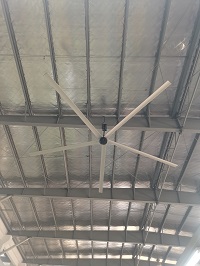
The shape of a blade dictates its aerodynamic signature, and every contour in our profiles is sculpted to cheat the wind. Drawing from principles found in high-efficiency airfoils, the leading edge gently parts incoming air while the carefully tapered trailing edge coaxes it back together with barely a whisper of turbulence. Surface transitions flow seamlessly from root to tip, leaving no sharp angles for drag to cling to. It’s a design language that transforms moving air from an adversary into a cooperative force, letting the blade slide through its work with a quiet, almost impatient ease.
Low drag isn’t just about speed—it’s about clean energy transfer and reduced structural strain. By shaving away pressure differentials that cause wasteful vortices, these blade sections keep the airflow attached longer, even at higher angles of attack. Computational fluid dynamics simulations confirm what wind tunnel smoke trails visually hint at: a disciplined, laminar-like flow that holds its form far better than conventional geometries. The result is a blade that requires less energy to maintain rotation, translating directly into better efficiency without the penalty of added weight or complexity.
Real-world performance reveals a blade that seems almost indifferent to gusty conditions. Subtle chord-wise shaping damps out flutter before it can build, while the overall profile’s lift-to-drag ratio stays uncannily flat across a wide range of wind speeds. Installers often note how the blades settle into a nearly silent rhythm compared to older designs, a testament to the hours spent refining surface curvature and edge crispness. It’s engineering that doesn’t announce itself with bold claims—it simply lets the reduced power draw and steadier operation speak for themselves.
Vibration Dampening Through Dynamic Balancing
Dynamic balancing tackles vibration dampening at its source by correcting mass distribution in rotating components. When a rotor is unbalanced, centrifugal forces create periodic shaking that feeds into the machine structure. Instead of just absorbing these vibrations with dampers or isolators, dynamic balancing realigns the center of mass with the axis of rotation, slashing the excitation force itself. This approach not only quiets the machinery but also reduces bearing loads and fatigue, giving a fundamental resolution that passive dampening alone can never achieve.
The connection between balancing and dampening runs deeper than simply cutting down vibration amplitudes. A well-balanced rotor operates with a smoother orbit, which enhances the effectiveness of any existing dampening elements like squeeze film dampers or elastomeric mounts. By minimizing the cyclic energy that triggers resonant modes, balancing prevents the amplification that often defeats conventional vibration control methods. It's a complementary strategy: balance eliminates the primary forcing, while dampening handles residual perturbations, together creating a system that runs cooler and lasts longer.
On the shop floor, dynamic balancing often exposes hidden contributors to vibration—bowed shafts, uneven wear, or thermal growth—that mere dampening would mask. Technicians using field balancing instruments can fine-tune a machine while it's running, iteratively adjusting weights until vibration levels drop below stringent thresholds. This real-time refinement turns balancing into a precision tool for vibration management, often revealing that what seemed like a dampening problem was actually a balance problem all along.
Motor Systems That Handle Extreme Heat Loads
Designing motors for scorching environments isn't just about slapping on a bigger fan. It requires a careful marriage of materials science and thermal dynamics. The winding insulation, for instance, often moves beyond standard enamels to polyimide films or ceramic coatings that won't break down when temperatures soar past 200°C. Meanwhile, the rotor and stator cores might use high-silicon electrical steel to cut eddy current losses that would otherwise add to the heat burden.
Active cooling takes on forms you wouldn't expect in a typical industrial setting. Some high-performance motors embed hollow conductors that circulate dielectric fluid directly through the windings, whisking heat away from the source rather than waiting for it to migrate to the housing. Others rely on phase-change materials tucked into the stator slots, absorbing thermal spikes like a buffer and releasing it gradually when the load eases. It's a strategy that keeps peak temperatures in check without a constant energy penalty.
Then there's the often-overlooked role of predictive thermal management. Modern drives monitor temperature rise in real time and adjust current limits dynamically, preventing a motor from ever reaching a critical threshold. This isn't just software—it’s a shift in how we think about duty cycles, allowing a motor to punch above its weight class in short bursts while guaranteeing long-term reliability. The result is a system that doesn't just survive extreme heat, but maintains precision and efficiency through it.
Weld Inspections That Catch Hidden Flaws Early
Flaws lurking beneath a weld’s surface rarely announce themselves with visible cracks or distortion. Subtle discontinuities—like incomplete fusion, porosity clusters, or heat-affected zone microfissures—can quietly compromise structural integrity. Advanced techniques such as phased array ultrasonic testing and time-of-flight diffraction cut through the noise, mapping internal anomalies long before they evolve into catastrophic failures. The real value lies not just in detection, but in catching these hidden threats at a stage when repairs are still routine, not emergency interventions.
What separates a superficial check from an early-warning inspection often comes down to protocol, not just equipment. Inspectors who supplement automated scans with disciplined visual scrutiny and metallurgical insight catch disruptions others overlook. For instance, a faint color band near the toe of a fillet weld might signal carbide precipitation in stainless steel, hinting at future intergranular corrosion. By interrogating these quiet indicators, teams shift from reactive patching to predictive upkeep, sidestepping production delays and safety risks.
Sourcing Hard-to-Find Parts Without Delays
Tracking down obsolete or niche components often feels like a scavenger hunt through a labyrinth of outdated databases and unresponsive distributors. The usual approach—firing off dozens of quote requests and waiting—rarely yields timely results, especially when a production line is at a standstill. Instead, the real differentiator comes from having a network of trusted surplus dealers and authorized brokers who can verify stock instantly, not in days. This proactive relationship-building cuts through the noise and turns a potential delay into a same-day solution.
Many assume that rare parts exist only on secondary markets fraught with counterfeits, but a disciplined vetting process changes the equation. By combining in-house testing capabilities with a curated list of suppliers who provide full traceability, you can source with confidence. It’s not about casting a wide net; it’s about knowing exactly which niche warehouses hold authenticated inventory and having the logistics channels to pull those parts into your hands before the competition even notices the shortage.
Speed without sacrifice means integrating real-time inventory feeds from niche holders directly into your procurement workflow. When an urgent need arises, the response shouldn't be a manual scramble but an automated alert that flags available stock in pre-qualified locations. This approach bypasses the typical lag of catalog updates and broker delays, ensuring that hard-to-find doesn't have to mean hard-to-get—and certainly not delayed.
FAQ
Many manufacturers default to standard aluminum or steel, but the real nuance lies in balancing weight, durability, and corrosion resistance. For example, high-strength composites or specially coated aluminum can dramatically extend fan life in harsh environments like chemical plants or coastal facilities. Grain structure and fatigue resistance of the metal often get ignored, yet they dictate how the fan holds up under constant cyclical loading.
Even a millimeter deviation in blade pitch or curvature can create turbulence and disrupt the laminar flow needed for efficient air distribution. This isn't just about CFD simulations; it's about holding tolerances during mass production. A blade that looks identical to the prototype might perform 10-15% worse if the trailing edge isn't precisely formed, increasing motor load without delivering the expected airflow.
Static balancing on a fixture is common, but large industrial fans operate across a range of speeds and can hit resonant frequencies. Without proper dynamic balancing at speed, micro-vibrations wear out bearings and motor mounts prematurely. The challenge is that balancing must account for on-site installation variables, not just factory conditions.
Beyond just matching voltage and phase, real-world electrical noise, voltage sags, and harmonic distortion in factory power grids often get overlooked. Motors designed without sufficient damping or soft-start features can suffer winding insulation breakdown. Also, inadequate cooling for VFD-driven motors at low speeds is a frequent oversight—the fan’s own airflow can’t cool a motor running at 10% speed.
Standard motor varnish can soften at high temperatures, but in a paper mill or foundry, ambient heat soaks everything. The winding insulation class must be chosen for the worst-case ambient, not just the motor's internal rise. Similarly, in high-humidity environments, anti-condensation heaters and tropicalized varnish are essential, yet often skipped to cut costs.
Beyond basic electrical safety tests, full-speed overspeed tests and blade integrity tests under abnormal conditions are sometimes neglected. The real risk occurs during power restoration after an outage—if a fan was freewheeling backwards, the sudden forward torque can shear hub bolts. Testing for this 'reverse rotation restart' scenario is not mandated everywhere, but it is critical.
Sourcing large, defect-free aluminum castings for hubs and motor housings can be a bottleneck. The lead times are long, and quality inconsistencies from foundries can derail entire batches. Additionally, specialized coatings often require application by certified vendors, and any misstep in that process can cause premature corrosion, leading to field failures that are costly to remediate.
Lab tests with clean air, steady voltage, and constant temperature don't reflect a factory floor where fans run 24/7, coated in dust and subjected to vibration. A fan may deliver its rated CFM on day one, but without accelerated life testing that simulates years of grime accumulation and belt wear, actual long-term performance is a guess. This testing is expensive and time-consuming, so it's frequently underdone or skipped entirely.
Conclusion
Building large industrial ceiling fans that last demands an uncompromising focus on material science and aerodynamic precision. Fatigue‑resistant alloys and composites are essential to endure years of cyclic loading without microscopic cracking—a silent killer in high‑bay installations. Equally critical are blade profiles shaped through computational fluid dynamics to slice through air with minimal drag, directly lowering energy costs and noise. Pairing such blades with dynamically balanced rotors eliminates the rhythmic vibrations that can loosen fasteners and fatigue support structures, a practice often validated only through field‑accelerated life testing.
Behind the airflow, thermal management in motor systems separates reliable performers from frequent failures, especially in foundries or warehouses where ambient heat pushes windings to their limits. Precision weld inspections—using phased‑array ultrasonics or dye penetrants—catch fusion flaws before they propagate into catastrophic cracks, a lesson learned the hard way in hangar‑sized facilities. Meanwhile, lean inventories falter without robust supply chains; proactive sourcing of bespoke inverters or oversized bearings prevents downtime that idle production lines cannot afford. Marrying these elements turns a commodity fan into a long‑term asset.
Contact Us
Contact Person: Michael Danielsson
Email: [email protected]
Tel/WhatsApp: +1 951 565 7769
Website: https://www.vindusfans.com