
Light Tower Supplier Tips for Choosing Durable Portable Illumination
2026-11-22
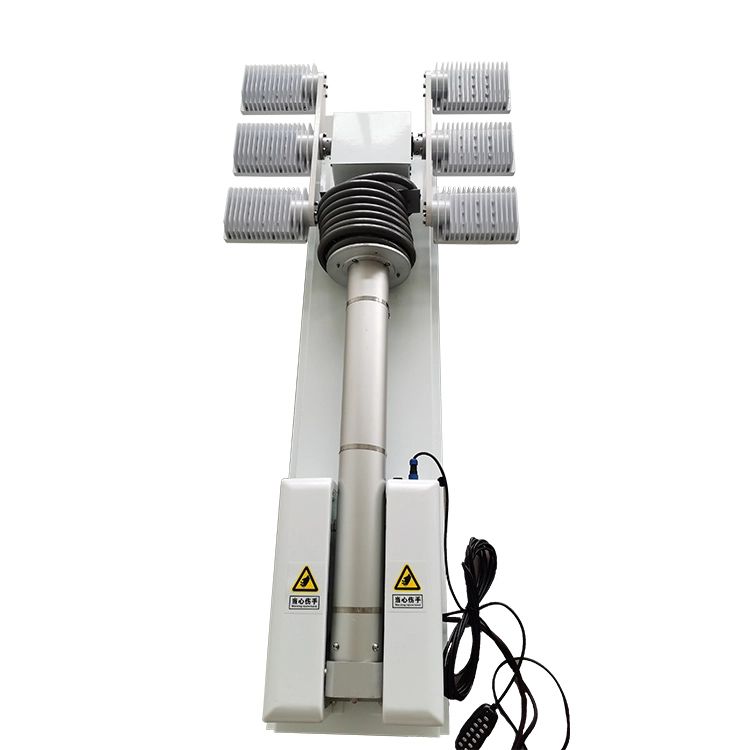
If you’ve ever watched a light tower flicker out halfway through a night shift, you already know that not all portable illumination is built the same. Spec sheets promise impressive lumens, yet durability is decided by smaller details: mast construction, weather sealing, engine access, and how well the tower handles rough transport. That’s where choosing the right light tower supplier makes a measurable difference. Homall Industry Limited has built its reputation on portable lighting that holds up when conditions don’t cooperate. Before you compare models, here are the practical checks that separate a lasting investment from a short-term fix.
What the Ground Under Your Light Tower Tells You
A patch of soil that stays damp long after the rain has passed usually points to poor drainage or a cracked conduit, not just morning dew. If the tower sits on a concrete pad, hairline cracks running away from the anchor bolts often mean the base is working harder than the original pour allowed for. Either way, the ground keeps a record of how the structure moves through freeze-thaw cycles and wind gusts.
Look for a slight depression forming around the legs or the edge of the pad. That shallow bowl catches water and tells you fines are being washed out from underneath, which can leave the foundation bridging over soft spots. In clay-heavy ground, you might see the opposite: heaving that lifts one corner just enough to make the mast lean a few degrees off plumb.
Staining, rust streaks, and scattered aggregate are worth reading too. They often show where water has been standing, where hardware has been losing zinc, or where frost has popped the surface. None of it is noise; it is the tower’s way of pointing to what needs attention before the problem climbs up the steel.
Wattage Is a Poor Predictor of Real Light Output
Most people still reach for a 60-watt bulb out of habit, assuming that number tells them how bright the room will get. It doesn’t. Wattage only measures how much electricity a bulb pulls, not how much visible light it produces. An old incandescent needed 60 watts to emit around 800 lumens, but a modern LED can hit the same brightness at 9 watts. That gap makes wattage nearly useless when comparing different technologies.
Lumens are the number that actually describes brightness. A 9-watt LED, a 12-watt CFL, and a 60-watt incandescent can all produce roughly 800 lumens, yet their energy use is wildly different. If you shop by watts alone, you might end up with a bulb that is too dim for a reading corner or too harsh for a bedroom, simply because the packaging leaned on an outdated habit.
The shift matters most in spaces where light quality changes the feel of the room. Kitchens, workbenches, and vanities need a certain lumen range, not a specific wattage. Checking the lumen count instead of the wattage label puts the focus on what you actually see, and it stops you from overpaying for electricity in the process.
Portable Means Different Things on Different Job Sites
On a kitchen remodel in a tight urban apartment, portable usually describes tools that can be carried up three flights of stairs without a cart: compact miter saws, stackable cases, and one battery platform shared across the crew. The main constraint isn’t power, it’s access. A tool that can’t fit through a narrow service elevator or sit safely on a balcony scaffold stays in the truck no matter how fast it cuts.
On a commercial high-rise, the same word shifts toward mobility within a floor plate. A portable dust extractor or wheeled gang box earns its place because the crew may move through a dozen rooms in a day, often with power available but no room for a fixed station. Here portability means quick teardown and a machine quiet enough not to disturb an occupied office above, not just low weight.
On a rural road or solar field job, portable has almost nothing to do with stairs or shared walls. It means skid-mounted welders, small towable compressors, and tool trailers that can handle a gravel access road and run off a generator for a week. What counts as portable in a high-rise would be seen as fragile or underpowered there, while a tow-behind compressor that is essential on a field crew would be absurd in a hospital corridor.
Runtime Claims That Fall Apart in the Field
Benchmarks rarely survive contact with a customer’s network. A runtime that posts tidy latency percentiles on a clean test cluster can fold under bursty traffic, noisy neighbors, or DNS quirks that never appeared in staging. The gap is not always dramatic; it often shows up as timeout spikes at 2 a.m. and support tickets that arrive before the alerts do.
Memory overhead follows a similar pattern. A service may run for weeks in a sandbox with a flat heap profile, then leak steadily once real payloads and retry storms hit. Field logs reveal the uncomfortable truth: garbage collection pauses, off-heap fragmentation, or thread pool exhaustion that synthetic workloads never triggered.
Zero-downtime upgrade promises are especially fragile. When rolling restarts meet long-lived connections, skewed replicas, or misbehaving clients, the result is not a seamless cutover but dropped sessions and partial writes. Teams learn to treat runtime claims as hypotheses, not guarantees, until they survive the messiness of production.
Why Materials Matter More Than a Paint Job
A fresh coat of paint can hide a lot, but only for a season or two. What actually determines whether a piece survives daily use is the substrate underneath — the density of the fiberboard, the grain structure of the hardwood, the way a metal frame is welded at the joints. Paint sits on the surface like a costume; material is the body beneath it. When you strip away the color, a cheap composite will flake and swell, while a solid core stays quiet and steady under pressure.
The difference shows up in small, unglamorous ways. Hinges bite into real wood instead of tearing out of particleboard. A stone countertop takes a hot pan without blistering, while a laminate fake registers every mistake. Even the sound changes — a knock on solid ash returns a low, confident thud, not a hollow rattle. These are the details that no amount of sanding, priming, or topcoat can manufacture.
Paint fades, chips, and gets repainted. Material accumulates character. The scratches on a thick oak table become part of its story; the same scratches on veneer just look like damage. If you plan to keep something for more than a few years, choose the thing that earns its beauty from the inside out.
The Spare Parts Question Most Buyers Skip
Plenty of people remember to ask about fuel economy, towing capacity, or what happens when the warranty runs out. Far fewer think to look into spare parts availability before signing on the dotted line. It only becomes an issue later, when a simple gasket or a sensor turns into a three-week waiting game. The parts question feels dull in the showroom, but it quietly shapes how long a machine stays useful and how much it costs to keep it running.
Some models share a parts bin with half a dozen other machines, which means your local supplier probably has what you need on the shelf. Others are more like orphans, with low production numbers or a supply chain that never quite matured. That difference shows up fast once the first repair is needed. A cheap initial price can turn expensive if every minor fix requires an international order and a hefty shipping charge.
A practical approach is to check what commonly wears out before you buy. Filters, belts, brake components, and electrical connectors tell you a lot about how easy a vehicle or machine will be to live with. If those basics are hard to find, the bigger and more expensive parts likely won't be any easier. Asking about spare parts isn't the most exciting part of buying, but it's one of the few questions that still matters five or ten years down the road.
FAQ
Have a close look at the tow bar attachment, suspension mounting points, and the way the mast locks for travel. Weak points usually show up as thin sheet metal around the lunette ring or a mast cradle that lets the tower bounce. If the supplier cannot tell you the gauge of the frame at the stress points, that is a warning sign.
Ask about the lift system instead of the number of cycles on a brochure. Cable drums with level winding, stainless or galvanized cables, and accessible lubrication points make a real difference. Also check whether the mast sections use wear pads or just rub against each other. Bare metal sliding on bare metal is a common source of early play and jammed sections.
Not always. LED is efficient, but the housing matters just as much as the diode. Look for cast or extruded aluminum bodies with gasketed lenses and separate drivers that can be replaced without swapping the whole head. Some cheaper integrated fixtures fail after one season because moisture gets in behind the lens and the entire unit becomes waste.
Check fuel tank material, coolant hose routing, and how easy it is to reach the oil filter and drain plug. A powder-coated steel tank may look fine on day one, but a puncture-resistant polymer or aluminum tank often ages better on muddy sites. Also confirm the engine idle speed and warm-up settings are configured for running lights and small loads, not just raw horsepower.
Ask how quickly they can supply a mast cable, a ballast or driver, a light head lens, and an outrigger pin. If those common wear items are not stocked locally or shipped within days, downtime will eat into the savings. Also request a wiring diagram and parts list before delivery, not after the first fault. Suppliers that hesitate on documentation often cost more later.
More than most people think. The control panel should have a gasketed door and tightly sealed cable entries, because dust and rain intrusion cause nuisance tripping and corrosion. Look for connectors with boots or strain relief instead of exposed terminals. If the panel is mounted low behind a wheel, check that road spray will not constantly soak the breakers.
Often yes, if the extra money goes into a galvanized mast, stainless pins, a better wiring loom, and a control system with standard breakers rather than proprietary parts. But do not assume price equals durability. Ask the supplier to point to the exact upgrades you are paying for. If they cannot, you may just be paying for a brand sticker.
Watch for thin outrigger pads, exposed wiring harnesses that rub against the frame, unbraced battery trays, and fuel tanks mounted with only two bolts. Also test the mast lock by pushing the tower gently while it is stowed. Movement, rattling, or flex around the cradle usually predicts damaged mast sections after a few thousand miles of towing.
Conclusion
When choosing a portable light tower, the site itself should shape more of the decision than the spec sheet. Loose sand, thick mud, or uneven gravel changes how stable a unit really is, so look closely at base design and outrigger footprint before trusting a quoted height. Wattage also misleads: two units can list the same watts but deliver very different usable light depending on reflector design, lens clarity, and fixture placement. What matters is how evenly and how far the beam reaches from the actual working position.
Portability is another term that shifts meaning. A light tower that is easy to roll around a warehouse may be clumsy on a highway shoulder or a muddy pipeline spread. Ask for runtime figures that reflect real load conditions, not a bare-bones LED setting that will never be used. Materials deserve more attention than the finish; frames, hinges, and mast sections take constant vibration and weather, and cheap coatings hide thin metal. Finally, ask which spare parts are stocked locally and how quickly mast rollers, lamps, and control boards can be replaced. That answer often reveals more than the brochure does.
Contact Us
Contact Person: Ryan
Email: [email protected]
Tel/WhatsApp: +85259582726
Website: https://www.robomast.com/