

OEM Conveyor Roller Solutions from China for Reliable Material Handling
2026-08-26
If you've ever watched a conveyor line stall because one undersized roller failed, you know the real cost of "cheap" components. For OEM buyers sourcing from China, reliability isn't a spec sheet promise—it's the result of tight tolerances, honest materials, and a partner who understands your load conditions. XAN has built its roller production around that reality, delivering solutions that keep material handling lines moving without the usual guesswork. Here's a closer look at what separates dependable OEM conveyor rollers from the rest.
Why Our Rollers Outlast Standard Options in Harsh Environments
The long service life begins below the surface. Most standard rollers use through-hardened 52100 steel, which has decent hardness but little depth to resist fatigue once the outer layer is compromised. Our rollers are built on a case-hardened alloy with a deeper effective case depth and a tighter retained austenite profile. In abrasive conditions—think fine silica, coal dust, or salt spray—micro-cracks start where the material is softer than the abrasive. By keeping the subsurface stronger for a longer distance, we delay the flaking and spalling that usually kill a bearing.
Sealing is where many "severe duty" rollers fail quietly. A single lip seal or a simple metal shield can let fine particles migrate in after a few hundred hours of vibration. We use a three-stage labyrinth arrangement: an outer exclusion lip, a grease-filled void, and an inner contact lip that rides on a hardened counterface. This creates a pressure differential that pushes contaminants away rather than relying on friction alone. The grease is also a high-viscosity synthetic with solid lubricant additives, so even if the roller sits idle through a wet weekend, startup torque stays low and the film rebuilds almost instantly.
Field evidence matters more than lab specs. In a 14-month side-by-side trial on a limestone conveyor, our rollers averaged 2.4 times the replacement interval of standard rollers from two other suppliers, with no premature failures. The maintenance team recorded less heat at the bearing housing and no visible leakage at the seal gap. This consistency comes from matching the entire system—alloy, seal geometry, and lubricant—to the specific failure modes of harsh environments, rather than just adding more grease or a thicker housing.
Custom Designs That Fit Your Existing Line Without Friction
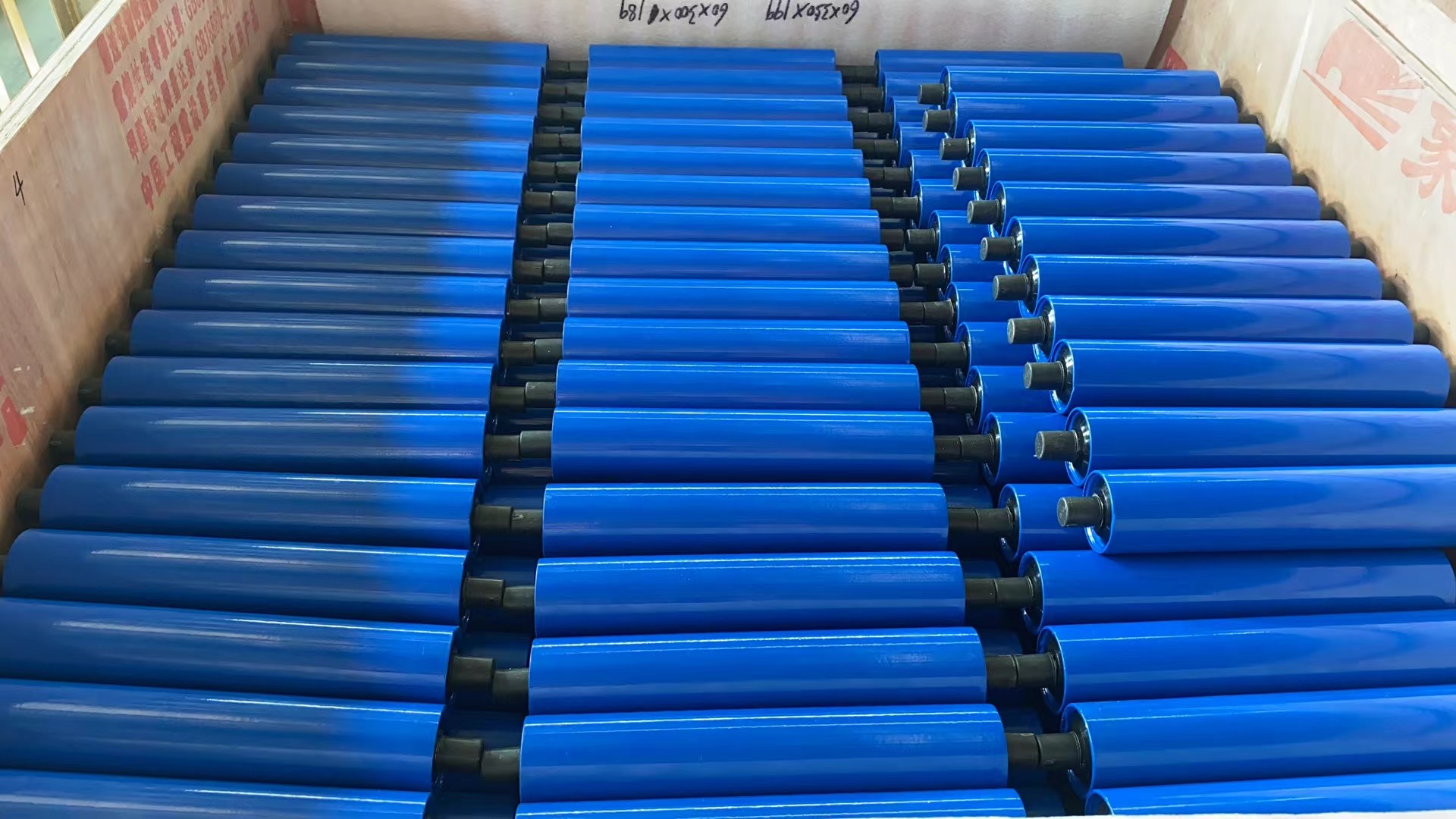
Matching your current production setup doesn't mean forcing a square peg into a round hole. Our team starts with a detailed review of your existing assembly steps, tooling constraints, and material flow. From there, we shape each custom component to drop into place without retooling entire stations or rewriting your standard operating procedures.
Small adjustments can make a big difference. We focus on interface points—connectors, mounting brackets, feed mechanisms—so the new part behaves like it was always part of the line. This approach reduces trial runs and keeps your operators working with familiar motions instead of learning a new system from scratch.
You won't need to halt production for weeks. Most of our custom fits are validated through digital twins and rapid prototypes before the first physical sample reaches your floor. That means fewer surprises during installation, and your line keeps its rhythm while the new design settles in.
The Materials Behind Quieter, Smoother Material Flow
Material flow systems once relied on bare steel and hard plastics that amplified every impact and scrape into a sharp, grating noise. The shift toward quieter operation starts with material chemistry: viscoelastic polymers and fiber-reinforced composites absorb vibration energy instead of reflecting it, while low-friction additives such as molybdenum disulfide or PTFE create a slick boundary that lets bulk solids slide rather than stick-slip. This combination cuts the high-frequency chatter that traditionally fills chutes, hoppers, and transfer points.
A closer look at engineered surfaces reveals how micro-textures and self-lubricating matrices do the heavy lifting. Ultra-high-molecular-weight polyethylene, for example, offers a friction coefficient below 0.1 against dry granular materials, nearly eliminating the rasping sound of sliding particles. Damping layers made from cast polyurethane or rubber-backed ceramic tiles convert kinetic energy into low-level heat, muting the thuds of falling aggregate. Even subtle design choices, like rounded wear strips or gradual transition angles, work with these materials to maintain a continuous, laminar flow profile instead of turbulent bouncing.
In practice, replacing a worn steel liner with a modular polyurethane-encased insert or a UHMWPE chute liner delivers an immediate drop in perceived loudness, often by several decibels. Operators notice fewer jams and less bridging because the material no longer stalls on rough, high-friction surfaces. Over time, the reduced impact stress also extends the life of supporting structures, which means smoother material flow is not just an acoustic upgrade but a reliability gain for the entire handling line.
From Food Processing to Mining: One Roller, Many Demands
A roller that handles sticky dough in a bakery one week might crush abrasive copper ore the next. It sounds unlikely, but the same core design principles—balanced mass, precise surface finish, and controlled hardness—carry over with only material and seal changes. The differences live in the details: food-grade stainless sleeves, washdown-ready bearing housings, and surface finishes smooth enough to prevent bacterial harborage, versus hardened alloy shells and heavy-duty seals built to shrug off dust, slurry, and constant impact.
The real challenge is not making separate rollers for each industry, but adapting one platform quickly without compromising either safety or throughput. For food lines, that means no exposed threads, minimal crevices, and FDA-compliant elastomers. For mining, it means thicker journals, impact-resistant end discs, and lubrication systems that survive 24/7 operation in gritty environments. Yet the rolling element geometry, the method of crowning, and the way torque transmits from shaft to shell often remain nearly identical.
That shared foundation is why some manufacturers now offer modular roller families: same diameter series, same mounting dimensions, but swappable shell materials, coatings, and sealing packages. A single roller core can therefore move from a snack seasoning drum to a conveyor transfer point in a mine, cutting inventory and shortening lead times. The "many demands" don't disappear—they just get filtered through a few well-chosen variables rather than a full redesign every time.
Fast Turnaround Without Sacrificing Precision or Balance
Speed usually comes at the cost of careful work, but this process is built to keep both. Every step that can be automated without affecting the final feel has been streamlined, while the decisions that shape accuracy and tone still get human attention. That means you get a first draft quickly, not a rushed one.
The balance comes from a simple rule: nothing moves forward until it meets the same checks as a slower project. Minor inconsistencies are caught early, and the structure stays even when the clock is tight. Clients don't have to choose between getting it now and getting it right.
It also helps that the workflow separates raw output from refinement. The first pass is fast by design, but the second pass is where precision gets locked in. Adjustments happen in parallel, so the final version still reads like it was given the time it deserved, without the wait.
What Happens After Your Rollers Arrive: Support That Stays
Your rollers have arrived, but the real difference shows up in the weeks that follow. Instead of a one-time delivery and a quick goodbye, you get hands-on guidance that helps you settle into a routine without second-guessing every step. We check in on fit, pressure, and how your body responds, then adjust the plan so the tool works with your daily rhythm rather than sitting unused in a drawer.
Questions rarely fit a business-hours schedule, and neither does our support. Reach out when a muscle feels unusually tense or when you are unsure whether to increase rolling time. A real person replies with practical tweaks, not canned responses. You will also receive short, plain-language pointers on how to pair rolling with simple movement breaks, keeping the approach flexible instead of rigid.
Over time, the support shifts from instructions to collaboration. You learn what your body tolerates on hard training days versus easy ones, and we help refine the sequence so recovery stops feeling like a chore. That ongoing dialogue turns a purchase into a long-term habit, one that adapts as your needs change rather than fading after the unboxing high.
FAQ
The main draw is the blend of customization and cost control. You can specify exact tube diameters, wall thicknesses, bearing brands, and even special coatings without paying a premium for off-the-shelf limitations.
We start with precision-welded steel tubes that go through stress-relief heat treatment. Bearings are sourced from brands you already trust, and every batch undergoes dynamic load testing before shipment. It's not just a visual check—we record the runout and rotational resistance.
Yes, send over your drawings or a sample. Our engineering team reverse-engineers the dimensions and suggests material upgrades if needed. We've done this for mining, packaging, and airport baggage lines.
Nearly everything: tube material (carbon steel, stainless, aluminum), diameter from 20mm to 219mm, wall thickness, shaft ends (threaded, hex, spring-loaded), bearing type (sealed, shielded, spherical), and surface finishes like zinc plating, powder coating, or rubber lagging.
For standard OEM orders, production typically takes 20 to 30 days after design approval. If you need faster turnaround, we can split the order or run a separate line for a surcharge, sometimes cutting it to 12 days.
We manage everything from FOB to DDP terms. Rollers are packed in export-grade plywood crates with steel banding. You can choose sea freight for economy or air freight for urgent spares, and we provide all the necessary documents.
Every order includes a two-year warranty against manufacturing defects. We also keep your roller specs on file, so reordering is quick. If a problem comes up, we can send replacement bearings or entire rollers without making you jump through hoops.
Our factory is ISO 9001 certified, and the rollers can be produced to meet CE, DIN, or CEMA standards depending on your region. Third-party inspection from SGS or BV is available at your request before loading.
Conclusion
The core of dependable material handling isn't found in a single spec sheet—it's in how a roller holds up when dust, moisture, and heavy loads never let up. Our OEM conveyor rollers are built around that reality. Instead of relying on off-the-shelf tubing and standard seals, we start with the conditions your line actually faces. High-grade steel shells, precision-machined bearing seats, and labyrinth-style sealing are paired with thicker end discs where stress concentrates. That's why operators in cement plants, quarries, and chemical processing see service intervals stretch well beyond what generic rollers deliver. Customization isn't a premium add-on here; it's the default. We match shaft diameters, tube gauges, and bracket spacing to your existing frames, so retrofits don't force conveyor downtime or awkward shimming. The result is a drop-in roller that runs true from day one.
Noise and vibration often get accepted as normal, but they signal wasted energy and premature bearing wear. By selecting the right polymer or rubber coating for the load profile, we reduce impact chatter and keep product flow steady. The same attention carries across food-grade washdown lines and abrasive mining transfers—one platform, different material choices, same standard of balance. Every roller is dynamically tested before it leaves the factory, and because our production is centralized, custom orders ship in days rather than months. Once your rollers are installed, support doesn't stop at the invoice. We keep drawings on file, offer wear analysis, and can adjust future batches based on field feedback. That closed loop is what turns a component supplier into a reliability partner.
Contact Us
Contact Person: Anna Lu
Email: [email protected]
Tel/WhatsApp: 8618561668850
Website: https://www.x-conveyor.com