

OEM Water Production Line Factory: Expert Solutions for Bottled Water Manufacturing
2026-07-16
Have you ever wondered what it takes to turn a simple idea into a thriving bottled water brand? Behind every crisp, clear sip is a sophisticated OEM water production line that transforms raw water into a perfectly packaged product—and the right partner makes all the difference. Whether you're scaling up or launching fresh, the efficiency, hygiene, and customization of your setup define your success. That’s where INTOP Machinery comes in, delivering tailored, turnkey solutions that keep your operation flowing smoothly from filtration to filling. Let's dive into how expert manufacturing can quench the market's thirst and give your brand the edge it deserves.
Tailored Production Lines for Unique Bottled Water Brands
Crafting a bottled water identity goes far beyond the label—every curve of the bottle, the closure type, and even the filling atmosphere can be custom engineered to reflect a brand's ethos. For a premium alpine spring water, the line might integrate glass bottles with natural cork finishes and a nitrogen drip to preserve taste, while a rugged outdoor brand could demand a squeezable, ultra-durable recycled plastic container with a sport cap, filled via a hot-fill process to ensure long shelf life on the trail. These choices aren't just cosmetic; they directly impact taste, mouthfeel, and the customer's unboxing ritual, making the production line a silent brand ambassador.
Beyond form, functional flexibility in the line allows for rapid switchovers between bottle shapes, sizes, and label formats without sacrificing efficiency. A boutique electrolyte water might run a short batch of sleek 500ml aluminum bottles in the morning, and by afternoon the same line converts to a 1-liter family-size PET format for a kids' vitamin-infused water, with automated adjustments to fill volumes, capping torques, and labeling positions. This agility empowers brands to test markets, offer limited editions, and respond to seasonal trends without bloated inventory—all while maintaining the precision that consistent product quality demands.
The real differentiation often hides in the finer details: a line that can handle biodegradable labels without tearing during high-speed application, or incorporate a tactile registration system for embossed logos that align perfectly on every container. Some visionary brands are even requesting integration of near-field communication tags into caps or base molds during production, opening a direct digital dialogue with consumers at the moment of the first sip. Such thoughtful customization turns a commodity into a conversation piece, proving that the right production line does more than bottle water—it bottles the brand's story with every drop.
Advanced Filtration and Purification Technologies
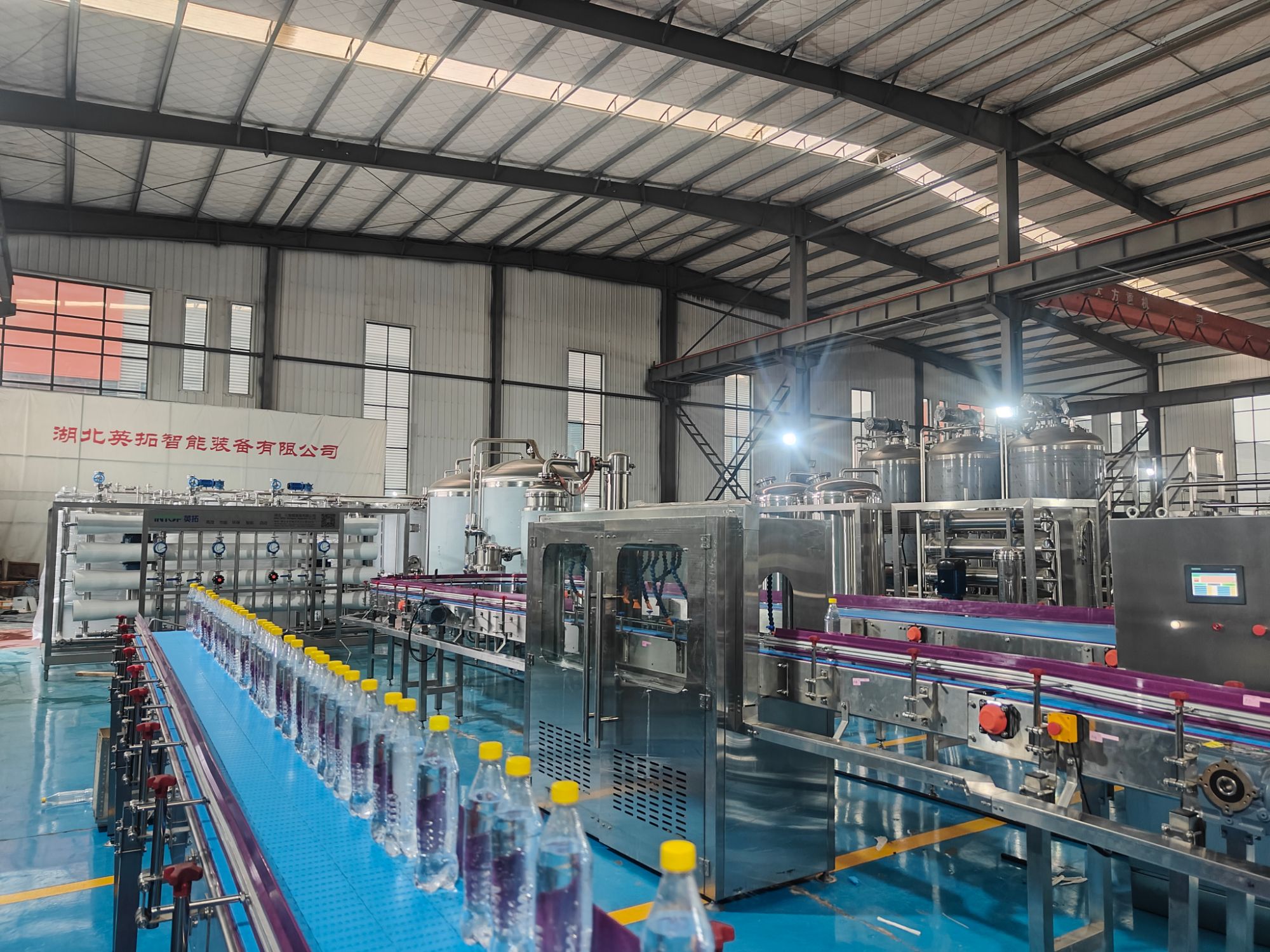
At the heart of modern water treatment lies a suite of advanced filtration methods that go far beyond simple mesh straining. Multistage systems now integrate depth filtration, where suspended solids are captured throughout a thick porous medium, alongside charge-modified membranes that attract and hold onto trace contaminants through electrostatic forces. These innovations not only improve throughput but also extend the lifespan of downstream processes, making large‑scale purification more reliable and energy‑efficient than ever before.
Another leap forward has been the refinement of adsorption-based purification. Engineered media like activated carbon fiber composites and hybrid ion‑exchange resins are tailored to remove specific threats—from endocrine‑disrupting chemicals to heavy metals—without the waste stream drawbacks of older granular carbon beds. By controlling pore size distribution and surface chemistry at the nanoscale, these materials achieve higher binding capacities and can often be regenerated on‑site, cutting overall operational costs and reducing dependence on chemical dosing.
Perhaps the quietest revolution is happening in membrane science. Ceramic and graphene‑oxide membranes now offer chemical and thermal stability that polymer‑based solutions cannot match, opening the door to harsh‑environment filtration in industries like pharmaceutical manufacturing and oil‑field water recycling. Combined with forward osmosis driven by recyclable draw solutions, these systems blur the line between filtration and desalination, delivering high‑purity water while consuming a fraction of the energy required by traditional reverse osmosis trains.
Energy-Efficient Design for Sustainable Operations
Modern facilities are rethinking how form and function intertwine, treating energy not as an afterthought but as a core design principle. By strategically positioning windows for optimal daylight harvesting and pairing them with dynamic shading systems, buildings slash reliance on artificial lighting while keeping interiors comfortable. The envelope itself becomes a living membrane—high-performance insulation, cool roofs, and ventilated facades work in concert to dramatically lower heating and cooling demands, often achieving a 30–50% reduction in baseline energy use before any mechanical systems are even considered.
Smart controls add another layer of efficiency, eliminating the waste that comes from rigid, schedule-based operations. Sensors and predictive algorithms adjust airflow, temperature, and lighting in real time based on occupancy patterns and weather forecasts. For instance, demand-controlled ventilation ramps up only when CO₂ levels rise, and adaptive lighting dims in response to available daylight. These subtle, continuous adjustments often go unnoticed by occupants yet collectively trim energy bills by 15–25%, proving that effective design doesn’t shout—it quietly optimizes.
Perhaps the most overlooked opportunity lies in cascading energy flows, where waste from one process fuels another. Heat recovered from server rooms preheats incoming water, while exhaust air warmth passes through enthalpy wheels to condition fresh air. Even building orientation plays a role: exposed thermal mass in sunlit areas absorbs daytime heat and radiates it back at night, smoothing out peaks without additional equipment. These principles, woven into the earliest sketches, transform buildings from static shells into responsive organisms that do more with less—a quiet revolution in how we think about operational sustainability.
End-to-End Project Management from Concept to Completion
Managing a project from its earliest concept through to final delivery requires a seamless blend of vision, adaptability, and rigorous execution. It's not just about ticking boxes on a timeline—it's about truly understanding what the end goal means for everyone involved and staying agile enough to navigate the inevitable twists. Effective end-to-end management means being hands-on from day one, translating rough ideas into structured plans without losing the spark that made the concept exciting in the first place.
The journey moves through distinct phases, but the best project leaders treat them as a continuous thread rather than isolated stages. Early feasibility checks and stakeholder alignment set the foundation, while iterative development and regular check-ins keep the momentum from stalling. Real progress happens when feedback loops are built directly into the workflow, allowing the team to refine deliverables continuously without waiting for formal milestone reviews.
What sets truly complete project management apart is the willingness to sweat the details all the way through to handover and beyond. It means owning the outcome, not just the output—ensuring that every piece of documentation, training, and support is in place so the result lands exactly as intended. This kind of accountability turns a project from a simple transaction into a lasting solution that actually works in the real world, long after the final report is filed.
Rigorous Quality Control at Every Production Stage
From the moment raw materials arrive on site, nothing escapes scrutiny. Every shipment is sampled and tested against internal benchmarks that often exceed industry norms. Suppliers are expected to meet these standards consistently, and any deviation triggers an immediate review and corrective action plan. This upfront rigor prevents costly flaws from ever reaching the assembly line.
During manufacturing, real-time monitoring and statistical process controls keep variability in check. Operators follow detailed work instructions and conduct in-line inspections at critical checkpoints. If a parameter drifts, the line stops and the issue is diagnosed on the spot. This approach catches anomalies early, when adjustments are quickest and least disruptive.
Finished products face a final gauntlet of functional, safety, and visual inspections. Random samples are pulled for extended lifecycle tests that simulate years of wear in days. Only after meeting every specification—and satisfying a final independent audit—does a batch earn release. This layered defense ensures that what leaves the facility is exactly what was promised.
Flexible Modular Systems Built for Scalability
A core principle behind our approach is that every component should slide into place like a building block. You’re not locked into a rigid structure that buckles under growth—instead, you get a collection of interchangeable modules that can be rearranged, expanded, or swapped out as needs shift. This means a proof-of-concept setup can gracefully evolve into a full-scale deployment without costly rework or downtime.
What sets this apart is how the architecture handles strain. Rather than forcing a monolithic upgrade, you simply add more units where and when they’re needed. It’s the difference between buying a bigger truck every time cargo increases and just hitching another trailer—elegant, cost-effective, and far less disruptive.
Beyond raw capacity, the modular design encourages experimentation. Teams can test a new feature or integrate a different tool in an isolated segment, then roll it out system-wide only after it proves its worth. This keeps the entire platform nimble, avoiding the bloat and risk that come with large-scale overhauls.
FAQ
Each line we build is engineered around your specific bottle size, output target, and water chemistry — not the other way around. We start with your production floor layout and local utility conditions, then select and integrate components that match those exact parameters. That means fewer compromises, quicker installation, and a line that runs smoother from day one.
We don’t just bolt on a standard RO unit and hope for the best. Our process team goes deep into your raw water analysis, often running pilot trials if needed, to design a multi-barrier treatment chain — ultrafiltration, degasification, remineralization, or specialized oxidation — that protects downstream equipment and guarantees taste consistency, bottle after bottle.
Absolutely. We use quick-charging bowl designs on the filler, recipe-driven CIP circuits, and modular dosing skids that let you toggle between plain water, carbonated variants, and even lightly flavored drinks during the same shift. Most changeovers take less than 20 minutes with a single operator.
Every line comes with our IIoT gateway that streams live data from the filler, capper, labeler, and packer to a dashboard you can access from any device. You’ll see OEE, energy consumption per thousand bottles, and predictive alerts — like when a servo motor is drawing higher current — so maintenance can happen before a jamming stoppage.
Yes, we partner with mold makers and preform suppliers to light-weight your bottles and caps without sacrificing top-load strength. We’ll also simulate your secondary packaging — trays, shrink film, pallet patterns — to minimize corrugate and plastic film per pallet. One client cut their shrink film usage by 18% just by tweaking the wrap pattern.
You’re never more than a video call away from a technician who knows your line by serial number. We keep a digital twin of your specific machine configuration, so spare parts are identified and dispatched within hours. When travel isn’t feasible, we guide your team through repairs using augmented reality annotations on their smartphone screens.
We design with expansion ports and modular add-ons in mind — extra filler valves can be integrated, the conveyor can handle higher speed by swapping gearboxes, and the control system has I/O reserve. So when demand jumps, you’re buying a performance upgrade, not a new factory.
We isolate the filling zone in a mini cleanroom envelope with HEPA-filtered laminar airflow, use neck-handling grippers to avoid bottle body contact, and apply UV or vaporized hydrogen peroxide cap sterilization. The filler bowl itself is sloped and polished to a mirror finish so nothing sticks — validated with regular ATP swab checks that prove microbial control.
Conclusion
At our OEM water production line factory, we specialize in delivering complete, turnkey solutions that transform bottled water concepts into thriving brands. Every system is custom-engineered to match the unique identity and capacity requirements of each client, from artisanal mineral waters to high-output purified lines. Our approach integrates advanced filtration and purification technologies, ensuring that every drop meets stringent safety and taste standards while preserving the natural qualities that make your product distinctive.
Beyond the machinery itself, we prioritize energy-efficient design and sustainable operations, helping you reduce long-term costs and environmental footprint without compromising performance. Our flexible modular systems are built for scalability, allowing you to expand your output seamlessly as brand demand grows. Backed by end-to-end project management—from initial concept through installation and fine-tuning—and rigorous quality control at every stage, we ensure a smooth launch and consistent production excellence. The result is a reliable, high-performance water production line that becomes a true asset for your business, ready to adapt to market shifts and consumer expectations.
Contact Us
Contact Person: Laura
Email: [email protected]
Tel/WhatsApp: +86 13957758832
Website: https://www.intopmachinery.com