
Outdoor Digital Advertising Screen Brands That Boost Engagement
2026-08-19
Think outdoor digital screens are just flashy billboards? Think again. The right screen can stop passersby in their tracks, spark conversations, and turn a glance into a genuine interaction. Brands like zemso are leading this shift, but what separates a screen that boosts engagement from one that gets ignored? In this post, we break down the outdoor digital advertising screen brands that actually make people look, linger, and act—and the features driving their impact.
Screens That Stop Foot Traffic Without a Single Word
A display doesn't need a headline to grab attention. When the visuals are strong enough, people stop mid-step, lean in, and try to make sense of what they're seeing. The most effective screens create a moment of curiosity that pulls viewers closer without relying on text to explain.
Think about the last time a screen made you pause. Maybe it was a slow-motion close-up of raindrops hitting a leaf, or a sequence of abstract shapes morphing into a product silhouette. These moments work because they tap into visual storytelling—letting the imagery do the heavy lifting while the viewer's brain fills in the gaps.
The trick is to design for the glance first. If a screen can stop someone moving at walking speed, it's already won half the battle. No taglines, no captions—just pure, unforgettable imagery that makes people want to stay a little longer.
Touch and Motion Displays That Turn Crowds into Conversations
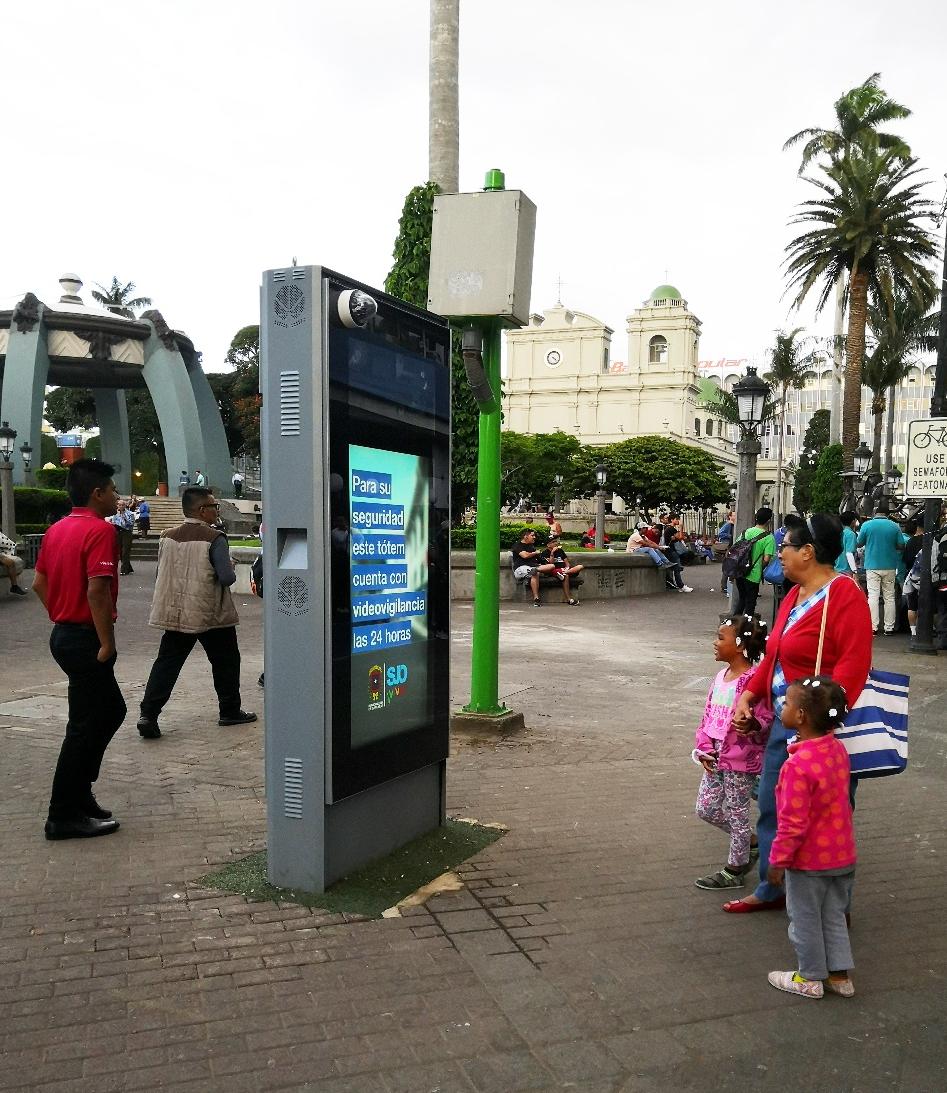
At first glance, a screen that reacts to a hand wave feels like a gimmick, but the moment two strangers realize they can steer the same particle flow by leaning left or right, something shifts. The display stops being a display and becomes a shared playground. People who wouldn't normally make eye contact start laughing when their combined movements trigger an unexpected burst of color.
The best installations don't just track touch or motion—they create gentle friction. A table that asks you to trace a path with your finger while someone else taps a rhythm turns a solo gesture into a negotiation. Suddenly there's a reason to say “wait, try it this way” or “what happens if we both let go?” That small verbal exchange is the real point; the pixels are just the excuse.
Motion-based displays also break the ice differently than touchscreens. Where a touchscreen invites one person to claim a spot, a motion wall catches three or four people at once, their silhouettes tangled together. The crowd becomes part of the content. Once that happens, quiet visitors start pointing, suggesting, and even stepping back to let someone else take a turn—conversation follows as naturally as the images move.
Sunlight-Readable Panels That Stay Sharp at Noon
Midday sun has a way of turning most screens into mirrors. The panels built for direct sunlight, though, use a combination of boosted backlight intensity, optical bonding, and carefully tuned anti-reflective coatings so that text and graphics don't wash out when the light is harshest. Instead of cranking brightness to a blinding level, these displays balance luminance with contrast, keeping dark areas dark and colors identifiable even under a noon glare.
What makes the difference is not just raw nits. A panel that reads well at noon typically pairs a high-brightness LED array with a matte or circular polarizer layer that scatters reflected light before it can bounce back at your eyes. The result is a screen you can glance at without cupping your hand around it, whether you're checking route data on a bike computer or reading gauges on a boat console.
Heat is the other half of the problem. Sustained direct sun can push a display into thermal dimming just when you need it most. The better outdoor panels manage this with efficient light guides and heat-dissipating frames, so brightness stays steady through the brightest part of the day rather than fading after ten minutes in the sun.
Modular Designs That Fit Unexpected City Corners
Leftover triangular lots, narrow gaps between buildings, and the shadowed space under an overpass rarely make it onto a developer's wish list. Yet these awkward pockets are exactly where modular construction shines. Because components arrive pre-cut and ready to assemble, crews can tuck a small studio, a bike repair kiosk, or a tiny café into a footprint that would never accommodate traditional scaffolding and concrete pours. The result isn't a compromise; it's a building shaped by the constraints, with angled walls and stepped roofs that turn an ignored corner into a place people actually pause.
One of the quieter advantages is speed. A vacant wedge beside a subway entrance can go from fenced-off eyesore to a working newsstand or flower shop in under two weeks. Since the modules are built off-site, noise and debris stay out of the neighborhood, and the final assembly often needs little more than a crane and a few bolted connections. That fast turnaround makes it easier for small businesses to test a location without signing a ten-year lease, and it lets city planners treat these leftover spaces as flexible inventory rather than permanent dead zones.
There's also a visual payoff. Modular units can be stacked, rotated, or cantilevered slightly over a sidewalk to grab daylight without blocking the path below. Materials like weathered steel, polycarbonate panels, and slatted timber give each tiny structure a distinct character, so two corners in the same district don't end up looking like clones. The best examples read as intentional infill: a sliver of a bakery with a fold-down counter, a two-story micro-library wedged behind a retaining wall, a rooftop garden shed that doubles as a bus shelter. None of them were supposed to be there, and that's precisely why they work.
Weatherproof Builds That Keep Attention Alive Year-Round
Some projects fade the moment the seasons shift, but the strongest ones are built to endure wind, rain, and relentless sun without losing their pull. The trick isn't overengineering—it's choosing materials and details that look sharper after a storm. Think powder-coated steel that shrugs off salt air, sealed concrete that doesn't crack under freeze-thaw cycles, and woven textures that shed water while still feeling warm to the touch. These aren't just weather-resistant choices; they become part of the story, adding character with each passing season instead of shouting for replacement.
What keeps attention alive month after month is how the build invites interaction no matter the sky. A covered entry with glass that angles light differently in winter than summer, a bench that dries fast after morning dew, or a vertical garden wall that changes color as temperatures drop—these details make people pause and look twice. They don't fight the weather; they play with it. The result is a space that feels intentional in July drizzle and magnetic in February frost, never reduced to a fair-weather attraction.
Durability alone can feel cold, so the real craft lies in balancing hard-wearing utility with small, tactile surprises. A handrail that warms under direct sun, resin panels that glow slightly after rain, or a roofline that directs snow melt into a visual cascade—these quiet moves reward repeat visitors. When a build refuses to hide from the elements and instead uses them as design fuel, attention doesn't just survive the year; it grows sharper with every forecast change.
Real Placements Where a Screen Changed the Whole Block
In New York's Times Square, a single digital billboard installed at the corner of 47th and Broadway didn't just add brightness—it rerouted foot traffic. Before the screen, pedestrians scattered across the plaza. After it lit up with short-form animations and live event feeds, people began clustering at that exact corner, waiting for the next loop. Nearby storefronts noticed longer dwell times, and within six months, the block's vacancy rate dropped as landlords renovated to match the corner's new gravity.
Something similar happened in Seoul's Seongsu-dong, a former industrial district. A disused factory wall became an outdoor projection surface for local art collectives. The screen wasn't selling anything; it showed slow, abstract visuals that shifted with wind data. Curious passersby started lingering after dark. Soon, food carts appeared, then tiny galleries in adjacent warehouses. The block reversed its decline not because of a marketing campaign, but because a screen gave people a reason to stop and stand together.
What these spots share is not scale or budget, but placement. The screen sat at a natural bottleneck—a crosswalk, a corner, a transit exit—where movement already paused. It didn't try to pull eyes from multiple directions; it anchored one intersection. That single change reorganized how the block felt, turning a passage into a place.
FAQ
Samsung and LG lead with ultra-bright panels that stay visible in direct sunlight, while Daktronics and Unilumin are popular for large-format LED displays with high refresh rates that keep motion smooth.
Many support touch, sensors, and real-time data integration. For example, Planar and Absen offer models with interactive overlays and dynamic content scheduling, letting passersby play with the screen or see local updates, which creates a reason to stop.
Look at Unilumin or Absen's modular outdoor LED cabinets. They let you start with a smaller size and expand later, and their energy-efficient designs keep running costs lower than older models.
Yes, Daktronics and Samsung have outdoor-rated models with IP65 or higher protection, built-in heating and cooling, and anti-glare coatings. They've been used in places from desert heat to snowy winters without frequent failures.
Most brands ship with their own content management systems, but they usually accept common formats like MP4, images, and HTML5. LG and Samsung also support third-party platforms, so you can keep using tools like Canva or Adobe Premiere.
LED billboards from Daktronics or Unilumin are brighter and can be seen from far away, making them good for highway visibility. LCD outdoor screens from Samsung or LG offer higher resolution up close and better color accuracy, which works well for storefronts where people stand a few feet away.
Many outdoor screens now include built-in audience analytics like camera-based counting and dwell time tracking. Brands like Planar and Absen offer optional sensors that show how many people look at the screen and for how long, so you can adjust content within days.
Yes, some manufacturers partner with creative agencies to provide plug-and-play interactive templates for games, polls, or social media walls. For instance, LG and Samsung have pre-built solutions that let a store owner launch a quiz or photo contest without coding.
Conclusion
Some outdoor digital screens earn a second glance before they say anything. The strongest models use high-contrast panels and clever placement, so a passerby halts mid-stride and reads the message without a prompt. Touch and motion displays take that pause further: a tap or a wave turns a one-way ad into a short, satisfying interaction, and groups gather around to watch each other try it. Sunlight-readable glass keeps colors crisp even when the sun is directly overhead, so a noontime crowd sees the same sharp image as an evening one. This combination of visual pull and simple physical response often matters more than the length of the ad loop.
Fit matters as much as brightness. Modular frames slide into angled storefronts, skinny alley walls, and curved transit shelters where standard rectangles fail. Weatherproof seals and internal climate control keep displays working through rain, salt air, dust, and freeze-thaw cycles, so a campaign doesn't lose its shine by February. One striking example is a narrow corner unit in a dense shopping district: after installation, foot traffic on that block shifted measurably, and neighboring businesses asked for the same setup. The best outdoor screen brands don't just mount a bright panel; they adjust the cabinet, controls, and content triggers to the actual street rhythm, turning a blank stretch of city into a place people habitually look.
Contact Us
Contact Person: Leo
Email: [email protected]
Tel/WhatsApp: +86 18901905138
Website: https://www.zemsogroup.com/