

PVDF PPGI Manufacturer Guide: Key Factors for Selecting Durable Coated Steel
2026-10-18
You're specifying coated steel for a project that has to last—then you notice premature fading, chalking, or corrosion. That's the moment you realize not all PVDF PPGI is built the same. The difference often comes down to the manufacturer's process, resin quality, and coating thickness. Before you settle for another standard sheet, it's worth learning what actually separates durable PVDF-coated steel from the rest. This guide from LANYUN breaks down the key factors to check, so your next selection doesn't quietly fail a few years down the line.
What Makes PVDF Coating Outperform Standard Polyester on PPGI?
The edge PVDF brings to a coated steel surface starts at the molecular level. The carbon-fluorine bond in PVDF resin is one of the strongest single bonds in organic chemistry, which means ultraviolet radiation and oxygen have very little room to attack the film. Standard polyester relies on ester linkages that are far more vulnerable to hydrolysis and photo-oxidation. As a result, polyester finishes on PPGI tend to chalk and fade noticeably after a few years of outdoor exposure, while PVDF keeps its original colour depth and surface integrity for decades.
That difference shows up clearly in long-term weathering data. PVDF coatings routinely pass 4,000 hours or more of QUV accelerated testing with only minor gloss loss and a Delta E colour shift under 5. In the same conditions, standard polyester often exceeds a Delta E of 10 and shows visible chalking well before 2,000 hours. Beyond UV resistance, PVDF also handles aggressive environments better—acid rain, coastal salt spray, and industrial pollutants do not easily etch or stain the surface. This means a PVDF-coated PPGI panel maintains a clean, uniform appearance with simple rainwater washing, where polyester would need recoating or replacement.
The practical outcome is a longer service life with less upkeep. PVDF-coated PPGI is regularly specified for architectural cladding and roofing in projects where a 20- to 30-year aesthetic warranty is non-negotiable. Standard polyester, by contrast, is usually limited to interior applications or short-term exterior use because its cost advantage disappears once maintenance and recoating are factored in. That is why, for exposed building envelopes, PVDF has become the reference finish despite the higher initial price.
How to Verify a Manufacturer's PVDF Resin Source and Purity
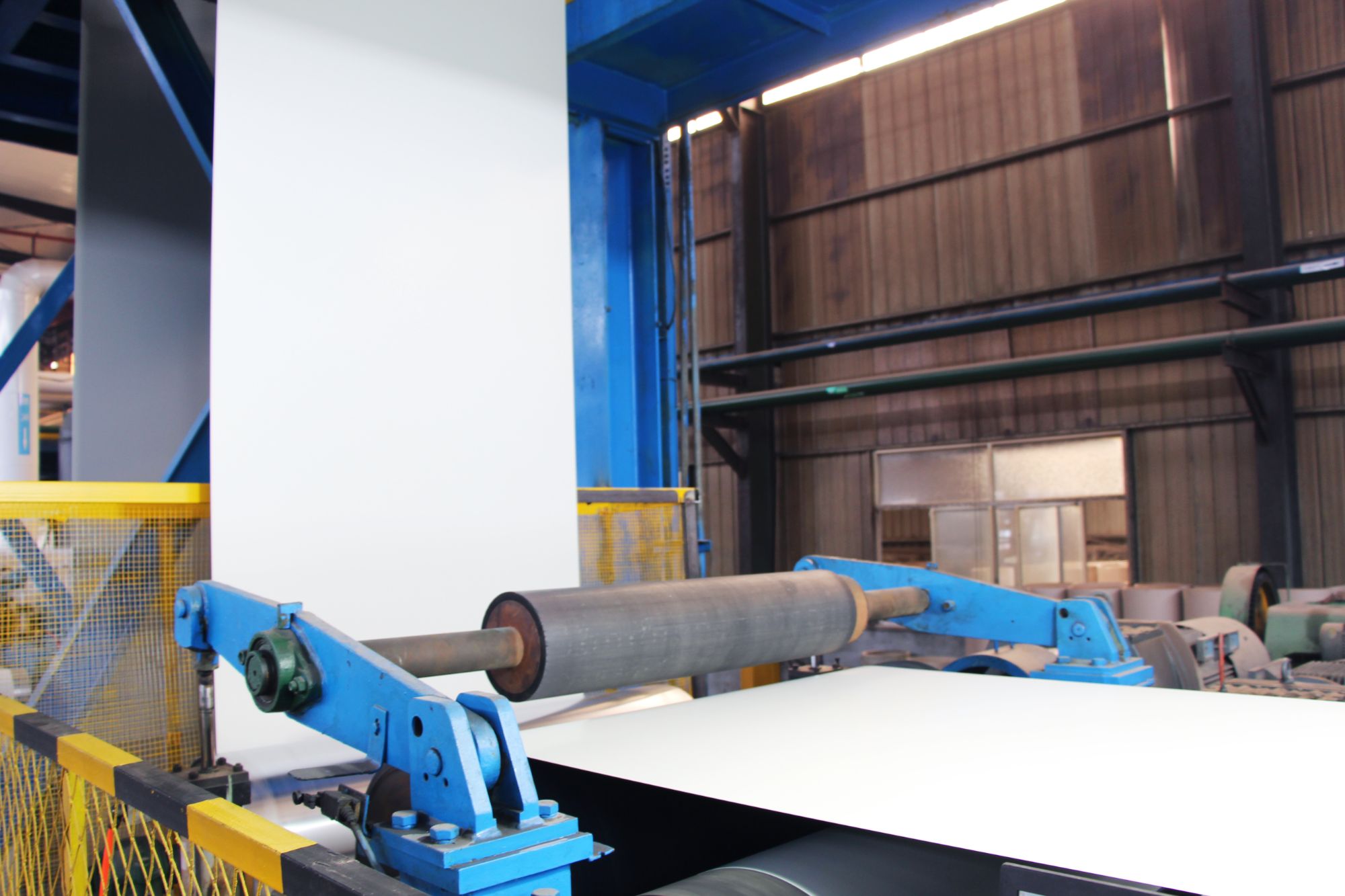
Start by requesting a detailed material certification from the supplier. This document should list the exact grade of PVDF resin, its melt flow index, and the originating polymerization facility. Cross-check the declared source against known production sites—reputable manufacturers typically operate dedicated fluoropolymer lines rather than sourcing from third-party brokers. A certificate that only states “virgin material” without naming the plant or batch genealogy is a red flag.
Purity verification goes beyond a simple data sheet. Ask for third-party test results covering extractables, residual monomers, and trace metal content. For high-purity applications, look for evidence of peroxide-free processing and low gel counts. If the supplier hesitates to share raw analytical data or offers only a generic compliance statement, consider sending a retained sample to an independent lab for FTIR and DSC analysis to confirm the resin is genuine PVDF homopolymer or copolymer as claimed.
Finally, audit the supply chain physically or through a trusted representative. Visit the manufacturer’s facility to observe feedstock handling, reactor cleaning protocols, and packaging procedures. Check whether the resin is pelletized in a clean environment and whether lot numbers allow full traceability back to the polymerization batch. A consistent, documented chain of custody—from monomer receipt to final bagging—provides the strongest assurance of both source authenticity and purity.
Testing Beyond Salt Spray: Real-World Weathering Evidence for Coated Steel
Salt spray chambers have long been the default benchmark for corrosion resistance, but anyone who has inspected a coastal bridge after a decade knows the chamber misses a lot. Cyclic UV exposure, thermal shock, and condensation patterns create stress combinations that a constant 5% NaCl fog at 35°C simply cannot replicate.
Real-world weathering programs place coated steel panels on racks in marine, industrial, rural, and high-altitude sites. Technicians return every six months to measure undercutting at scribe marks, gloss retention, color shift, and the onset of red rust. Data from a tropical marine site often diverges sharply from accelerated results within two years, while a cold northern industrial exposure reveals failure modes unseen in any cabinet.
Such evidence feeds directly into coating reformulation and warranty decisions. Instead of relying on a single artificial pass/fail, engineers now weigh exposure histories from multiple climates. This shift reduces the costly surprises that occur when a product performs flawlessly in the lab yet blisters after three winters on a highway bridge.
Why Coating Thickness and Primer Choice Determine Service Life
Dry film thickness is often treated as a final inspection box to tick, but it has a direct effect on how stress moves through the cured film. Too thin, and the edges and peaks of a blast profile stay exposed, leaving easy paths for moisture and oxygen. Too thick, and solvent entrapment or uneven crosslinking can create internal strain, which shows up later as mud cracks or peeling at corners. The serviceable range is not “more is better”—it is a narrow window where the resin system has enough body to bridge surface roughness without locking in shrinkage stress.
Primer choice decides whether the first molecular layer actually grips the substrate. A zinc-rich primer does not simply cover steel; it becomes a sacrificial anode at scratches and cut edges, holding back rust in ways a generic alkyd primer cannot. On concrete or galvanized surfaces, the wrong primer can fail from alkali attack or poor wetting, even when the topcoat remains glossy and intact. The primer is where adhesion is won or lost, and no amount of topcoat performance recovers a weak bond line.
Service life is determined at the buried interface, not by the finished surface. When coating thickness falls below the specified DFT over sharp edges or weld seams and the primer chemistry is mismatched to the substrate, the first signs of failure usually appear there—under the film, as rust blooms or intercoat delamination. Field inspectors see this pattern repeatedly: a topcoat that still looks new while edge rust tells you the system was compromised months earlier. Getting thickness and primer right is not a coating upgrade; it is the difference between a five-year rework cycle and a system that quietly does its job for decades.
Comparing Color Retention and Chalk Resistance Across PVDF Grades
Not all PVDF coatings are created equal, and comparing color retention and chalk resistance across grades quickly separates the premium systems from the budget options. The key variables are resin content, pigment type, and dispersion quality. A grade with 70% PVDF resin and carefully selected ceramic pigments tends to hold its original hue far longer than a 50% PVDF blend using conventional colorants. After five years of south-facing exposure, the difference can be visible to the naked eye—one panel looks nearly new, while the other shows a dull, milky film.
Chalk resistance follows a similar pattern. Higher-grade PVDF formulations resist surface erosion because the fluoropolymer matrix is dense and less prone to UV breakdown. In accelerated weathering and outdoor tests, premium grades often maintain a chalk rating of 8 to 10 after a decade, while lower-grade products may drop to 6 or below within three to five years. Color retention, measured by Delta E, typically stays under 3 units for top-tier PVDF, whereas lesser grades can drift past 5 units, shifting whites toward yellow or blues toward gray.
Field data from Florida and Arizona exposures reinforces the lab results, showing that the resin-to-pigment bond and the quality of the inorganic pigment encapsulation matter as much as the raw PVDF percentage. When choosing a PVDF grade for architectural metal, it is worth requesting long-term weathering data rather than relying on short-term QUV panels, because the real-world gap between grades becomes more pronounced with each additional year of service.
Questions to Ask Before Committing to a PVDF PPGI Supplier
Before you sign anything, dig into the specifics of the coating system. Ask which PVDF resin is actually used—70% or 50% formulations behave very differently in terms of fade resistance and chalk resistance. Request a breakdown of primer type, topcoat thickness, and whether the back coat matches the front in durability. A supplier who hesitates to share these details is often cutting corners where you can’t see them.
Next, ask for real-world references within your climate zone, not just lab reports. Coastal salt spray, high UV exposure, and industrial fallout affect PVDF differently. Ask to speak with past buyers who have had panels installed for at least five years. Also press for third-party testing data on gloss retention and color shift under accelerated weathering—not just in-house certificates.
Finally, clarify the claims process and supply chain stability. If a batch arrives with uneven coating or delamination, who covers the rework and downtime? Ask about lead times during peak construction seasons and whether they stock raw PVDF resin or rely on spot buys. The answers reveal whether you are dealing with a manufacturer or a middleman.
FAQ
PVDF resins contain strong carbon-fluorine bonds that resist UV breakdown far longer than polyester or silicone-modified polyester. This means the finish keeps its gloss and color even after years of direct sun, salt spray, and industrial fallout. For coastal or high-rise projects, that stability is often the deciding factor.
The topcoat is only as good as what's underneath. Look for hot-dip galvanized steel with a zinc coating mass of at least Z275 or an equivalent zinc-aluminum alloy. A clean, properly pretreated surface prevents edge creep and blistering, so ask for substrate certifications rather than relying on visual inspection alone.
A PVDF topcoat has limited adhesion if applied directly to metal. A two-coat system with an epoxy or polyurethane primer improves corrosion resistance and gives the topcoat a uniform base. Without the right primer, even premium PVDF can delaminate at cut edges or around fasteners.
Yes, if the coating system is formulated for flexibility. Reputable manufacturers adjust the resin and pigment load so the finish can withstand 0T to 1T bends without cracking. Always request samples and test the actual coil you plan to use, because reformulated batches can behave differently.
Look for suppliers that run continuous monitoring of dry film thickness, color consistency, gloss level, and pencil hardness. They should also perform impact, adhesion, and salt spray tests on retained samples from each production run. Ask to see test reports with batch numbers rather than generic certificates.
Not necessarily. A 25 to 35 micron dry film thickness is typical for exterior applications. Going much thicker can make the finish brittle and prone to cracking during forming. The key is a balanced system: proper pretreatment, primer, and a topcoat within the manufacturer's recommended range.
In hot, humid, or coastal regions, look for PVDF formulations with higher resin content and UV-stable pigments. In areas with heavy industrial emissions, added barrier protection in the primer matters more. For snowy or high-UV alpine environments, gloss retention and resistance to thermal cycling should guide the selection.
Many PVDF systems carry a 20 to 30 year film integrity warranty, but warranties often exclude cut-edge corrosion and installation damage. Read the fine print and confirm whether the warranty covers color fade, chalking, or adhesion loss. A manufacturer that offers a clear, written warranty with defined testing methods is usually more trustworthy.
Conclusion
Selecting a durable coated steel starts with understanding why PVDF outlasts standard polyester. The fluoropolymer backbone of PVDF resists UV degradation at a molecular level, meaning it doesn't chalk or fade nearly as fast when exposed to intense sunlight or industrial fallout. But the resin source matters just as much as the chemistry—top-tier manufacturers use only high-purity PVDF from licensed suppliers like Arkema or Solvay, and they can show batch certificates proving the exact resin grade. Without that transparency, you might be paying for a cheaper blend that fails after a few years of coastal exposure.
Real-world weathering data beats accelerated salt spray alone. Ask for multi-year outdoor exposure results from Florida, Arizona, or similar harsh climates, and compare color retention across different PVDF grades—some formulations hold bright reds and deep blues far better than others. Coating thickness and primer choice are equally critical: a 25-micron topcoat over a chrome-free epoxy primer may perform well on inland buildings, but coastal or chemical environments often demand 35 microns or more with a urethane primer. Before committing, question the supplier about resin batch traceability, actual film thickness on formed edges, and warranty terms tied to specific gloss retention and chalk ratings. A manufacturer that openly shares test data and answers these questions directly is one you can trust for long-term performance.
Contact Us
Contact Person: Nia
Email: [email protected]
Tel/WhatsApp: +86 18954360337
Website: https://www.sdppgi.com