

Reduce Operational Costs with Industrial Air Compressors
2026-08-23
Electricity can account for up to 70% of an air compressor's lifetime cost—yet many facilities still treat compressed air as a fixed expense. That mindset quietly drains your budget every single day. Reducing operational costs isn't about running equipment harder; it's about running it smarter. Whether you're dealing with leaks, pressure drops, or outdated controls, small inefficiencies compound into significant losses. In this post, we'll explore practical strategies to cut energy waste, optimize maintenance, and extend equipment life. And when you're ready to upgrade, Seize Air offers industrial air compressors engineered to deliver measurable savings without compromising performance. Let's break down where your money is going—and how to keep more of it.
Why Most Facilities Overpay for Compressed Air
Many plants treat compressed air as a fixed overhead rather than a controllable utility. That mindset is costly. The compressor room often runs at higher pressure than necessary because nobody checks pressure drops across filters, dryers, and piping. Each extra bar of pressure typically adds 6 to 7 percent energy consumption, and those losses stack silently across shifts.
Leaks are the obvious drain, but they persist because they do not stop production. A single 3-millimeter hole at 7 bar can waste over 1,500 dollars a year in electricity alone, and most facilities have dozens. Yet leak tagging programs stall when maintenance teams juggle breakdowns. Meanwhile, artificial demand from open blows, worn nozzles, and unregulated end uses makes the compressor work harder than the process actually needs.
The biggest overpayment comes from mismatch. Compressors are often sized for rare peak events, then left running at part load where efficiency collapses. Storage receivers are undersized or missing, causing pressure swings that operators solve by turning up the header pressure. Without submetering and trend data, these costs hide inside a single utility bill line, so nobody questions the real cost per cubic meter.
Pinpoint Hidden Energy Drains in Your Air System
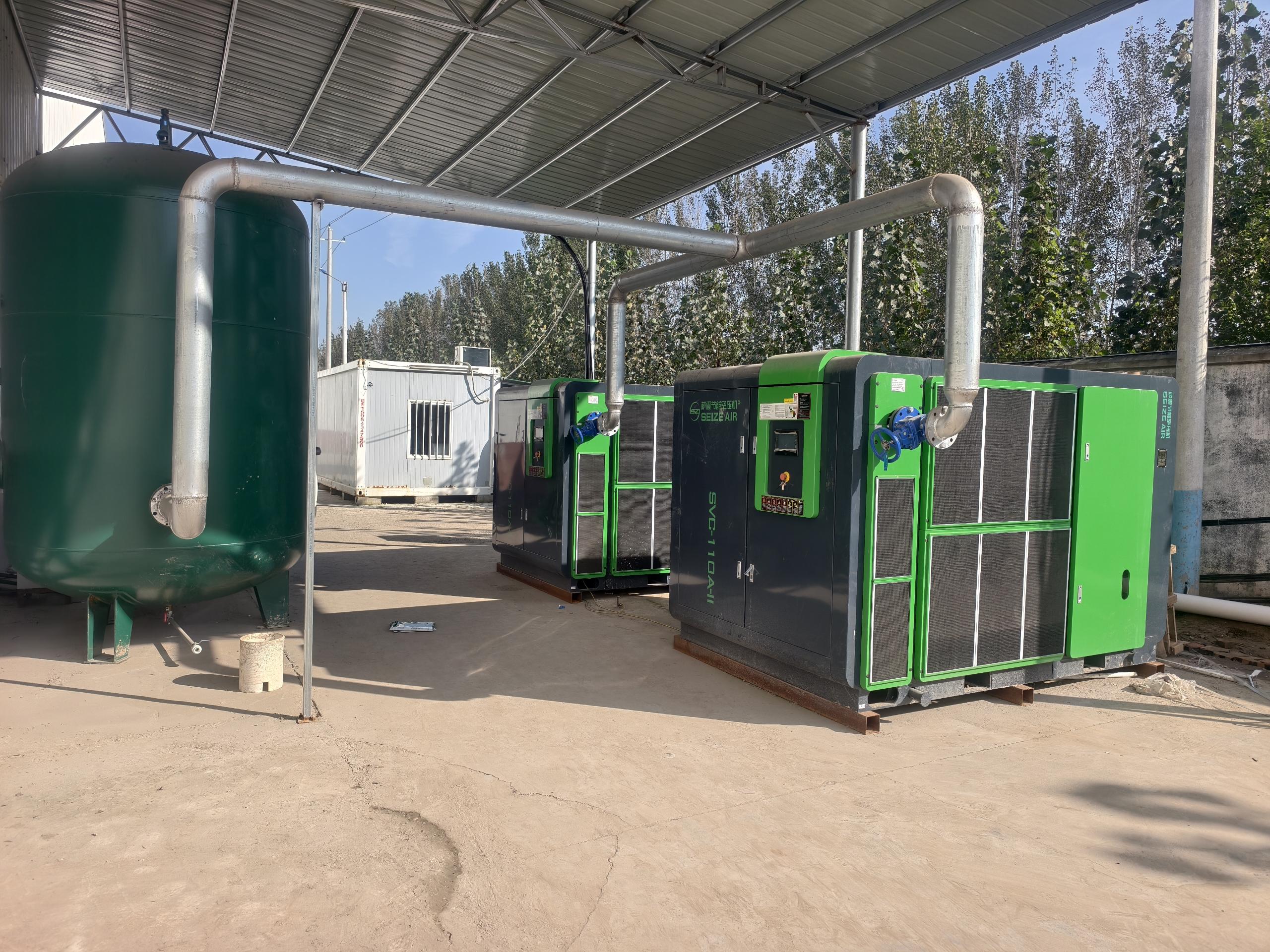
Most facilities only notice the obvious leaks—the hissing fitting by the loading dock or the cracked hose near the compressor. But the real energy thieves in a compressed air system rarely announce themselves. They hide in undersized piping that forces the compressor to work harder, in neglected filters that choke airflow, and in those “temporary” fixes that somehow became permanent. Walking the line with an ultrasonic leak detector during a quiet shift can uncover a surprising number of small losses that add up to a major chunk of your electric bill.
Pressure drop is another silent drain that gets overlooked because it feels normal. If your system needs 90 psi at the point of use but the compressor is set to 110 psi just to compensate, you’re paying for air you don’t actually use. Every 2 psi of excess pressure costs roughly 1% more in energy. Check the gauges at the far end of the distribution network, not just at the tank. You might find that a single undersized elbow or a long run of old steel pipe is quietly wasting thousands of dollars a year.
And don’t forget the demand side. Tools left connected but idle, drain valves that stick open, and machines that blow air continuously when a simple timer or solenoid would do the job—these are drains you won’t hear unless you actively look for them. A quick audit with a data logger over a weekend can reveal exactly where air goes when production stops. That’s where the hidden energy is: in the gaps between what you need and what the system keeps delivering out of habit.
Rethink Maintenance Schedules to Cut Downtime Costs
Many plants still follow calendar-based maintenance like clockwork, replacing parts on a fixed schedule regardless of actual wear. That habit quietly drives up downtime costs because you're either stopping machines too often for needless service or waiting too long between checks. Shifting to condition monitoring—using vibration sensors, oil analysis, or thermal imaging—lets you catch real degradation early and skip the guesswork. The result is fewer unplanned outages and less money spent on labor and parts that weren't yet needed.
Another overlooked lever is scheduling maintenance around production lulls instead of peak demand. If you can line up routine work with planned changeovers or seasonal slowdowns, you avoid cutting into profitable run time. Pair that with a simple criticality ranking for assets: not every pump or conveyor deserves the same attention. Focus your tightest monitoring and most frequent checks on the equipment whose failure stops the whole line. That kind of tiered approach trims downtime without adding headcount.
Don't treat maintenance schedules as sacred. Review failure data each quarter and adjust intervals based on what's actually happening, not what the manual said ten years ago. Even small adjustments—extending one interval, shortening another—can free up hours of production time each month while keeping repair costs in check.
Turn Waste Heat into a Free Resource
Most facilities treat excess thermal energy as an unavoidable byproduct, venting it into the air or cooling it down with water. Yet that heat still carries usable work potential, whether it comes from a compressor bank, a furnace flue, or even a server room. By capturing even a fraction of this outflow, you can offset primary fuel consumption without changing your core process. It's not about adding complexity; it's about rerouting what you already produce away from the exhaust stack and toward a second use.
Think of the temperature differences that already exist across your site. A hot discharge line running beside a cold water intake is a missed opportunity every minute. Simple heat exchangers can transfer that energy to preheat boiler feedwater, warm workspaces in winter, or drive an absorption chiller for summer cooling. The upfront cost is often modest compared to the continuous savings, especially where operations run around the clock. You're not buying a new energy source; you're just refusing to throw away the one you have.
The real shift is mental: instead of seeing waste heat as a disposal problem, treat it as inventory. Audit your process streams and note where hot fluids or gases are released. Rank them by temperature and flow rate, then match each stream to a nearby thermal load. Even low-grade heat below the boiling point can preheat incoming air or water, cutting the load on primary heaters. Once you start viewing heat as a movable asset rather than a loss, the next efficiency gain often appears in plain sight.
Match Compressor Output to Real Demand—Not Guesswork
Compressor sizing decisions often start with a rough tally of tools and a fudge factor. That approach leaves money on the table. The real question is not how much air you think the plant uses, but when and how sharply demand spikes. A week of data logging on the supply side often reveals a pattern that has little in common with the original estimate.
Look at the actual pressure band throughout a full production cycle. If the compressor cycles rapidly at low load, short-cycling is eating into motor life. If it runs flat out for hours and still falls below the required minimum, downstream pressure sag is throttling tool performance. Match the storage tank and compressor controls to that observed curve—not the other way around.
Pay attention to shifts with different loads, seasonal changes, and batch operations. A compressor that’s right for Tuesday morning may be oversized for Friday night. The fix can be as simple as adding a larger receiver, trimming control setpoints, or sequencing two smaller units instead of one large one. Data removes the guesswork; the compressor will only ever deliver what the system is actually asking for.
Build a Leak-Proof Culture That Saves Thousands
Most leak prevention programs fail because they treat people as the problem, not the solution. Adding another layer of approvals or tightening access might stop a few drops, but it also slows everything down. The real savings come when every shift worker, dispatcher, and warehouse clerk feels comfortable flagging something that just doesn't look right. In one metal fabrication shop, a janitor noticed a faint oil sheen near a hydraulic press on a Friday night. Instead of assuming someone else would handle it, he left a sticky note on the supervisor's locker. That single note led to the replacement of a worn seal before it burst, avoiding a cleanup and downtime that would have cost over eight thousand dollars. That's the kind of culture you can't buy with software.
Building that culture means making leak reporting a normal part of the day, not an event. Try short, informal walk-throughs where the goal is curiosity, not inspection. Ask operators what they've noticed, what smells different, what sounds off. Give them a simple way to record small anomalies, like a shared logbook or a whiteboard in the break room. A food processing plant did exactly that after a series of minor glycol leaks kept ruining batches. Within two months, the line staff had pinpointed three recurring drip points that maintenance had overlooked. Fixing those flaws saved just under ten thousand dollars in lost product and emergency call-outs, and the workers started competing to find the next hidden leak.
The hardest part is resisting the urge to turn every report into paperwork. If people feel that flagging a leak will trigger a 40-minute investigation or a blame session, they'll stay quiet. Instead, celebrate the catch. Publicly track the money saved, not to shame anyone, but to show how small observations add up. A regional distribution center kept a simple tally on a wall near the loading docks: each reported leak that was fixed got a green dot, and the running savings were updated every Friday. In one quarter, those green dots represented over seven thousand dollars in prevented damage and wasted utilities. Over time, the dots mattered more than the money, because they proved that everyone's eyes on the ground were the company's best early warning system.
FAQ
Start with a compressed air audit to identify leaks, pressure drops, and artificial demand. Fixing leaks alone can recover 20-30% of lost air, and lowering the pressure setpoint by 10 psi often reduces energy consumption by 5% without affecting production.
A VSD compressor adjusts motor speed to match air demand in real time. Instead of running at full load and blowing off excess air, it maintains a stable pressure band and can cut energy consumption by up to 35% in plants with fluctuating demand, which directly shrinks the electric bill.
Yes. Around 70-90% of the electrical energy input to a compressor becomes heat. A simple heat recovery system can capture that warmth to preheat process water or space heating. In a facility with year-round heating needs, this can reduce boiler or heater fuel use enough to pay back the recovery equipment in under two years.
Replacing intake filters on schedule, keeping coolers clean, and checking condensate drains prevent efficiency loss. A clogged filter alone can increase energy use by 3-5%. Also, monitoring oil and lubricant condition in lubricated screw compressors avoids friction losses that silently drive up current draw.
Track the duty cycle and pressure stability over a normal production week. If the compressor runs below 60% loaded most of the time and still cycles frequently, it is likely oversized and wasting energy through starts, stops, and unloaded run time. If it struggles to maintain pressure during peak demand, adding a smaller trim compressor can be cheaper than running one large unit at full capacity.
Often yes, but it depends on the age and condition. Newer models with efficient airends, permanent magnet motors, and better controls can be 10-20% more efficient. If your current unit is over 10 years old and runs more than 4,000 hours per year, the energy savings alone often justify the capital cost within 2-3 years.
Adding receiver tanks and proper piping reduces pressure fluctuations and lets the compressor run in longer, more efficient cycles. It also allows you to lower the system pressure setpoint because stored air covers short bursts of high demand. This avoids using a higher pressure than needed, which directly cuts energy consumption.
Conclusion
Most plants never realize how much money slips away through their compressed air system. The biggest drain isn't always the compressor itself—it's the invisible leaks, the oversized units running at partial load, and maintenance habits that ignore actual wear patterns. A quick walk-through with an ultrasonic detector often reveals pinhole leaks that, combined, waste tens of thousands of dollars a year. And when the system's pressure is set higher than the tools actually need, every extra psi adds directly to the power bill. Shifting from a fixed schedule to condition-based maintenance also prevents sudden failures that force costly emergency repairs and unplanned downtime.
What many operators overlook is that an air compressor already produces a valuable byproduct: heat. Recovering that waste heat to warm water or facility space can offset other utility costs, turning a thermal loss into a practical asset. At the same time, matching compressor output to real demand—using variable-speed drives and storage receivers—eliminates the guesswork that causes machines to cycle too often or run unloaded for hours. Building a leak-removal routine, where every shift checks a short list of common leak points, creates a culture where small fixes compound into annual savings of thousands. The result is not a single dramatic change but a steady reduction in operating costs that shows up on every monthly energy statement.
Contact Us
Contact Person: Mia
Email: [email protected]
Tel/WhatsApp: +86 19821985894
Website: https://www.seize-air.com