

Sumac Wax Manufacturers from China: Top 10 List for Quality Sourcing
2026-10-13
Finding a reliable source for sumac wax in China often means sifting through endless supplier lists that all look the same—until you stumble upon one that actually delivers. That’s where a curated top 10 list becomes your shortcut, not just another directory. Among the names worth noting, XUSHI has built a quiet reputation for quality that speaks louder than flashy claims. Whether you’re formulating cosmetics, coatings, or adhesives, you need a manufacturer who treats sumac wax as a specialty, not an afterthought. In the list ahead, we skip the hype and highlight only the Chinese factories that consistently meet rigorous sourcing standards. Curious which ones made the cut—and why XUSHI earns a spot alongside them? Keep reading; your next dependable supplier might be closer than you think.
Where China’s Sumac Wax Industry Actually Concentrates
The bulk of China's sumac wax output does not spread evenly across the country. Instead, it clusters in the mountainous borderlands of Yunnan, Guizhou, and Sichuan, where native sumac species grow with less competition from large-scale grain farming. Smallholder groves are tucked into valleys and slopes, often mixed with walnut or tea plantations. The cooler nights and well-drained acidic soils in these areas help the fruit develop a thicker waxy coating, which is exactly what processors want.
Within those three provinces, a few counties have become the actual hubs. In Yunnan, the prefectures around Zhaotong and Qujing handle much of the first-stage boiling and pressing. Guizhou's Bijie and Liupanshui districts are known for refining crude wax into cleaner blocks for cosmetic and polish buyers. Southern Sichuan acts mainly as a raw fruit supplier, feeding village-level collection points that truck harvests to these processing towns each autumn.
The concentration is also a matter of inherited skill. Because sumac fruit yields only a small amount of wax per tree and the work is hand-harvested, the industry survives where labor costs stay moderate and traditional extraction knowledge still passes between generations. That is why production has not migrated to richer coastal provinces or been replaced by large monoculture plantations. Instead, it remains a scattered but stubbornly local trade, anchored to a handful of highland communities.
Reading Beyond the Spec Sheet: What Quality Claims Miss
Spec sheets love to parade their numbers: thread count, tensile strength, wattage, IP ratings. But numbers rarely survive contact with real life. What they don't list is how a fabric feels after its tenth wash, whether a zipper snags when you're in a hurry, or if a hinge starts to groan after two seasons. Those are the details that separate a product you tolerate from one you reach for without thinking.
Take a winter jacket, for example. The label will happily tell you the fill power and waterproof rating, but it won't mention that the cuffs let in cold air when you bend your elbows, or that the hood's drawstring loosens on its own after a month. A chair can boast a 300-pound weight capacity while still wobbling on a flat floor. The gap between a spec and an experience is where quality actually lives.
That's why reading beyond the numbers matters. Look for long-term reviews, watch how a product behaves after repeated use, and pay attention to the small annoyances that never make it into marketing copy. A quality claim is a snapshot taken under ideal conditions; the real story unfolds in daily wear, unexpected weather, and the hundred small interactions no laboratory ever tests.
The Real Differences Among Wax Grades and Purity Levels
Wax grades often get lumped together in casual conversation, but the distinctions run deeper than most people realize. A low-grade paraffin and a high-purity microcrystalline wax might both melt into a clear liquid, yet their molecular structures tell entirely different stories. The grade typically hinges on the refining process—how much oil, moisture, and non-wax hydrocarbons are stripped away. Purity, on the other hand, measures the remaining fraction of straight-chain versus branched molecules, which directly affects hardness, flexibility, and even how the wax binds to additives in industrial applications.
In practical terms, you can spot the difference without a lab. Lower-grade waxes often feel greasier or emit a faint petroleum odor, because residual oil acts as a plasticizer. High-purity grades—those above 0.5% oil content—snap cleanly, have a tighter crystalline lattice, and resist blooming when temperature swings. This isn't just academic; candle makers chasing a smooth, opaque finish will choose a different purity level than a cosmetic formulator who needs a barrier that melts close to skin temperature. The real trick is that two waxes with identical melting points can perform wildly differently if their purity profiles diverge.
What complicates the picture further is that no universal standard exists across suppliers. One refinery's "fully refined" might still carry 1.2% oil, while another's "semi-refined" could be cleaner. So the true difference often comes down to asking for the certificate of analysis—not just the marketing grade. Once you start comparing those numbers, you realize that wax grade is more about process intent, and purity is the measurable outcome. And that gap, between what a grade promises and what the purity delivers, is where most formulation surprises hide.
How Smaller Workshops Compare to Large Export Factories
Small workshops operate with a degree of flexibility that large export factories simply cannot match. A team of five can shift production schedules overnight to accommodate a custom order, whereas a factory employing hundreds often needs weeks of planning to alter a single line. This agility allows workshops to experiment with limited runs and unique designs without the risk of massive unsold inventory.
Cost structures also differ sharply. Workshops typically carry lower overhead — no cavernous warehouses, no layers of middle management — so they can price products competitively even with smaller batches. Large factories win on volume pricing for standardized goods, but that advantage evaporates once a buyer requests changes or moderate quantities.
Quality control tells a similar story. In a workshop, the person cutting leather often signs off on the final piece; accountability is immediate and personal. In a large export factory, defects can slip through a dozen hands before anyone notices, and correcting them means halting an assembly line rather than simply turning to a colleague across the room.
Logistics, Lead Times, and Hidden Costs Worth Planning For
Quoted lead times rarely reflect what actually happens once a purchase order leaves your inbox. A factory may say four weeks, but that clock often starts after tooling adjustments, material procurement, and sample approval—steps that can eat another two to three weeks before production even begins. Then comes the handoff to freight: loading delays at the origin warehouse, missed vessel cutoffs, transshipment waits, and customs holds. Each of these pinch points has its own quiet buffer that nobody lists on the proforma invoice.
The freight quote is not the freight cost. Hidden charges tend to arrive as separate invoices weeks after delivery—terminal handling, chassis rental, demurrage due to port congestion, detention for late container return, and residential or limited-access delivery fees. If your shipment sits at a bonded warehouse waiting for clearance, storage fees compound daily. Choosing the lowest rate without checking the forwarder’s detention policy can turn a $3,500 ocean shipment into $7,000 before you’ve even unpacked a carton.
Instead of planning around best-case timelines, build a rolling log of actual lead times per route, including days lost at each transfer point. A separate logistics contingency line—around 8 to 15 percent of product value depending on lane and season—makes surprises manageable. If you shift to DDP terms, you may simplify paperwork, but the supplier will embed their own risk margin; you are still paying for the delays, just with less visibility.
Questions to Ask Before You Finalize a Supplier Contract
Before you sign anything, dig into the supplier's actual capacity and track record. Ask how they handle sudden volume spikes, what their lead times look like under pressure, and whether they've ever missed a delivery window for a client similar to you. It's not enough to hear "we can handle it"—get specific examples or references you can verify independently. That conversation reveals more than any polished brochure.
Payment terms often hide the real risk. Push beyond the standard net-30 or net-60 language and ask what happens when invoices are disputed, whether there are early payment discounts that actually matter, and who absorbs currency fluctuation if you're crossing borders. A supplier that won't discuss flexibility here is likely to become rigid exactly when you need breathing room.
Finally, clarify the exit and failure scenarios before you're locked in. What are the penalties if they fail a quality audit? Who owns the tooling or custom materials if the relationship ends? Can you renegotiate pricing if raw material costs drop significantly, or are you locked for the full term? These questions feel awkward in a friendly negotiation, but they're the ones that prevent expensive surprises later.
FAQ
Sumac wax is a natural vegetable wax obtained from the outer coating of berries from certain Rhus trees, especially Rhus succedanea and Rhus verniciflua. In China, much of the raw material is harvested in mountainous areas of Guizhou, Sichuan, and Yunnan, where the trees have been grown for centuries. The berries are steamed or boiled to release the wax, which is then filtered and sometimes bleached to different grades.
China has long-standing expertise in producing sumac wax because the trees grow well in several southern and southwestern provinces. Many Chinese manufacturers have invested in modern refining equipment while still sourcing from traditional growing regions. This combination gives buyers access to consistent quality, flexible batch sizes, and competitive pricing compared to smaller supply origins. Several factories also export regularly to Japan, Europe, and North America, so they understand international documentation and packaging needs.
Start by checking whether a supplier actually specializes in sumac wax rather than treating it as a minor side product. Look for evidence of direct relationships with berry growers or raw wax processors, not just trading companies. Request samples with measurable specifications such as melting point, acid value, saponification value, and color. Compare how quickly they respond with technical data versus generic sales talk. A useful shortlist also includes factories that can explain their filtering or bleaching process in detail and are willing to accept third-party inspection before shipment.
The main points are melting range, acid value, saponification value, iodine value, and color on the Gardner or Lovibond scale. Depending on your use, you may also want low moisture content and low impurities. Ask for a certificate of analysis from a recent production batch, not a generic brochure. If possible, have an independent lab test a pre-shipment sample. Good manufacturers will also tell you whether the wax is crude, refined, or bleached, because that affects how it behaves in cosmetics, coatings, or polishing compounds.
It varies widely. Some medium-sized producers will accept a trial order of 100 to 200 kilograms for standard grades, while larger refiners may set a one-ton minimum. If you need custom melting points or extra bleaching, the MOQ often rises to three to five tons because the factory has to set up a dedicated batch. It is worth asking whether they can offer smaller sample quantities first, then scale up once you confirm the material works in your formulation.
Ask for their business license and, if available, export records or references from past overseas customers. A video call showing their workshop, storage area, and lab equipment is far more useful than polished marketing photos. Check if they can arrange a third-party audit from an agency like SGS, Intertek, or Bureau Veritas. Also pay attention to how they handle questions about raw material origin; a factory that can name the provinces or counties where berries are collected is usually more credible than one that only gives vague answers.
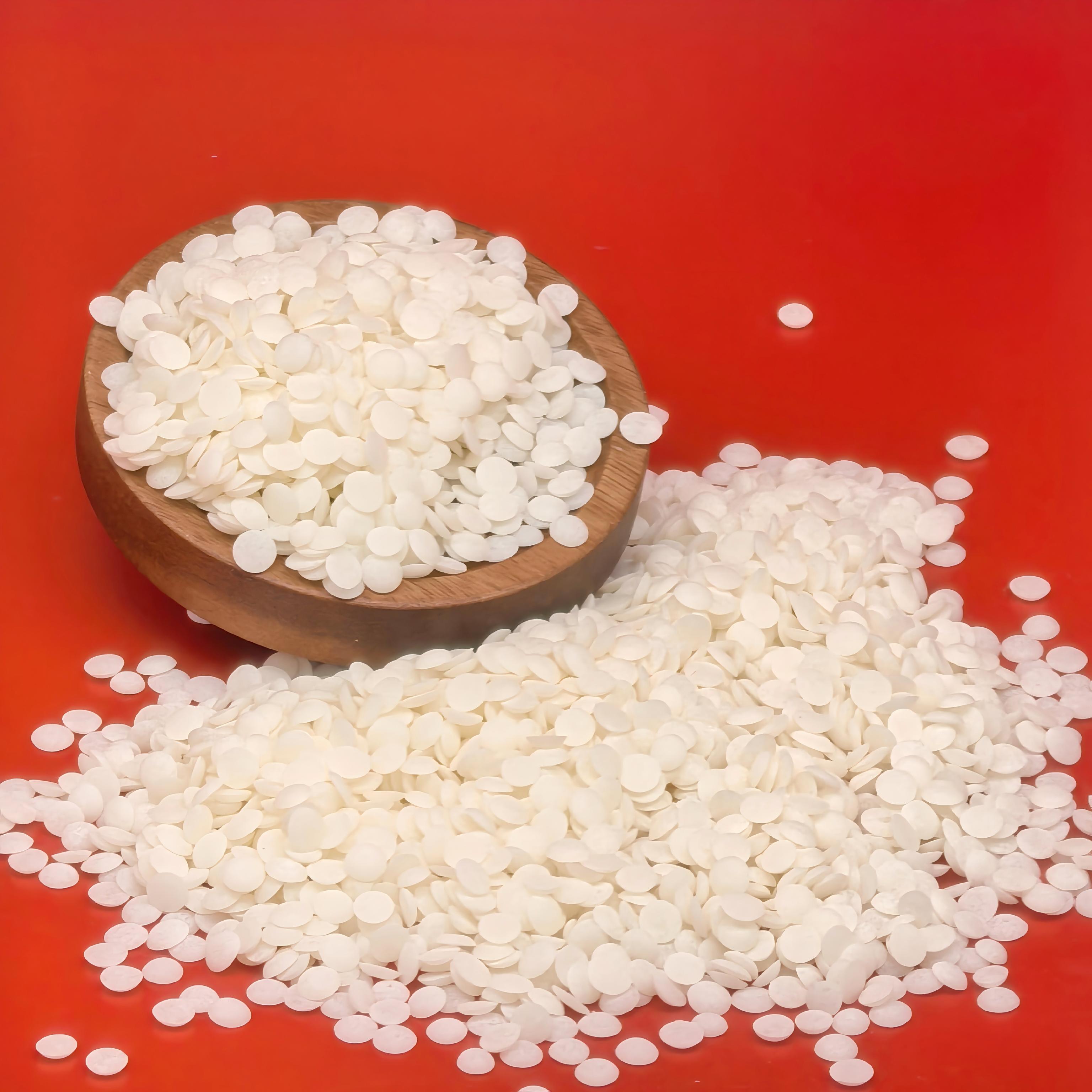
Refined sumac wax is usually packed in 25 kg paper bags or cardboard drums with an inner plastic liner. Some suppliers offer flake or pastille form to make handling easier than large blocks. For ocean freight, the wax is often loaded in 20-foot containers, and buyers in hot climates may request insulated or refrigerated containers if the melting point is low. Make sure the supplier marks batch numbers and production dates clearly on each package so you can trace any quality issue later.
Yes. Sumac wax tends to be harder than candelilla but not as hard as carnauba in many cases, and it has a different fatty acid and ester profile. It often works well as a partial replacement in polishes, carbon paper, cosmetics, and fruit coatings, but you cannot assume a one-to-one swap without testing. Chinese sumac wax is sometimes called Japan wax in older literature, but modern grades vary based on the Rhus species and refining level, so always match the specification to your application.
Conclusion
Most of China's sumac wax actually comes from a handful of provinces where the raw material has been processed for generations. That geographic concentration means buyers who rely only on glossy spec sheets often miss the gap between what a lab claims and what arrives in the drum. Even within the same nominal purity level, wax from a small workshop can behave very differently than wax from a large export plant, because filtration methods, bleaching agents, and storage conditions vary widely. A 98% purity figure doesn't tell you whether the wax will bloom, crack, or yellow after six months in storage.
On the logistics side, the real cost often hides in domestic freight, port congestion, and the extra time needed to book containers during China's holiday seasons. Lead times can stretch from a month to two months without warning, and smaller suppliers may not have the same export documentation experience as bigger factories. Before signing anything, push for a pre-shipment sample from the actual production batch, not a lab sample they keep on the shelf. Ask who pays for re-testing if the wax fails your incoming inspection, and get the melting point, acid value, and ash content written into the contract with clear tolerances. Those questions separate a supplier who really understands your end use from one who's just moving commodity wax.
Contact Us
Contact Person: Alan Zhu
Email: [email protected]
Tel/WhatsApp: 8613931838766
Website: https://www.cnxushibeeswax.com