

Thermal Printable Wristband Manufacturer: Your Guide to Quality Wristbands
2026-06-15
When it comes to event management or patient identification, the right wristband can make all the difference. As a leading BAOBI thermal printable wristband manufacturer, we know that durability, comfort, and print clarity aren't just features—they're essentials. But with so many options on the market, how do you ensure you're getting quality that won't let you down? This guide strips away the guesswork, giving you the insider knowledge to spot top-tier wristbands and avoid costly compromises.
The Technology Behind Thermal Printing
At its core, thermal printing relies on a straightforward yet ingenious chemical reaction. The key component is the thermal paper, which is coated with a mixture of a dye and a color developer that are solid and colorless at room temperature. When the printer's thermal head selectively heats specific areas of the paper, the coating melts briefly, allowing the dye and developer to interact and form a visible color, usually black. This process eliminates the need for ink ribbons, toner, or other messy consumables, making it exceptionally reliable and low maintenance—exactly why you find it humming away in countless point-of-sale terminals and receipt printers.
The thermal print head itself is a marvel of precision engineering. It contains a linear array of tiny heating elements, each corresponding to a single dot on the paper. As the paper moves past the head, the printer rapidly pulses these elements, creating patterns of heat that translate directly into the characters or images you see. Direct thermal printing, the most common variant, simply burns the image onto heat-sensitive media, but there’s also thermal transfer printing, where a heated ribbon melts ink onto everyday paper or even synthetic materials. That version produces sharper, longer-lasting prints and is often used for labels that must endure tough environments—think warehouse inventory tags or laboratory sample markers.
Despite its simplicity, the technology offers surprising speed and flexibility. Modern thermal printers can churn out receipts in under a second, and because the mechanism is largely solid-state with few moving parts, they rarely jam and can withstand the bumps of a busy kitchen or retail counter. The resolution has also improved over time, now reaching up to 300 dots per inch, which is sufficient for crisp barcodes and legible small text. The only real trade-off is durability: direct thermal prints fade over time when exposed to heat or sunlight, but clever formulations in the paper coating have pushed that horizon out to several years, making thermal printing an enduring, practical solution across countless industries.
What Sets Premium Wristbands Apart
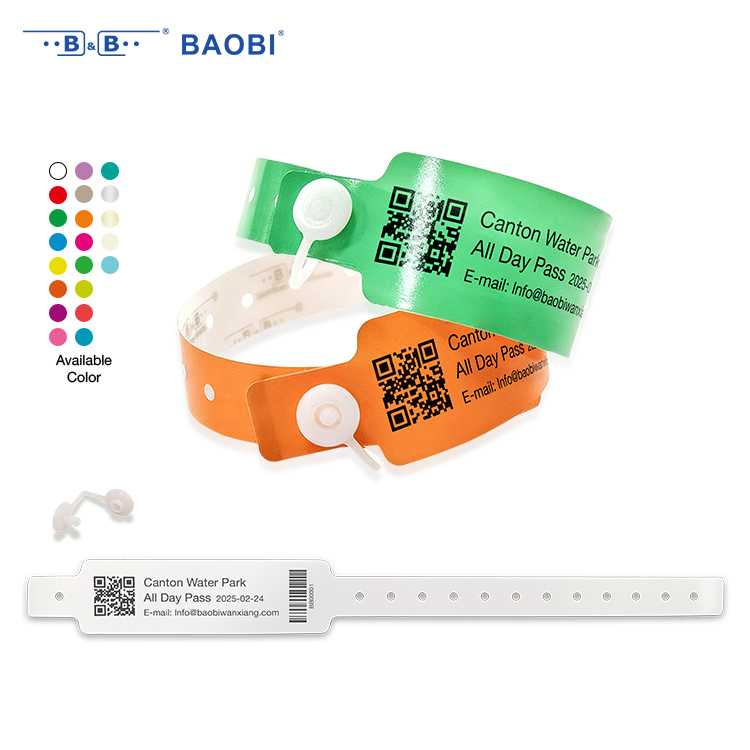
Cheap wristbands feel like an afterthought—flimsy, scratchy, prone to fraying after a single event. Premium ones shift that entirely. The fabric is denser, often a custom-woven polyester that holds its shape without turning stiff. You notice it the moment you pick one up: a slight weight, edges that are smoothly finished rather than raw-cut, and a clasp or slide lock that doesn’t bite into your wrist.
The real difference, though, is in the details most people ignore. Thread color matched precisely to the band, not whatever was left on the spool. A matte finish that resists fingerprints, instead of that cheap glossy sheen. Even the packaging tends to be simpler—no plastic shells, just a tidy roll that tells you someone actually thought about the unboxing. These aren’t the kind of wristbands you toss in a drawer and forget; they’re the ones that end up on a keychain or pinned to a corkboard long after the event is over.
Material Selection for Long-Lasting Wear
Choosing the right material is the linchpin of wear resistance, and it starts with understanding the specific type of wear your part will face. Abrasive wear from hard particles slicing into a surface demands high hardness and toughness—think high-chromium white irons or ceramic-reinforced composites. For adhesive wear, where surfaces gall under sliding contact, you need materials with low mutual solubility to avoid cold welding; tool steels with carefully matched hardness levels often work wonders here. Don't overlook the role of surface treatments either—a simple nitriding or hard coating can transform an ordinary steel into a wear-fighting champion without changing the bulk material.
The art of material selection goes beyond a handbook lookup. You have to weigh the operating environment: is corrosion eating away at the surface alongside mechanical wear? Then a duplex stainless steel or a cobalt-based alloy might be your best bet, sacrificing a bit of pure hardness for chemical stability. Temperature swings add another layer—polymers that excel at room temperature can soften or melt under frictional heat, while some ceramics thrive where metals wilt. And never forget the human element: a cheaper material that requires frequent replacement might actually cost more in downtime and labor than a premium, long-lasting alloy that keeps the process humming.
Smart material selection isn't just about performance—it's about seeing the full lifecycle. Consider how the part will be manufactured and maintained. A highly wear-resistant powder metallurgy grade might be perfect on paper but impossible to source or machine affordably. Often, the sweet spot lies in a clever combination: a tough core material capped with a hard, wear-facing layer applied through weld overlay or thermal spray. This way, you get the best of both worlds—resilience beneath and relentlessness on the surface—giving your components a fighting chance against wear’s relentless attack.
Creative Ways to Customize Your Wristbands
Give your wristbands an unexpected twist by incorporating subtle textures that people can feel as well as see. Instead of sticking to flat prints, experiment with raised patterns, engraved details, or a soft-touch finish that makes the band more tactile. A debossed logo or a woven fabric strap instantly adds depth and a premium feel, turning a simple accessory into something people will keep and wear long after the event.
Play with unconventional materials to make your wristbands stand out. Swap standard silicone for recycled ocean plastic, cork, or even a slim metal plate attached to a fabric band. These unexpected choices not only catch the eye but also tell a story about your brand or cause. A leather-like tag on a woven bracelet or a bamboo bead accent can completely shift the vibe, making each piece feel like a small, wearable work of art.
Incorporate dual-purpose features that extend the wristband’s usefulness. Add a small QR-code charm, a detachable key ring, or a glow-in-the-dark element that comes alive at night. You could even embed a tiny seed paper tag that can be planted after use. Functional details like these encourage people to interact with the wristband in daily life, transforming it from a one-time pass into a memorable keepsake with a life beyond the day it was handed out.
Balancing Comfort with Everyday Durability
The sweet spot between feeling pampered and putting up with wear and tear isn't always easy to find. We've shaped our fabrics to feel like a second skin, using a knit structure that breathes and moves with you. Yet the real trick was engineering that same softness to hold up against daily life—pets jumping up, coffee spills, kids who use everything as a napkin. The yarns we picked hide scuffs and balance stretch with shape retention, so you're not constantly straightening cushions. It's comfort that takes the chaos in stride.
Most of the time, durability comes at the cost of stiffness—something you can feel the moment you sit down. We rejected that trade-off. Instead, we bonded a whisper-thin backing to the upholstery without compromising its drape. This layer distributes stress across a wider area, preventing rips before they start. Spills bead up long enough for you to grab a towel, and even after countless washes, the texture still invites you to sink in. The goal was simple: make something you can flop onto after a long day, without worrying that it'll look tired before you do.
Designers often talk about performance as if it's separate from relaxation—here, they're inseparable. The seams are reinforced at high-tension points, but we buried the stitching so nothing digs into your legs. Colors are chosen to fade gracefully, feeling lived-in from the start. Because real comfort means not flinching when someone puts their feet up or pulls a blanket across the arm. It means the sofa handles Sunday naps and weekday movie marathons with equal ease, aging into your life instead of fighting against it.
How to Identify a Trustworthy Production Partner
Finding a production partner you can actually rely on isn’t about ticking boxes on a standard checklist. It starts with observing how they handle the messy, unexpected moments. When a shipment gets delayed or a material shortage hits, do they communicate proactively or disappear? A trustworthy manufacturer treats your deadlines as their own, even when things go sideways. Look for partners who ask detailed questions about your product’s end use rather than just quoting minimum order quantities—that curiosity often signals a deeper investment in your success.
Dig into their track record beyond polished testimonials. Request to speak with former clients who had projects of similar complexity, and listen for the unspoken cues: how often did they need to micromanage? Were there hidden costs that surfaced late? A consistent pattern of transparency around pricing, coupled with a willingness to share process documentation without you asking, separates the dependable players from those who just talk a good game.
Finally, gauge their problem-solving mindset during your early interactions. If you propose a design tweak, do they immediately list obstacles or brainstorm workable alternatives? The partners worth keeping are the ones who treat your initial inquiry as the start of a long-term dialogue, not a one-off transaction. Visit their facility if possible—the state of the floor, the way workers respond to supervisors, and the overall organization can tell you more in ten minutes than weeks of email exchanges.
FAQ
Thermal wristbands print directly without ink or ribbons, so they're quick to produce and resist smudging. This makes them ideal for fast-paced environments like registration desks or patient check-ins where durability and clarity matter.
Look for consistent material quality, timely delivery records, and customization options. Ask about their adhesive performance in different conditions and request samples to test print clarity and tear resistance firsthand.
Yes, most quality thermal wristbands are coated to handle sweat, handwashing, and brief submersion. However, prolonged soaking or abrasive surfaces may reduce lifespan, so match the specific coating to your event’s demands.
You can typically choose colors, add logos, include sequential numbering, or print barcodes. Some manufacturers offer multi-color pre-printed designs combined with thermal variable data for branding and functionality.
They eliminate printing delays since you don’t need to stock pre-printed bands. Information can be personalized on-site, which reduces waste and last-minute changes are easier to manage.
Assess the face stock smoothness, print darkness and sharpness, adhesive tack (does it stick firmly without residue), and how the band fares when folded or stretched. Real-world tests reveal weaknesses that specs might hide.
Conclusion
The backbone of any reliable thermal printable wristband lies in the print technology and material choices that ensure crisp, smudge-free results even after prolonged wear. Direct thermal printing eliminates the need for ink or toner, embedding the image directly into a heat-sensitive layer, which makes these wristbands practical for fast-paced environments like hospitals or festivals. Premium wristbands distinguish themselves through a blend of synthetic substrates—often polypropylene or polyester—that resist tearing, moisture, and stretching, while maintaining a smooth surface for clear print clarity. Coatings are subtly engineered to repel water and oils without compromising the softness required for patient comfort, and the adhesive closures are designed to stay secure without irritating the skin. This fusion of technical precision and thoughtful material science forms the foundation of a wristband that works reliably from admission to discharge.
Beyond performance, customization turns a functional item into a memorable brand touchpoint. Creative layouts can incorporate color gradients, variable data like barcodes or QR codes, and even sequential numbering without sacrificing scannability, allowing you to tailor each wristband to event themes or facility workflows. The real challenge is balancing that personalization with all-day comfort and ruggedness—something achieved through lightweight, hypoallergenic fabrics and perforated designs that breathe, preventing sweat buildup during extended wear. When evaluating a manufacturing partner, look beyond flashy claims: examine sample batches for print durability under friction, test adhesive strength in humid conditions, and ask about consistency in production runs. A trustworthy supplier will share material certifications and offer small pilot orders, signaling confidence in their quality control rather than relying on generic guarantees.
Contact Us
Contact Person: Bill Xu
Email: [email protected]
Tel/WhatsApp: 8618688898707
Website: https://www.baobitech.com/