
Top Fire-Resistant Silicone Sealant Suppliers for Durable High-Temperature Sealing
2026-11-16
When temperatures climb and ordinary sealants break down, finding a supplier that can truly withstand extreme heat isn’t just a preference—it’s a necessity. Fire-resistant silicone sealants must hold their integrity under continuous high-temperature stress, from industrial kilns to commercial firestopping. Yet with so many options claiming durability, how do you separate genuine performance from marketing hype? In this guide, we cut through the noise to spotlight reliable suppliers, including Baolongda Group, whose high-temperature sealing solutions are engineered for the toughest conditions. Read on to discover which manufacturers deliver the lasting protection your projects demand.
How High-Temperature Silicone Sealants Maintain Adhesion When Metals Expand
Metal surfaces rarely stay put. As temperatures climb, steel and aluminum stretch by measurable amounts, and that movement puts enormous stress on any sealant trying to hold a joint together. High-temperature silicone formulations handle this by staying rubbery instead of turning brittle. Their polymer chains retain enough flexibility to follow the metal's expansion without tearing away from the surface. This isn't just about softness—it's a deliberate balance between internal cohesion and the ability to deform reversibly under load.
The real trick happens at the interface. Heat alone doesn't break the bond; cyclic expansion and contraction create microscopic shear forces that gradually peel ordinary adhesives loose. Silicone sealants resist this by forming a mechanical grip in surface irregularities and maintaining that grip through repeated strain cycles. Some formulations also incorporate fillers that dissipate stress along the bond line, preventing localized fatigue from turning into full delamination. The result is a seal that keeps working even when the metal substrate grows by a few millimeters under full thermal load.
What surprises many engineers is how little residual stress builds up during service. Because the cured silicone yields slightly under tension, the joint doesn't fight itself as temperatures fluctuate. That yielding behavior—sometimes called stress relaxation—reduces the force transmitted to the adhesive layer over time. In practice, this means a properly applied silicone bead can outlast mechanically stronger but more rigid alternatives on exhaust manifolds, oven doors, or turbine housings where thermal swings happen daily.
What Fire Resistance Ratings Actually Reveal About a Sealant's Limits
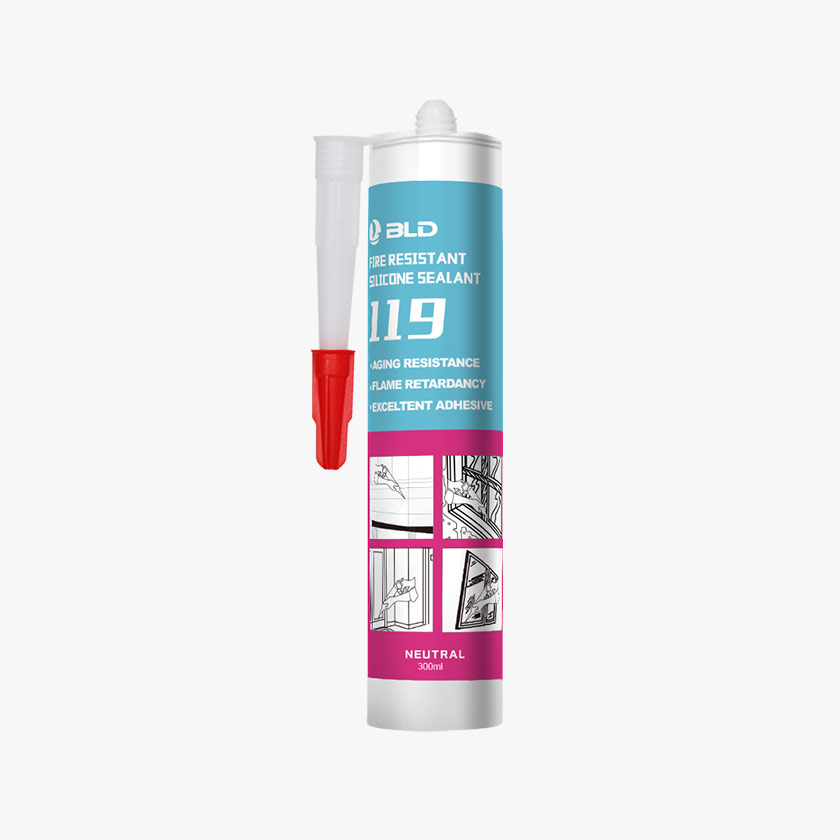
Fire resistance ratings on a sealant are often read as a promise of absolute protection, but they actually describe a very specific set of conditions that rarely match real-world fires. A two-hour rating, for example, doesn't mean the sealant will hold back flames and smoke for exactly 120 minutes in any building layout. It means that under controlled laboratory conditions, with a particular joint width, depth, substrate type, and temperature curve, the assembly stayed intact for that duration. Once you change the joint movement, exposure to moisture, or installation quality, the actual performance can shift dramatically.
These ratings also reveal less about the sealant's material limits and more about the system it was tested in. A sealant might earn its rating only when paired with specific backing materials, primers, or firestop collars. Change any of those components and the rating becomes unverified. This is why manufacturers' data sheets are full of footnotes: the rating is a benchmark, not a blanket endorsement. Understanding these constraints helps building teams avoid over-reliance on a single product and instead evaluate the entire penetration or joint system under realistic service conditions.
A Closer Look at Neutral-Cure Silicones for Heat-Heavy Environments
Neutral-cure silicones behave differently from older acetoxy types in one way that becomes hard to ignore once heat is involved: they release alcohol or oxime byproducts instead of acetic acid. That shift removes the corrosion risk on copper traces, brass fittings, and coated steel, and it also helps the cured material stay flexible longer. Many neutral-cure formulations are tested for continuous use in the 150°C to 200°C range, and some hold up past 250°C for short excursions without turning brittle.
What makes them attractive in heat-heavy enclosures, sensors, and lighting assemblies is not just the peak temperature rating but the way they handle thermal cycling. Joints expand and contract, and a rigid adhesive or a cheap RTV will crack or lose grip after a few hundred cycles. A well-chosen neutral-cure silicone tends to distribute that stress through its elastic network, keeping a seal intact on die-cast aluminum and glass-filled housings. The main downsides are slower room-temperature cure and occasional primer dependency on low-energy plastics, but for high-temperature electronics and industrial fixtures those limitations rarely outweigh the longevity gain.
Questions to Ask Suppliers Before You Trust Their Heat Resistance Claims
Before you accept a supplier's heat resistance data, ask how the material was actually tested. Was the sample exposed to continuous heat or just short bursts? Many claims come from quick thermal cycling tests that don't reflect real-world conditions. You want to know the specific test method, the duration, and whether the results were verified by an independent lab. If the supplier hesitates to share the full report, that's a warning sign.
Another question worth pressing: what happens to the material's mechanical properties at elevated temperatures? Heat resistance isn't just about melting point. A polymer might keep its shape but become brittle or lose tensile strength after repeated exposure. Ask for data on elongation, impact resistance, and load-bearing capacity at the working temperature range. Real performance often drops long before visible deformation occurs.
Finally, ask about long-term aging and environmental interaction. Does the supplier's claim hold up after months of thermal cycling combined with humidity or chemical exposure? Request evidence from accelerated aging tests that mimic your application's worst-case scenario. A supplier that can't answer these questions clearly is probably relying on marketing numbers rather than engineering data.
The Role of Filler Loading and Crosslink Density in Long-Term Thermal Stability
When elastomers or thermosets are pushed into high-temperature service, their survival hinges on two structural levers that rarely get equal attention: the amount of filler packed into the matrix and the tightness of the crosslink network. Filler loading is often treated as a cheap bulk replacement or a stiffness booster, but its influence on thermal aging runs deeper. Dense filler networks can physically obstruct oxygen diffusion and slow the propagation of oxidative chain scission, especially when the filler–polymer interface is strong enough to pin molecular segments and raise the activation energy for degradation. On the flip side, poorly dispersed or overly high filler fractions create stress concentrations and microvoids that become fast lanes for thermal oxidation—so there is a sweet spot where barrier effects outweigh localized damage.
Crosslink density plays a subtler game. A lightly crosslinked system retains enough chain mobility for radical recombination and can sometimes self-heal incipient thermal damage, but it also allows more segmental motion that exposes vulnerable bonds to oxygen. Go too far in the other direction and the network becomes so rigid that localized thermal stresses cannot dissipate, leading to microcracking and a rapid loss of mechanical integrity. The most resilient formulations often pair a moderate-to-high filler loading with an intentionally tuned crosslink distribution—not just total density, but the ratio of short, rigid crosslinks to longer, more flexible ones. That balance slows oxygen permeation while still permitting enough molecular relaxation to blunt oxidative embrittlement.
What matters in practice is the interplay, not the individual settings. Raising filler content without adjusting the cure system can leave you with a stiff material that crumbles after a few hundred hours of hot air exposure. Similarly, boosting crosslink density to chase modulus gains may backfire if the filler–rubber adhesion is weak—thermal cycling will separate the phases and open paths for oxidation. The most thermally stable compounds tend to be those where the filler geometry and loading are chosen to create a tortuous diffusion path, while the crosslink architecture is designed to tolerate the internal stresses that come with long-term aging. Testing only hardness or tensile retention misses this; you need to watch the strain energy density and crack growth behavior after aging to see which lever is actually doing the protecting.
Where Standard Silicone Falls Short and Fire-Rated Formulations Take Over
Standard silicone rubber typically starts to degrade around 200°C to 250°C. Beyond that, it loses tensile strength, becomes brittle, and can emit significant smoke and toxic gases. In real fire conditions, this means a seal or gasket made from ordinary silicone may fail within minutes, allowing flames and hot gases to penetrate through penetrations or joints.
Fire-rated silicone formulations address this by incorporating intumescent additives or ceramic-forming fillers. When exposed to high heat, these materials expand or transform into a rigid, char-like barrier. This crust slows heat transfer, blocks smoke, and keeps the assembly intact far longer than standard silicone would. Some formulations also have low smoke density and low toxicity, which are critical for evacuation safety.
The shift from standard to fire-rated silicone is not just about marginal improvement—it's often a code requirement in commercial buildings, marine vessels, and industrial plants. Choosing the right grade means understanding the specific fire test standards the product must meet, such as UL 1479 or EN 1366-3. Without that certification, a cheap silicone seal may look fine during installation but become a liability when it matters most.
FAQ
Prioritize suppliers that publish clear technical data sheets with fire ratings, temperature limits, and movement capability instead of just marketing claims. Ask for third-party test reports, batch consistency details, and real-world case studies from industrial or construction projects. A reliable supplier will also offer guidance on joint design, substrate compatibility, and curing conditions rather than pushing a one-size-fits-all product.
Look beyond glossy product names. A dependable supplier provides full technical documentation, including fire test standards, maximum service temperature, and elongation at break. They should also be willing to share samples for your own oven or torch testing and answer questions about adhesion to specific substrates like steel, glass, or concrete.
Request a data sheet showing continuous and intermittent temperature ratings, not just a single spike number. Then run a small-scale trial under your real operating conditions: heat cycling, vibration, or chemical exposure. Pay attention to whether the sealant stays flexible after aging instead of turning brittle or chalky.
You'll see them in furnace and oven manufacturing, exhaust systems, power generation, aerospace fire barriers, and passive fire protection in buildings. Anywhere that combines high heat with the need for a flexible, long-lived seal, rather than a rigid cement or epoxy patch.
Many buyers focus only on the initial price or the word "fire-rated" on the label. They overlook joint movement capability, cure time, and whether the product is intended for occasional or continuous exposure. Another mistake is ignoring the supplier's support: the best suppliers help with joint sizing and surface preparation instead of just taking the order.
Sometimes, but not universally. Outdoor joints need extra resistance to UV, ozone, and rain, while indoor furnace joints may face more chemical fumes or thermal shock. Ask the supplier for weathering data and expansion joint performance, and avoid assuming indoor product will survive years of direct sunlight.
Very important. Certifications like UL 2079, EN 1366-4, or ASTM E119 show the sealant has passed standardized fire endurance tests under controlled conditions. But certification alone isn't enough; check whether the tested assembly matches your actual joint configuration and substrate materials. A reputable supplier will explain the test scope rather than hiding behind a logo.
Ask about lead time stability, batch-to-batch color consistency, shelf life, and storage conditions. Also ask for a reference project with similar temperatures and joint movement. If you need on-site support, confirm whether a technical specialist can visit to inspect the joint preparation and curing environment.
Fire-resistant versions are formulated to form a stable char or intumescent barrier when exposed to flame, which helps block smoke and hot gases for a rated period. Standard high-temperature silicones may handle heat but can degrade quickly under direct fire or fail to maintain an insulating seal. The difference often shows up in fire tests, not just in the advertised temperature number.
Conclusion
Choosing a supplier for fire-resistant silicone sealants isn't just about picking the highest advertised temperature limit. The best manufacturers focus on how their products maintain a reliable bond when metal substrates expand and contract under heat. High-temperature silicones do this through flexible polymer backbones and controlled crosslinking, but adhesion also depends on filler loading and neutral-cure chemistry. In heat-heavy environments, acetoxy-cure sealants can corrode metals or lose strength, while neutral-cure systems offer a cleaner, more stable bond. Before trusting any heat resistance claim, ask suppliers for specific data on movement capability after thermal cycling, not just a single flash point or intermittent rating. Fire resistance ratings often reveal only how long a sealant can block flames or smoke in a standardized test—they do not guarantee long-term mechanical performance at sustained operating temperatures.
The gap between standard silicone and a true fire-rated formulation becomes clear when you compare filler systems and crosslink density. Standard silicones may soften, outgas, or lose elasticity above 200°C, whereas fire-rated products are reinforced with heat-stable fillers like iron oxide or cerium compounds. These additives slow thermal decomposition and help maintain the sealant's shape and adhesion under continuous load. A reputable supplier will be transparent about the formulation's limits: ask about maximum continuous service temperature, compatibility with specific metals, and third-party test reports for both fire resistance and long-term thermal aging. The most durable high-temperature sealing solutions come from suppliers who combine neutral-cure chemistry with optimized filler loading and realistic performance data, rather than relying on vague marketing claims.
Contact Us
Contact Person: Charles
Email: [email protected]
Tel/WhatsApp: +86-0536-3350888
Website: https://www.baolongda.com/