

Top Industrial Vehicle Solutions for Modern Manufacturing Needs
2026-10-04
Every minute a forklift sits idle on a busy factory floor, production schedules slip and costs climb. Modern manufacturing doesn’t just demand more vehicles—it needs smarter, more adaptable industrial vehicle solutions. From automated guided carts to heavy-duty electric forklifts, the right equipment keeps lines moving and workers safe. In this post, we’ll explore the top options shaping today’s plants, including standout models from HANGCHA that pair rugged reliability with advanced efficiency.
Driverless Forklifts Are Learning the Floor Layout
For years, autonomous forklifts operated on strictly pre-mapped routes, relying on fixed floor markings or magnetic tape to find their way. That approach worked in static warehouses, but real facilities change constantly—pallets get dropped in unexpected spots, new racking appears overnight, and seasonal inventory shifts turn familiar aisles into obstacle courses. The latest generation of driverless forklifts takes a different path: instead of memorizing a single layout, they build and refine a live mental model of the floor as they move. Each travel cycle feeds fresh data into the vehicle’s onboard system, letting it recognize when a lane has narrowed, a dock door is blocked, or a preferred shortcut is no longer available.
The shift is subtle but transformative. A traditional AGV might stop and wait for a supervisor to clear a path, or worse, reroute through a long detour that throws off the whole shift’s schedule. A learning forklift, by contrast, compares what it sees today with what it saw yesterday and last week. If a particular corner repeatedly causes slowdowns, the machine flags it as a trouble spot and starts avoiding that turn preemptively. Over time, the fleet develops a shared map that reflects not just where things are, but how the space actually behaves under real traffic, lighting changes, and human footfall.
This doesn’t mean the forklifts are making wild guesses. Their learning stays bounded by safety rules and operational limits, and the floor model updates only after repeated observations confirm a stable pattern. The result is a warehouse where autonomous vehicles adapt quietly in the background—shortening dock-to-stock runs, reducing near-misses at blind intersections, and giving floor managers one less thing to reprogram after every layout tweak. In a busy distribution center, that quiet adaptability is worth more than a hundred perfectly drawn static maps.
Why Electric Tow Tractors Outlast Diesel in Tight Schedules
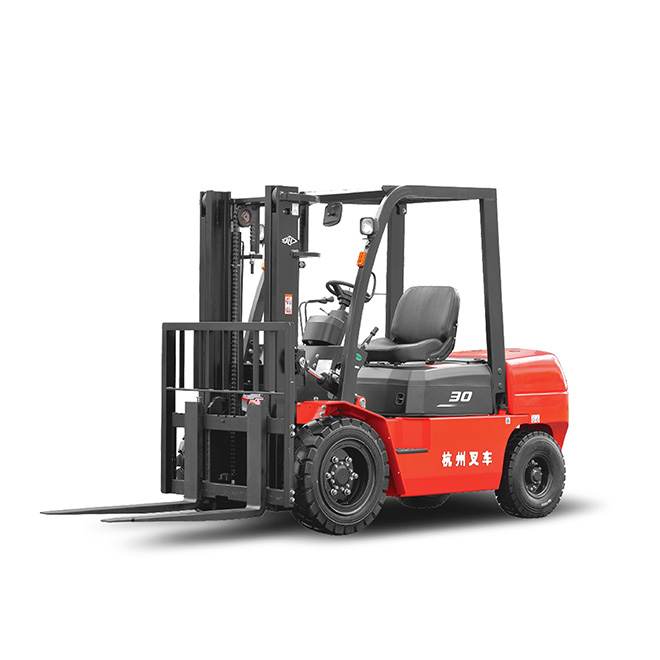
Electric tow tractors handle tight schedules with far less mechanical strain because their powertrains are dramatically simpler. A diesel engine relies on hundreds of moving parts—pistons, rings, valves, injectors, and a complex exhaust aftertreatment system—all of which suffer under constant stop-start duty cycles. In a busy warehouse or freight yard, a diesel tractor rarely gets a chance to cool down, leading to thermal cycling that cracks manifolds and degrades oil. An electric motor, by contrast, has a single rotating assembly and no combustion byproducts. It runs cool even during repeated short hauls, so the heat-related fatigue that kills diesel engines simply never occurs.
Another factor is how electric drive eliminates harsh gear changes and clutch engagement. Diesel tractors often need a torque converter or manual transmission to get moving, and every shift introduces a jolt that stresses drive shafts, U-joints, and axle components. In tight schedules, operators tend to accelerate quickly and brake hard, multiplying that wear. Electric tow tractors deliver full torque from zero RPM, so there is no clutch slip, no shift shock, and no lurching start. This smooth power delivery means the entire driveline—from motor to wheels—absorbs far less impact over thousands of cycles, which directly translates to longer service life.
Maintenance patterns also favor electric models when downtime is not an option. Diesel engines need oil changes, filter replacements, coolant flushes, and periodic regeneration of diesel particulate filters, all of which require taking the tractor out of service. Electric tow tractors have no oil, no belts, no air filters, and no emissions hardware to clog. The only routine items are battery health checks and occasional brake pad replacements, and regenerative braking actually reduces brake wear by recapturing energy during deceleration. With fewer scheduled interruptions and fewer surprise failures, electric tow tractors simply stay on the job longer—making them the more durable choice when every minute counts.
Fleet Data That Actually Shortens Downtime
The real value of fleet data isn't in dashboards or monthly reports—it's in catching a failing alternator three days before it strands a driver on the highway. Modern telematics pull live signals from engine load, battery voltage, and brake temperature, and the smartest systems compare those readings against historical failure patterns. When a delivery van's voltage dips at idle for the third time in a week, that's not just a statistic; it's an early warning that lets you schedule a $200 repair instead of a $2,000 tow and a missed day of routes.
Downtime often comes from maintenance that's either too late or too early. Blindly replacing parts on a calendar wastes hours and money, while waiting for a breakdown wrecks schedules. Fleet data cuts through that by tracking actual usage—engine hours, harsh braking events, idling time—so each vehicle gets attention based on how it's really driven, not on a generic interval. A pickup hauling tools across rough job sites will need brake service far sooner than one cruising smooth highways, and the data makes that distinction obvious without guesswork.
Shortening downtime isn't just about fixing things faster; it's about preventing the domino effect of one downed vehicle. Live location and diagnostic feeds let dispatchers reroute work to nearby units or loaner vehicles before customers even notice a delay. Instead of a loader sitting idle while a technician drives across town, the closest available machine gets flagged automatically. Fleet data becomes useful when it changes a decision in real time—swapping a job, moving a part, or pulling a truck off the road before a small fault turns into a full-day failure.
AGVs Designed for the Unforgiving Narrow Aisle
Most warehouses treat narrow aisles as an afterthought, but these AGVs are built from the ground up for exactly that environment. The chassis is slimmer than typical models, yet it carries the same load rating, thanks to a counterbalance system that shifts weight low and inward. You won't find unnecessary protrusions or wide turning arcs—every millimeter is accounted for.
Instead of relying on wide safety buffers that force you to widen rack spacing, the navigation stack uses a tight-beam lidar and inertial guidance. That means the vehicle can run within a few centimeters of rack faces without slowing to a crawl. Operators who've worked with older AGVs will notice the difference immediately: no more stop-and-go crawling through the tight spots.
Maintenance is also designed around the narrow-aisle reality. Lift mechanisms are modular, so a technician can swap a drive wheel without needing to move the entire unit out of the aisle. Battery packs slide out from the side, not the rear, which matters when there's no room to maneuver a service cart behind the machine.
The Lift Truck That Schedules Its Own Service
Most lift trucks sit idle until a warning light appears or a calendar reminder forces a check-up. This one keeps an eye on its own hour meter, hydraulic behavior, and battery cycles, then quietly books a service slot before wear becomes downtime.
It doesn't just react to a fault code. The onboard system tracks lift weights, idle stretches, and shift patterns to estimate when a component is approaching the end of its useful life. Once the data crosses a threshold, it sends a request to the maintenance team with the specific fault code, the parts needed, and a time window that fits the operation's slower periods.
A fleet manager gets a heads-up instead of a surprise. When the truck rolls into the bay, its service history and the predicted replacement part are already on screen, so the technician can spend less time hunting for the problem and more time fixing the right one.
When Standard Frames Don't Fit: Custom Industrial Vehicles
Standard production frames are built around a narrow set of assumptions—typical load distributions, predictable road surfaces, and OEM body dimensions that rarely hold up in heavy industry. Once you move into underground mining, port handling, or molten metal transport, those assumptions collapse. A stock chassis may be too short for a bespoke crane mount, too flexible for a 60-ton slag pot, or simply unable to handle the twisting forces of uneven rail yards. The result isn't just premature wear; it's a vehicle that fights its own structure every shift.
That's where custom frame design stops being a luxury and becomes a practical requirement. Engineers start with the actual duty cycle—axle loads, impact points, turning radius, and static vs. dynamic stress—and build the chassis around those numbers. This often means using higher-yield steel in specific zones, relocating crossmembers to match a non-standard body, or extending wheelbase without simply stretching the rails. The goal is a frame that behaves like it was designed for the job, because it was.
The payoff shows up in ways that don't make brochures. Maintenance crews spend fewer hours chasing stress cracks. Operators notice the vehicle tracks straight under full load instead of wandering. And when a custom-built hauler outlasts two generations of converted standard models, the cost argument quietly settles itself. It's not about building something exotic—it's about refusing to let a generic frame dictate how industrial work gets done.
FAQ
The decision usually hinges on production volume, aisle width, and how often routes change. AGVs shine in repetitive, high-frequency material movement with fixed paths, while traditional forklifts still win for sporadic tasks, outdoor yards, or operations where flexibility outweighs the upfront automation cost.
Look for obstacle detection sensors, automatic speed reduction in pedestrian zones, blue safety spotlights, and audible alerts. More advanced solutions add geofencing, operator assist systems, and real-time telematics that flag unsafe driving patterns before incidents happen.
Beyond lower emissions, electric models reduce noise and heat inside plants, need less routine maintenance than internal combustion engines, and offer smoother acceleration. Modern lithium-ion batteries also support opportunity charging during breaks, keeping fleets available across multiple shifts.
They should integrate with existing warehouse management systems, offer simple route programming, and allow gradual adoption. Start with a few automated pallet movers on stable routes, measure downtime and throughput, then expand only where the data shows clear bottlenecks.
They move multiple carts or heavy kitted parts across long distances between buildings, reducing the number of individual forklift trips. In campus settings, electric burden carriers also transport maintenance crews and tools, which cuts walking time and keeps skilled workers focused on core tasks.
It turns a collection of vehicles into a coordinated system. Fleet software tracks battery health, usage hours, impact events, and operator checklists. That data helps maintenance teams schedule service before breakdowns and identifies underused vehicles that could be redeployed or retired.
Floor condition, door transitions, and wireless connectivity often matter more than the vehicle itself. Retrofitting may require leveling uneven surfaces, widening narrow aisles, or adding repeaters for reliable navigation. A phased rollout with manual override modes reduces disruption during the transition.
Yes, many vendors offer sealed components, stainless steel exteriors, or non-marking tires for cleanroom use. For heavy assembly, reinforced lift masts, custom fork lengths, and higher load centers accommodate awkward parts without sacrificing stability.
Conclusion
Modern production floors rarely reward one-size-fits-all equipment. Driverless forklifts now build their own internal maps of aisle layouts, adjusting routes when racking changes or a new workstation appears, so operators spend less time correcting paths and more time on value-added tasks. In the tightest storage areas, AGVs specifically engineered for narrow aisles slip through gaps where standard units would hesitate, turning previously wasted space into usable throughput. And when off-the-shelf frames simply do not match a plant’s unusual load profiles or clearance limits, custom industrial vehicles close the gap—extended forks, lowered masts, specialized attachments—without forcing a facility to compromise on safety or cycle times.
Reliability and uptime get a different treatment here. Electric tow tractors have quietly overtaken diesel in operations where schedules are unforgiving: fewer moving parts, no fuel stops, instant torque for repeated short hauls, and they keep running through shift changes while diesel units cool down or refuel. Fleet data moves beyond basic telematics by flagging the exact conditions that lead to breakdowns—battery temperature swings, hydraulic pressure drops, unusual vibration—so maintenance happens before a line stops. Some lift trucks take that further, monitoring their own wear patterns and booking service windows around production lulls rather than interrupting them. The result is a vehicle fleet that behaves less like a collection of machines and more like a coordinated system built for the way modern manufacturing actually runs.
Contact Us
Contact Person: Liuxue
Email: [email protected]
Tel/WhatsApp: +86-19084200370
Website: https://www.hf-ec.com/