

Top Landing Craft Barge Options for Efficient Heavy Cargo Handling
2026-10-22
What separates a landing craft barge that barely survives a season from one that handles heavy cargo day after day? Usually, it’s the details: deck reinforcement, ramp geometry, and how well the builder understands real-world loading conditions. Below, we compare the top configurations on the market, with a close look at why Allheart consistently shows up in demanding projects.
When a Flat Deck Beats a Cargo Ship
In the world of freight, size doesn't always dictate speed or practicality. A flat deck trailer—essentially a long, open platform without sides or a roof—can outmaneuver a massive cargo ship when the journey is short, the load is awkward, or timing is everything. While a container vessel may carry thousands of boxes across an ocean, it can't pull up to a construction site in a mountain town or deliver a pre-built steel beam to a mill on a tight deadline. The flat deck wins on flexibility; it loads from the top, the side, or the back using a crane, and it doesn't need a port, a deep-water channel, or a crew of twenty. When the destination is a few hundred miles inland, the ship is simply the wrong tool for the job.
Consider a turbine blade bound for a wind farm. It's long, curved, and fragile—impossible to stack inside a standard shipping container. A cargo ship could carry it across an ocean, but once it reaches the coast, it still needs a flat deck to navigate narrow rural roads, sharp turns, and low bridges. The flat deck's open design lets the blade overhang safely at the rear or front, with proper flagging and escort vehicles. No need for disassembly, no need for a special container, no waiting for a weekly sailing schedule. In fact, for many industrial loads, the flat deck doesn't just beat the cargo ship—it's the only viable option for the final, most difficult leg of the journey.
Timing also tips the scale. A cargo ship crosses the Pacific in two to three weeks, but that doesn't count port congestion, customs delays, or the drayage truck that still has to move the container from dock to warehouse. A flat deck loaded and rolling the same day can cover 500 miles before the ship even leaves the harbor. For emergency repairs, perishable industrial supplies, or just-in-time manufacturing parts, that speed means the difference between a running production line and a costly shutdown. So while a cargo ship may own the high seas, the flat deck owns the last mile—and sometimes, the last mile is the only one that matters.
Drive Straight On with the Right Ramp
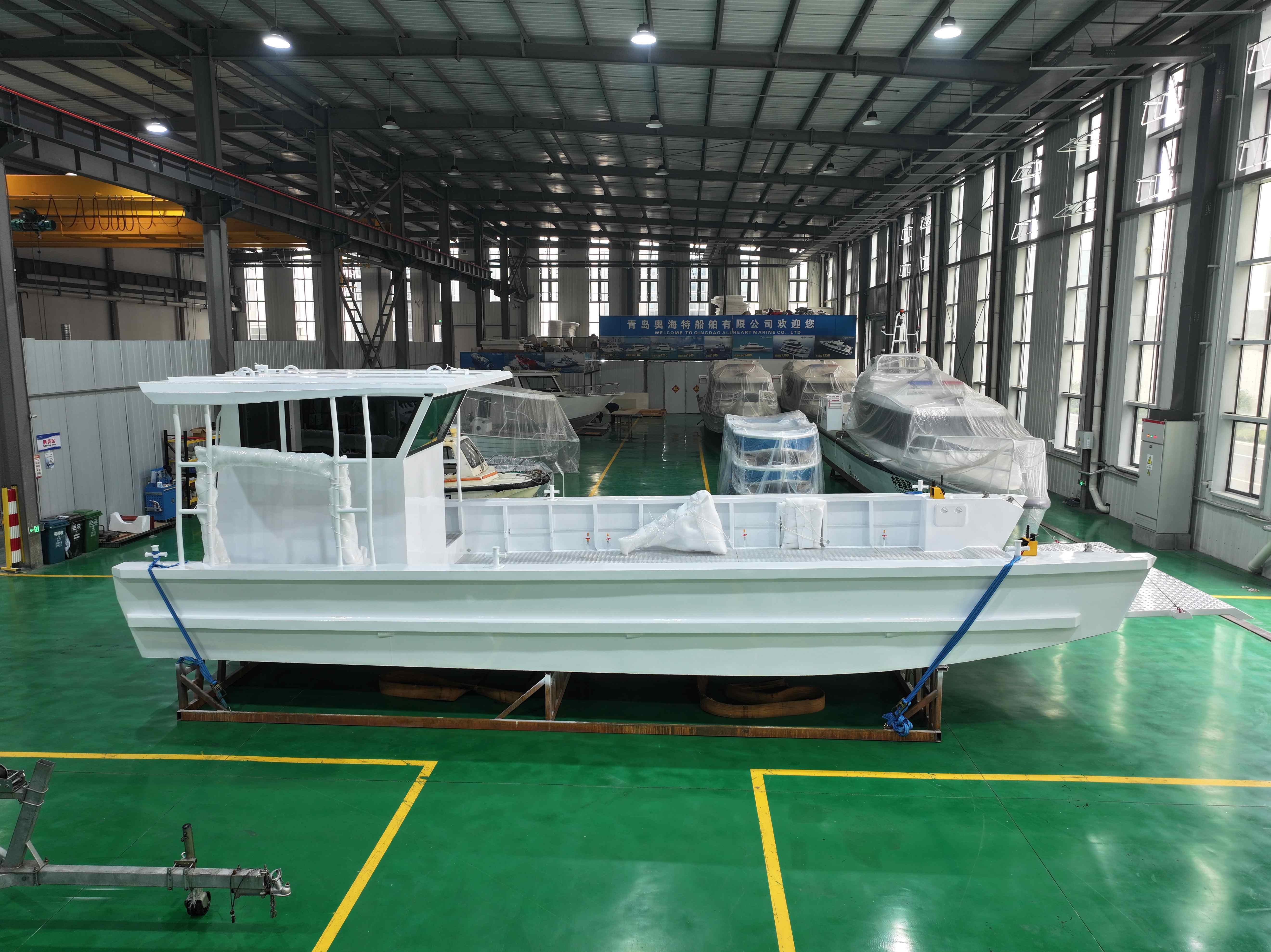
When you approach a junction where a ramp merges from the right, holding your line takes more than just keeping the wheel steady. Your eyes should flick to the side mirror a moment before the merge point, then back to the road ahead. That brief check tells you whether the ramp traffic is flowing smoothly or bunching up, which changes how much space you need to leave.
Many drivers make the mistake of drifting left out of caution, but that can startle vehicles already occupying the adjacent lane. Instead, maintain a predictable path and adjust your speed gently. If the ramp is short and the merging vehicles are moving slower, easing off the throttle early is often better than braking late. Your goal is to let the merge happen without forcing anyone to swerve or slam on their brakes.
In heavy rain or at night, the right ramp can hide pooling water or faded lane markings. Keep your headlights on and reduce speed slightly before the merge zone. Trust your lane position, not the temptation to hug the shoulder. A straight, steady course with the right ramp in your peripheral vision gives everyone around you a clearer picture of your intentions.
Barges That Float in Three Feet of Water
Shallow-draft barges are built to glide through water barely deeper than a bathtub, and that changes everything about how they’re designed. A flat bottom, squared-off bow, and minimal keel keep the hull from biting into the mud, while buoyancy is spread wide instead of deep. In three feet of water, weight distribution becomes a careful balancing act—too much cargo in one spot and the stern drags, kicking up silt and slowing the trip.
Operators who run these boats learn to read the river like a map of hidden thresholds. A sandbar that wasn’t there last week, a submerged stump, a sudden drop from a recent rain—all of it matters when you have only inches of clearance. Many barges in this class use push knees and raised propeller tunnels, letting them back off a shoal without waiting for a tow. The hull’s shallow profile also means less wake, which keeps canal banks from eroding and lets the barge slip under low bridges that taller vessels can’t approach.
What surprises newcomers is how stable a wide, flat-bottom barge feels in calm, skinny water. There’s no deep keel to pendulum-roll in a breeze, and the broad beam resists tipping when a load shifts. Maintenance is simpler too—no deep draft means you can beach the boat on a gravel bar and check the bottom plates with a flashlight. For moving supplies through backwater channels, flooded timber, or coastal marshes, barges that float in three feet of water aren’t a compromise; they’re often the only sensible choice.
Bolting Together a Barge for One Heavy Job
When a single lift exceeds the capacity of any available crane barge, the only practical answer is to join two or more barges into one rigid platform. The process starts with careful alignment: the deck edges are brought parallel, and heavy steel connection plates or link beams are lowered into place. These plates span the gap between the hulls, and each one is secured with dozens of high-strength bolts. Rather than welding, bolting allows for faster assembly and disassembly, and it avoids heat distortion that could weaken the barge structure. Crews work from both barges simultaneously, using hydraulic torque wrenches to achieve uniform tension across every joint. The result is a single floating foundation wide enough to support the enormous load, whether it is a bridge section, a refinery module, or a decommissioned reactor vessel.
Before the first bolt is tightened, engineers calculate the bending moments and shear forces that the combined platform will experience. The connection design must account for wave-induced flexing between the two hulls; a rigid bolted joint can create stress concentrations if the barges move independently even slightly. To manage this, the connection points are often placed at multiple locations along the length, with some plates acting as hinges and others as rigid stops. Rubber or neoprene pads may be inserted between the steel faces to absorb minor relative movement and reduce fatigue on the bolts. During the actual bolting operation, the sequence matters: workers tighten from the center of each plate outward, checking alignment after every pass. This prevents the plates from bowing and ensures that the load will be shared evenly once the heavy item is placed on deck.
After all connections are torqued to specification, the combined barge undergoes a load test with water bags or concrete blocks before the real job begins. Any slippage in the bolted joints is corrected immediately, and the bolt tension is rechecked after the first hour under load. For extremely heavy lifts, additional longitudinal stiffeners are bolted along the deck edges to tie the two barges into a box-like structure. The whole assembly may take a day or two to prepare, but it can be taken apart just as quickly when the job is done. This temporary marriage of two barges turns a routine waterway into a heavy-lift corridor, avoiding the need for a specialized and costly single-hull vessel that might sit idle for months between projects.
How Much Weight Can You Really Put on a Deck?
Most residential decks are built to handle a combined live and dead load of 40 to 60 pounds per square foot, but that figure doesn't tell you what you can actually pile on. The number includes the weight of the decking, joists, railings, plus the people, furniture, planters, and snow. A 12-by-16-foot deck with a 50-psf rating can theoretically support 9,600 pounds total, yet that number drops fast once you subtract the structure's own weight and account for uneven distribution.
The real limit often comes down to how the deck was framed and attached to the house. Ledger boards with proper bolts and flashing, footings below frost depth, and joist spans matched to the wood species all matter more than a simple square-foot calculation. A deck built with 2x8 joists on 24-inch centers won't hold the same load as one using 2x10s on 12-inch centers, even if both share the same square footage.
If you're planning to add something heavy like a hot tub, masonry fireplace, or a crowd of guests for a party, don't guess. A hot tub full of water and people can easily exceed 100 psf in its footprint, which most standard decks aren't designed to carry. Older decks with soft spots, rusted connectors, or wobbly railings should be inspected before any heavy use, because the posted capacity on paper means little if the wood has started to rot or the fasteners have loosened.
What Moving a 200-Ton Generator Actually Takes
Moving a 200-ton generator is not a matter of hooking up a trailer and hitting the road. The first step usually involves a detailed route survey, where engineers walk or drive every inch of the path to check bridge ratings, road widths, overhead clearance, and ground pressure limits. In many cases, the route has to be reinforced with steel plates or temporary matting before the trailer even starts rolling.
Once the route is cleared, the actual move relies on specialized equipment like self-propelled modular transporters or a multi-axle hydraulic trailer. These rigs spread the load across dozens of tires, but even then, the generator may need to be jacked up, slid onto beams, and secured with chains and custom saddles. A crew of riggers, spotters, and escort drivers coordinates with utility companies to lift power lines or remove signs. The pace is often slower than walking speed, and a single tight corner can take hours to navigate.
Weather plays a bigger role than outsiders expect. Rain can turn an unpaved staging area into mud, and high winds can make the load sway. That is why moves are often scheduled for early morning or late night, when traffic is light and temperatures are lower. Every move ends with a final positioning that can require millimeter-level adjustments using jacks, rollers, or hydraulic skates to land the generator exactly on its foundation bolts.
FAQ
Look for a clear deck with minimal obstructions, a reinforced ramp rated for the heaviest machine plus dynamic load, and a shallow draft so you can nose onto soft banks. A bow door that doubles as a ramp saves time, and check the deck coating for grip in wet conditions.
Powered craft give you independent repositioning without waiting on a tug, which matters when you're hopping between small islands or river bends. Dumb barges are cheaper per ton but you need reliable tug support and more planning. Many operators run a mix: powered for quick moves, dumb for static storage.
Look for a boxed longitudinal frame with closely spaced transverse bulkheads. The steel plate thickness on the deck should be at least 8-10 mm for tracked equipment, and the ramp hinges need reinforcement where they meet the hull. Some builders add internal stiffeners under the load path from the ramp to the stern.
As the load crosses the ramp, the bow dips and the stern rises. Without adjustable ballast tanks, you can lose traction on the ramp or beach the stern. Good landing craft let you flood stern tanks before unloading, then pump out as the machine rolls off, keeping the deck angle stable.
Aluminum saves weight and works for lighter payloads or corrosive saltwater environments, but for repeated tracked traffic and abrasive cargo, steel holds up better. If you go aluminum, make sure the deck has a sacrificial wear plate and the ramp is steel or heavily reinforced.
Daily checks on ramp hinges and hydraulic lines, weekly greasing of pivot points, monthly inspection of hull plating below the waterline for sand wear, and an annual drydock for anode replacement and weld checks. Sandy water accelerates wear on the ramp seal and pump impellers, so budget for those replacements.
Pre-stage cargo on the quay with the heaviest piece closest to the ramp, use a spotter with a clear hand signal plan, and set the barge ramp at a less steep angle by adjusting ballast or using a temporary shoring ramp. Lock the ramp in place and chock machines as soon as they're aboard.
Conclusion
Choosing a landing craft barge over a conventional cargo ship often comes down to one practical advantage: a flat, open deck that lets you place irregular loads without fighting container cell guides or crane reach. When you need to drive a 40-ton excavator straight onto the deck, a properly sized bow ramp makes the difference between a two-hour setup and a full day of lifting. Many operators overlook shallow-draft capability until they face a tidal inlet or a river mouth with only a few feet of water. A barge that floats in three feet can deliver payloads to sites where deeper-hull vessels simply cannot go. This is not about raw speed; it is about eliminating transshipment and getting cargo closer to the final pad.
For one-off heavy lifts, bolting together sectional barges offers flexibility that welded hulls cannot match. You can assemble exactly the deck area needed for a 200-ton generator, then disassemble and haul the modules away by truck. Real deck capacity is rarely a single number: you have to check distributed load versus point load, and account for how the load sits on the deck beams. Moving that generator takes more than a big crane. It requires calculating the roll-on path, blocking under the skid, ballasting the barge to keep the ramp angle shallow, and lashing against both lateral and longitudinal forces. The best barge option is the one that matches your load footprint, water depth at the landing site, and the equipment you already have on hand for loading and unloading.
Contact Us
Contact Person: Benny Hu
Email: [email protected]
Tel/WhatsApp: +8618354225697
Website: https://www.allheartmarine.com/