

Top Walk In Glass Door Cooler Picks for Any Commercial Space
2026-11-16
Walk-in glass door coolers are the hardest-working display cases in any commercial space—when they’re chosen right. Get the glass, airflow, or sizing wrong, and you’re stuck with fogged doors, uneven temperatures, and a layout that fights your staff. That’s why this list skips the generic models and focuses only on coolers that earn their footprint. From beverage-heavy retail floors to back-of-house kitchen prep, each pick was evaluated for real daily use, not just spec sheets. If you’re ready to make your refrigerated space work as hard as you do, ART brings the kind of build quality and door engineering that belongs at the top of your list.
What a Busy Kitchen Actually Needs From a Glass Door Cooler
In a kitchen where every second counts, staff don't have time to open doors just to check stock levels. Glass door coolers earn their place when the glass actually stays clear—anti-fog and LED lighting matter more than sleek design. If a cook can glance over mid-rush and spot the heavy cream without breaking stride, that's the real value.
Durability takes on a specific meaning here. It's not about surviving a showroom; it's about tolerating constant door swings, kicked bumpers, and the occasional hot sheet pan resting against the frame. Gaskets need to seal fast after each grab, and shelves should adjust without tools because nobody has a screwdriver during service.
Noise is another quiet dealbreaker. A glass door cooler hum that's noticeable over the exhaust hood is a hum that'll drive a line cook insane by hour four. Temperature recovery after repeated openings matters too—busy kitchens don't close the door gently, so the unit has to pull back to temp before dairy or proteins notice the difference.
Turning Browsing Into Buying in a Convenience Aisle
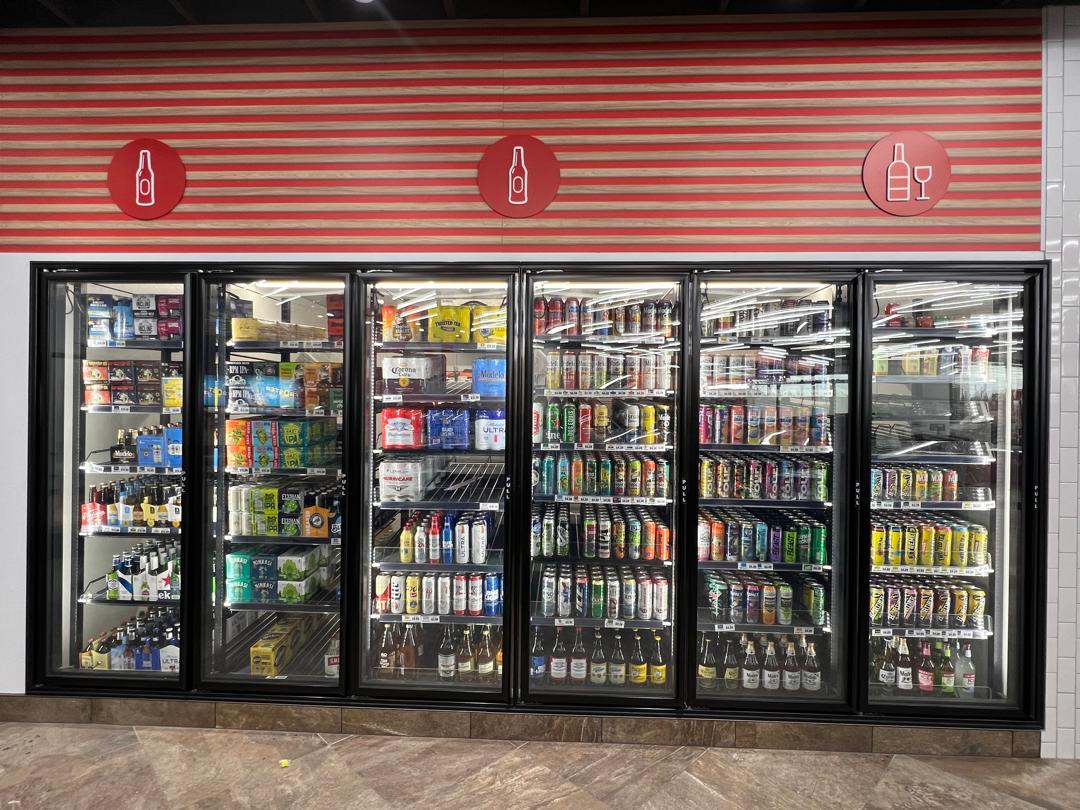
Convenience aisles are where impulse meets intent, but most shoppers still walk past without grabbing a single extra item. The key isn't louder signage or more crowded shelves—it's understanding the split-second decisions that happen while someone waits for the coffee to brew or scans for a snack. Place frequently bought together items within an arm's reach of each other, not stacked on opposite ends, and you'll see hands start moving before the brain fully approves.
Lighting and shelf height do more than any flashy promotion. Products at eye level with a warm glow get touched first, while lower shelves become a graveyard for overlooked gems. Rotate limited-time items near the checkout line where hands are already idle—this is where browsing turns into buying without a second thought. Keep the path clear, the labels simple, and let the flow of the aisle do the selling.
Small changes in product pairing can nudge customers from just looking to actually purchasing. A rack of single-serve cookies next to the cold brew fridge, or a small basket of phone chargers beside the toiletries—these mini-suggestions feel natural, not pushy. The best conversions happen when the shopper believes the idea was theirs all along.
Beer and Beverage Cases That Do More Than Just Chill
Most coolers are one-trick ponies: they hold ice, they keep cans cold, end of story. But the right beer and beverage case quietly earns its keep long after the condensation dries. Look for models with reinforced corners that survive tailgate drops, drain plugs that don't demand a wrestling match, and latches you can actually open with one hand while holding a burger in the other. The best ones borrow tricks from toolboxes and tackle boxes, turning a simple container into something you reach for on grocery runs, beach days, and even as a makeshift seat when the camp chairs run out.
A well-designed beverage case also respects the reality of mixed gatherings. Not everyone wants an IPA, and nobody wants their sparkling water buried under a bag of ice that's slowly turning into slush. Dividers, removable trays, and a tall enough profile for wine bottles make the difference between a cooler that works and one that just takes up trunk space. Some cases even shed water when tipped, so the last few cans aren't swimming in a puddle by the time you pack up. It's not about being fancy; it's about not fighting your gear.
Beyond the weekend, these cases find second lives as dry storage for camping gear, a waterproof home for camera equipment on kayak trips, or a sturdy step stool in a pinch. The point isn't to buy more stuff — it's to buy one thing that stops being single-purpose. When a beverage case can handle a forty-pound bag of dog food on Monday and keep a six-pack frosty on Saturday, it's earned its place in the garage.
Florists and Bakers Need Humidity Control Without the Guesswork
Walk into a flower cooler after a busy Saturday and you can usually tell if something is off before you even look at the buckets. Petals feel softer than they should, stems get that faint slime, and the air carries a heavy, almost sweet decay. It's rarely a mystery: the humidity has drifted too high and stayed there. Florists live with this constant low-grade worry because a few percentage points either way can cut vase life in half. Guessing by whether the glass fogs up or the cooler feels damp enough is no way to protect inventory that turns over fast.
Bakers face a different version of the same problem. A cake that looked flawless at midnight can wake up sticky, with fondant sagging and colors bleeding into each other. Buttercream doesn't hold crisp edges when moisture hangs in the air, and sugar flowers absorb it until they turn translucent and fragile. On the dough side, a humid proofing space might give you a great rise on Tuesday and a collapsed, gummy mess on Thursday. Without a reliable reading, every batch becomes an experiment.
What both need is a way to see the actual number, not a vague sense of how the room feels. A small, well-placed monitor takes away the guesswork. It tells you when to run a dehumidifier, when to shut it off, and whether the cooler or bake room has drifted overnight. That kind of consistency keeps flowers firm and cakes clean, without constant checking or second-guessing.
Footprint, Clearance, and the Condensing Unit Question Nobody Asks Early Enough
Most installs get measured for pad size and the clearance printed on the data sheet, but the real footprint includes the space around the unit that never shows up in a cut sheet. A condensing unit can fit perfectly on paper and still end up blocked by a gate swing, a fence post, or a deck stair that wasn't there when the drawing was approved.
The question that gets skipped is whether the spot allows enough airflow, tool access, and distance from windows before the first line set is run. Top discharge needs room above, not just on the sides, and a unit jammed under a low deck will pull hot air back through the coil no matter how tidy the install looks. Service valves facing a wall and a disconnect hidden behind the unit both turn a simple cleaning or capacitor swap into a half-day job.
Asking about all of that before the concrete is poured is much easier than moving a unit after the first fault code or noise complaint. A tape measure, a look at prevailing wind, and a few minutes standing where the unit will sit usually reveal the clearance problems that spec sheets don't mention. That early walk-around is what separates a job that stays quiet for ten years from one that gets reworked by July.
The Five-Year Math on Energy Bills and Service Calls
Five years is long enough for the real costs to show up. A system that looks like a bargain on day one can quietly drain the budget through higher monthly bills and extra visits from a technician. When you stretch the comparison across sixty months, small differences in efficiency and reliability turn into real money.
Say one option saves $25 a month on electricity. That’s $1,500 over five years. If the cheaper alternative needs just two additional service calls a year at $175 each, you’re looking at $1,750 in repair costs over the same period—before you even count the energy penalty of a system that isn’t running at its best. The lower sticker price no longer tells the whole story.
Service call frequency matters as much as the bill itself. A unit that needs attention every season interrupts your schedule and adds up in parts, labor, and emergency fees. Over a five-year stretch, those repeated calls often erase any upfront savings, leaving you with a less comfortable home and a longer list of receipts.
FAQ
Pay attention to the door hardware and glass itself. Low-e double-pane glass reduces condensation and keeps the cold in, while heavy-duty hinges and self-closing mechanisms survive constant opening. The interior lighting matters too—LED strips placed along the mullions make products pop without adding heat.
Start with your product volume, not just floor space. Measure the tallest item you plan to store and add at least 6 inches of clearance for airflow. A 6x8 foot unit works for most small cafes, but if you handle bulk produce or kegs, bump up to 8x10. Also consider door swing clearance—left-hinged doors can be a nightmare in tight backrooms.
Not necessarily. Modern glass doors use argon-filled double panes and thermal breaks that cut heat transfer significantly. The real cost driver is how often staff leave doors open. Look for models with door closers that snap shut within a few degrees of closing, and program defrost cycles for off-peak hours.
Aim for 36°F to 38°F. Anything below 34°F risks freezing lettuce and eggs near the evaporator fan, while above 40°F accelerates spoilage. Place a digital thermometer in the warmest spot—usually near the door—and adjust the set point based on that reading, not the unit's display.
Only if it's specifically designed for outdoor use. Standard panels and door gaskets degrade quickly in humidity or temperature swings. For patio or garage setups, ask about weatherproofed door frames, heated glass to prevent fogging, and a condensing unit rated for ambient temperatures below 50°F.
Clean the glass weekly with a non-ammonia cleaner to avoid damaging low-e coatings. Check door gaskets monthly by closing the door on a dollar bill—if it slides out easily, the seal is weak. Replace worn gaskets every 2-3 years, and realign hinges if you notice the door not closing flush.
Depends on your location and health codes. A floorless unit sits directly on your existing floor, saving money and avoiding a trip hazard, but it requires a perfectly level, insulated slab. If you have a wooden floor or need to pass strict sanitation inspections, a fully floored kit with aluminum tread plate is easier to clean and lasts longer.
Buying for current needs instead of peak season. A cooler that's packed to the gills on day one will block airflow and force the compressor to run constantly. Another common slip is forgetting about delivery access—measure doorways and hallways before ordering a pre-assembled unit, or insist on modular panels that can be assembled in place.
Conclusion
A walk-in glass door cooler earns its keep by matching the space it serves. In a busy kitchen, that means heavy-duty hinges, adjustable shelving that can hold sheet pans, and a door that stays fog-free when opened dozens of times an hour. It is less about looks and more about reaching in without hunting. In a convenience aisle, the same unit does a different job: it turns a quick glance into a sale. Bright, shadow-free LED lighting and clean sightlines make products feel closer, and a well-organized case can lift impulse purchases without any staff pushing. Beer and beverage sections add another layer—temperature consistency matters, but so does label visibility and the ability to stock deep without losing the front row.
Florists and bakers have a quieter but sharper demand: humidity. A cooler that drifts too dry will wilt blooms and crack buttercream, so look for models with stable humidity control and a drain design that does not pool water. Before buying, measure the actual footprint and door swing clearance—many spaces lose a cooler because a door opens into a prep table or a remote condensing unit vents heat into a small back room. That condensing unit question, whether self-contained or remote, shapes noise, heat, and installation cost more than most people expect. Finally, do the five-year math. Energy draw and service calls usually outweigh the sticker price. A well-built compressor, accessible controls, and replaceable gaskets keep the long-term bill lower than a cheap unit that needs constant attention.
Contact Us
Contact Person: Ellen
Email: [email protected]
Tel/WhatsApp: +86-535-2229725
Website: https://www.artrefrigeration.com/