

Wholesale Transmission Line Towers in China: Your Ultimate Sourcing Guide
2026-06-24
Sourcing transmission line towers from China can feel like navigating a maze of suppliers promising the lowest prices. But when reliability, engineering precision, and long-term performance are non-negotiable, cutting corners isn't an option. As one of the industry's most trusted names, Anbang has been quietly powering grid projects worldwide. In this guide, we'll show you how to secure top-tier towers without the guesswork.
Who’s Who in China’s Transmission Tower Sector
China's transmission tower industry is shaped by a mix of state-owned giants and nimble private manufacturers, with competition concentrated in design, manufacturing, and overseas expansion. Key players like PowerChina and China Energy Engineering Corporation (CEEC) dominate through their subsidiaries, which handle everything from survey and design to tower production and EPC contracting. In recent years, privately owned firms such as Jiangsu Zhongtian Technology and Henan Pinggao Electric have also carved out significant roles, specializing in high-voltage and ultra-high-voltage tower solutions, thereby intensifying the market dynamics.
Beyond domestic projects, these companies are aggressively pursuing international contracts, especially across Belt and Road Initiative countries. Africa, Southeast Asia, and Latin America have become critical battlefields where Chinese tower makers leverage cost efficiencies and integrated supply chains to outperform global rivals. This global push is reshaping the traditional supplier landscape, with tier-two manufacturers now forming consortia to bid for complex overseas transmission projects.
The sector's growth is further fueled by China's ambitious renewable energy targets, driving demand for new long-distance transmission corridors. As ultra-high-voltage lines expand westward, the need for specialized tower designs that withstand harsh terrains and climates pushes innovation forward. This has led to a clear hierarchy among suppliers, where technically advanced firms secure premium contracts while others focus on standardized towers for routine grid expansion, creating a multi-tiered competitive environment.
Inside the Factory: Quality Checks That Matter
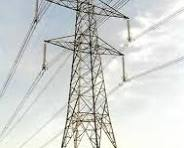
Walking through the factory floor, you quickly realize that the real magic isn't in the machines—it's in the moments between the noise, where someone pauses to inspect a seam or test a batch for consistency. These aren't just boxes to tick; they're the invisible backbone that separates a product you can trust from one you'll regret buying.
What most outsiders don't see is the layered scrutiny that happens at every stage. Raw materials get checked at the door with a skepticism that borders on paranoid, and finished goods go through a battery of stress tests that mimic years of abuse in just a few seconds. It's not glamorous work, but when you hold something that just works, you're holding the sum of a thousand tiny decisions to never let a flaw slip through.
The real difference, though, is in the culture. In some factories, quality is a department. In the ones that last, it's a reflex—every operator, every supervisor, acting like their name is stamped on the final piece. That shift doesn't come from posters or slogans. It comes from seeing a batch get scrapped without hesitation because someone noticed a subtle defect at 3 a.m. and refused to stay quiet about it.
Custom Tower Designs: Avoiding Common Engineering Pitfalls
In the rush to create something visually striking, it’s easy to overlook the hidden forces at play. Many custom towers fail not because of obvious flaws, but due to subtle misjudgments: underestimating wind patterns around clustered rooftops, ignoring the cumulative weight of secondary equipment, or forgetting that thermal expansion can slowly loosen even the tightest bolts. A well-designed tower needs to balance the architect’s ambition with a healthy respect for physics, ensuring that the final structure isn’t just a bold statement but a safe, enduring one.
One common misstep is chasing an ultra-sleek, minimalist look without accounting for maintenance access. Hidden mounting points and concealed cable runs might photograph beautifully, but they turn routine inspections into costly nightmares. Similarly, fixation on reducing steel tonnage can lead to eigenfrequency mismatches that amplify sway, making the tower uncomfortable or even hazardous during moderate winds. Smart engineering embraces simplicity where it matters most: connections that are easy to inspect, damping strategies that work with the natural dynamics, and a clear load path that leaves no room for surprise stress concentrations.
Another pitfall lurks in the interface between design and reality—tolerances. Digital models assume perfect alignment, but on-site fabrication and assembly introduce millimetre-scale variations that compound across a tall structure. Ignoring this can lead to forced fits, unintended pre-loading of joints, and accelerated fatigue. Seasoned teams address this early with adjustable interfaces and mock-ups, resisting the temptation to hand-wave away the inevitable imperfections. Ultimately, avoiding these traps comes down to humility: designing not for the ideal, but for the real-world conditions the tower will actually face, from unpredictable ground settlements to the corrosive breath of coastal air.
Cost vs. Value: Where to Invest, Where to Save
A premium ergonomic chair might raise an eyebrow at checkout, but its value crystallizes over years of supported posture and pain-free workdays. In contrast, that sleek standing desk can often be replicated with a DIY shelf and a stack of books, freeing up funds for where it honestly matters. The trick is identifying the gear that earns its keep versus the shiny upgrades that merely indulge a fleeting want.
Daily comfort and productivity hinge on a few key investments. A high-quality keyboard or an adjustable monitor arm often returns invisible dividends in workflow and wrist health, while decorative accents and branded desk pads rarely move the needle. Let your body and your hours dictate where the money flows—your future self will thank you for the discernment.
Long-term thinking transforms a purchase into an investment. Tech that ages well or adapts to your evolving needs justifies its cost, while chasing trendy gadgets only clutters your space and drains your wallet. Saving on modular, scatter-shot accessories gives you more room to invest in foundational pieces that truly underpin your daily efficiency and well-being.
Navigating Export Procedures and Delivery Timelines
Shipping goods across borders means untangling a web of documents, customs checks, and carrier requirements that rarely line up the way you expect. First, confirm the Incoterms with your buyer—this single choice dictates who pays for freight, insurance, and duties, and sets the handover points. Next, pull together the commercial invoice, packing list, and certificate of origin early; errors here are the most common reason shipments stall at clearance. Many exporters overlook the need for an EORI number or equivalent economic operator registration, so double-check if the destination country requires one. Getting these pieces right at the outset stops tiny mistakes from snowballing into week-long delays.
Timelines tighten or stretch based on things many freight calculators miss: port congestion, customs exam triggers, or sudden changes in a carrier’s blank sailing schedule. Instead of trusting a generic transit estimate, ask your forwarder for a breakdown—pre-carriage, main transit, and final-mile delivery—and add buffer days at each handoff. If your cargo moves by sea, watch for cut-off dates at the origin port; missing the terminal’s receiving window by a few hours can push shipment back to the next vessel a week away. A running log of actual transit times, customs clearance duration, and last-mile hiccups from past orders is worth more than any routing guide when you need to promise a credible delivery date.
Beyond the Purchase: Maintenance and After-Sales Support
A product’s journey with you doesn’t end at the checkout counter. It’s in the weeks, months, and years that follow where true value emerges. Maintenance and after-sales support often get overshadowed by flashy features or price tags, yet they quietly determine how long something stays useful—and how much frustration you’re spared from when things go wrong. Smart buyers watch for this hidden layer, recognising that a warranty is more than a piece of paper; it’s a promise that a brand is willing to stand behind its work long after the excitement of unboxing fades.
Real support goes beyond call-centre scripts. The best companies train their teams to diagnose issues with empathy, offer repairs locally instead of shipping items across borders, and keep spare parts available not just for the hot-selling models but even for older ones. They treat routine maintenance—whether it’s cleaning, software updates, or wear-and-tear adjustments—as a partnership rather than a transaction. This thoughtful infrastructure means your possession gets to age gracefully, rather than becoming a slow-burning headache you eventually abandon.
When done right, after-sales care turns a simple purchase into a long-term relationship. It engenders a quiet confidence: you know that if something cracks or glitches, there’s a real person on the other end who actually cares about fixing it without imposing hurdles. This trust doesn’t show up on spec sheets, but it radically shifts how you feel about what you own. Brands that invest in this unseen backbone aren’t just selling goods—they’re cultivating loyalty that outlasts any single transaction.
FAQ
Focus on the manufacturer's experience with international standards, material quality certifications, and ability to customize designs for voltage level and terrain. Also check their export track record and whether they provide full technical support.
Most reputable suppliers follow strict quality control systems certified by ISO and global standards like ASTM or BS. They use high-grade steel such as Q345B and conduct tests like galvanizing thickness checks, dimensional verification, and load testing to ensure compliance.
Yes, many factories have in-house engineering teams that use lattice structure analysis software. They can design towers for high winds, ice loads, seismic zones, and remote locations, adapting to specific line voltage and conductor requirements.
Lead time varies with order size and complexity, usually 30–60 days after design approval. Towers are typically packed in strong seaworthy bundles with proper rust protection, and containers are carefully planned for efficient ocean freight.
Request third-party inspection reports, visit the factory if possible, and check past project references. Reliable suppliers will have transparent communication, provide detailed production videos, and offer material test certificates.
Competitive pricing due to lower production costs, scalable manufacturing capacity, and well-established supply chains for raw steel. Many suppliers also offer fast prototyping and can meet tight deadlines without compromising quality.
Most experienced exporters provide detailed assembly drawings, on-site supervision if required, and ongoing technical support. Some even offer training for installation crews and assistance with foundation design.
Typically, 30% deposit and 70% against shipment documents or L/C at sight. Shipping options range from full container loads (FCL) to bulk breakbulk vessels for large projects, and suppliers often help with logistics coordination.
Conclusion
Sourcing transmission line towers from China isn’t a simple checklist—it’s a journey that mixes technical scrutiny with smart negotiation. The country’s tower sector holds a cluster of established manufacturers, each with their own specializations in voltage classes, material grades, and geographic reach. Sorting through these players means looking beyond glossy brochures and verifying real project portfolios, on-time delivery records, and whether they hold the right industry certifications. A factory visit often reveals more than any spec sheet: walk the production floor to see how they handle galvanizing thickness tests, bolt torque checks, and full-scale prototype assembly. When you’re eyeing custom designs, don’t let an engineer talk you into an overbuilt structure that adds weight but no resilience. Instead, push for value-engineered solutions that respect local wind zones, seismic loads, and terrain without padding the steel tonnage. That upfront collaboration with the design team can head off costly rework later.
Price isn’t the whole story—where you invest a little more upfront often saves multiples downstream. Coatings and connection detailing, for instance, are worth the extra spend because they directly affect decades of corrosion resistance. On the flip side, you can avoid overpaying for speculative "add-ons" that don’t change structural performance. Once the towers are ready, the export dance begins: incoterms, container consolidation, port selection, and realistic lead times need careful choreography. A supplier that juggles documentation and customs clearance smoothly is gold. Finally, treat the handover as the start of a long-term relationship. Ask about remote inspection support, spare parts packages, and warranty response times before you sign. Because a tower that stands without follow-up care is a gamble; one with accessible after-sales support is a lasting asset.
Contact Us
Contact Person: antor khan
Email: [email protected]
Tel/WhatsApp: 8613863903569
Website: https://www.qdabtower.com/